Council approves cleanup rezoning, moves properties from R‑3G to R‑3
July 14, 2025 | Hastings City, Adams County, Nebraska
This article was created by AI summarizing key points discussed. AI makes mistakes, so for full details and context, please refer to the video of the full meeting. Please report any errors so we can fix them. Report an error »
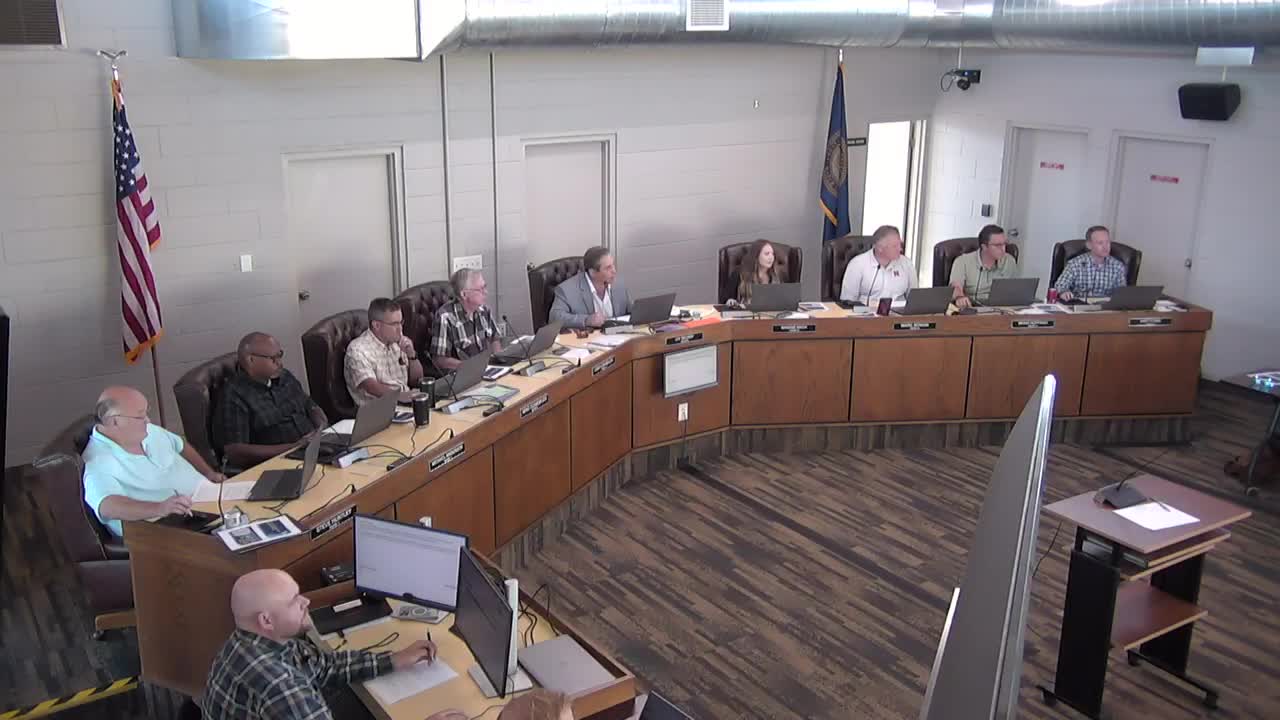
Amber Bathland, city planner, told the council the R‑3G district was adopted in 1968 and repealed in February 2009, but GIS records still showed a handful of parcels carrying the old designation. "This map shows properties throughout the city of Hastings that are in that R 3 Gs District," Bathland said, explaining the item was intended to align the map with the current code.
Bathland detailed the locations affected: Laughlin Avenue, Crozer Park, the Hastings College area and South Hastings. She described how each area fits the 2025 comprehensive plan's future land‑use categories and cited density ranges used for that plan. "The Crozer Park area is in the medium density residential category, which is intended for 7 to 15 dwelling units per acre," Bathland said, adding that the currently developed land in that area has a density of about 6.7 dwelling units per acre. She also said Hastings College and South Hastings areas fall within medium density ranges the plan anticipates.
Bathland said the rezoning would not change allowable uses in these neighborhoods but would reflect the most similar district currently in the zoning code. She noted staff and the planning commission recommended approval; the planning commission voted 7-0 to send the ordinance to council.
Councilmember Hoffman moved to adopt the ordinance; Councilmember Huntley seconded. The council approved Ordinance No. 4808 by an 8-0 vote and later voted 8-0 to suspend the rules and take the ordinance for second and final reading that evening.
Because the action was a map correction, Bathland emphasized there would be no immediate change to what property owners may do under the code. The council record shows the rezoning was presented and approved during the regular meeting; no speakers registered for or against the rezoning during the public hearing.
The adoption aligns official zoning records with the city's zoning code and comprehensive plan and clears legacy map anomalies dating to the 2009 repeal.
Don't Miss a Word: See the Full Meeting!
Go beyond summaries. Unlock every video, transcript, and key insight with a Founder Membership.
30-day money-back guarantee
Sponsors
Proudly supported by sponsors who keep Nebraska articles free in 2025

