
Finance and fire department present budget overview and proposed building-permit fee increases
Get AI-powered insights, summaries, and transcripts
Subscribe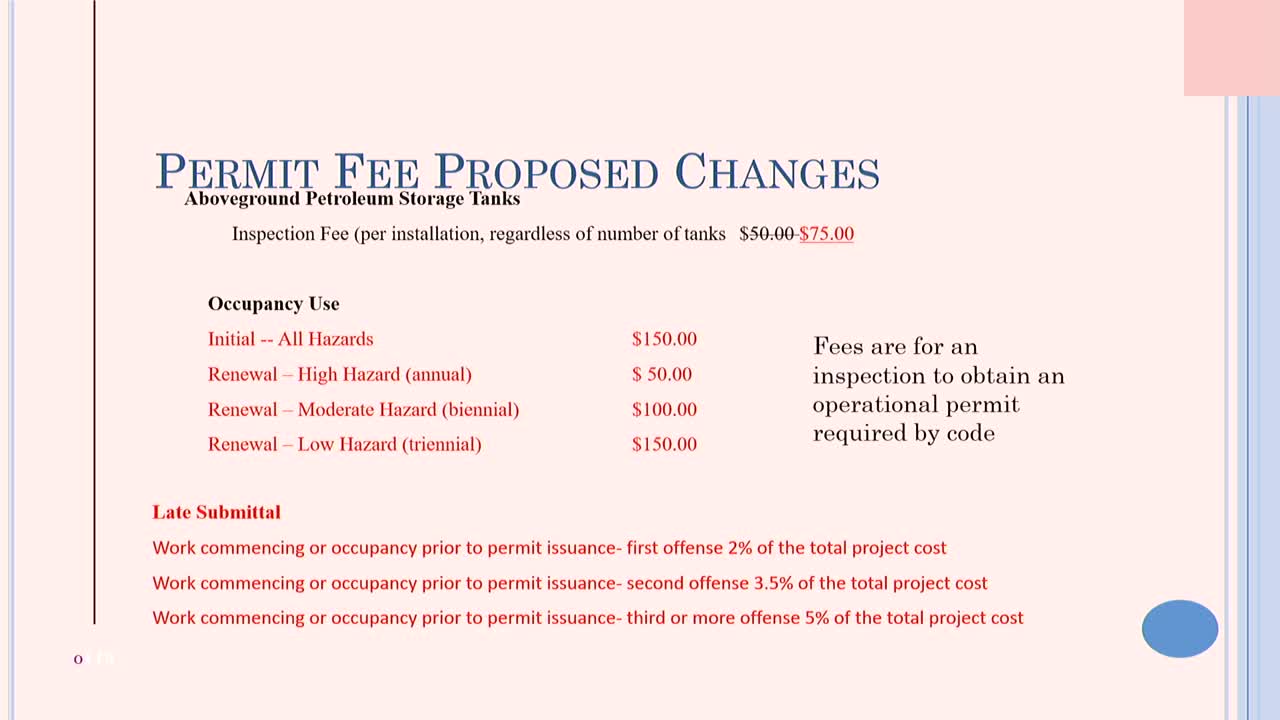
Summary
City finance staff reported the general fund is on track through May; the fire department proposed raising plan-review and permit fees to better cover inspection and review costs, which would increase revenue if adopted during the upcoming budget process.
City finance staff gave the council an update on the general fund through May and described the city’s budget process and constraints, while the fire department proposed modest increases to plan-review and other permit fees to better match staff time and inspection costs.
"So as you can see, it's, the operating budget," said Roger, who provided a monthly briefing showing year-to-date expenditures are near expected percentages and that licensing and permitting revenues were above budget because of large inspection permits. Roger told the council the general fund is in reasonable shape and noted that intergovernmental revenue timing (an FAA airport grant) is shifting some revenue and expense into the next fiscal year. He also reviewed how property tax, local-option sales tax and intergovernmental revenues support the general fund and explained the constraints created by state limits on revenue sources.
Fire Department staff proposed raising plan-review fees and adding fees for resubmissions and operational inspections that currently require staff time but are not charged. "Current plan review for a $20,000 project is a $5 fee. With this proposal, it would be a $20 fee," the fire presenter told the council, describing a tiered schedule that would increase revenues for large projects significantly. The department provided four example projects and estimated that under the proposed schedule the department would collect approximately $36,805 compared with $1,857 under the existing fees for those same projects.
Fire staff also proposed new occupancy and operational-permit fees (for alarm systems, hood suppression systems and other required inspections) and late-submittal penalties for work started without permits. Presenters said current permit fees do not cover on-site inspector time: one multi-building site had generated $3,500 in permit fees while staff logged about 158 hours of inspector time — roughly $6,500 in personnel costs.
Council members expressed support for measuring permit costs against staff time and for bringing fee proposals through the formal budget process. No fee changes were adopted at the work session; staff said they will return with final fee language and estimates as part of the July budget proposal.
What happens next: Finance and department heads will finalize fee proposals and include revenue estimates in the draft fiscal 2026 budget scheduled for public presentation in mid-July; any fee or ordinance changes will return to council for formal action.