
HEDC: Hastings housing, site readiness and Hartwell Renewables updates highlighted
Get AI-powered insights, summaries, and transcripts
Subscribe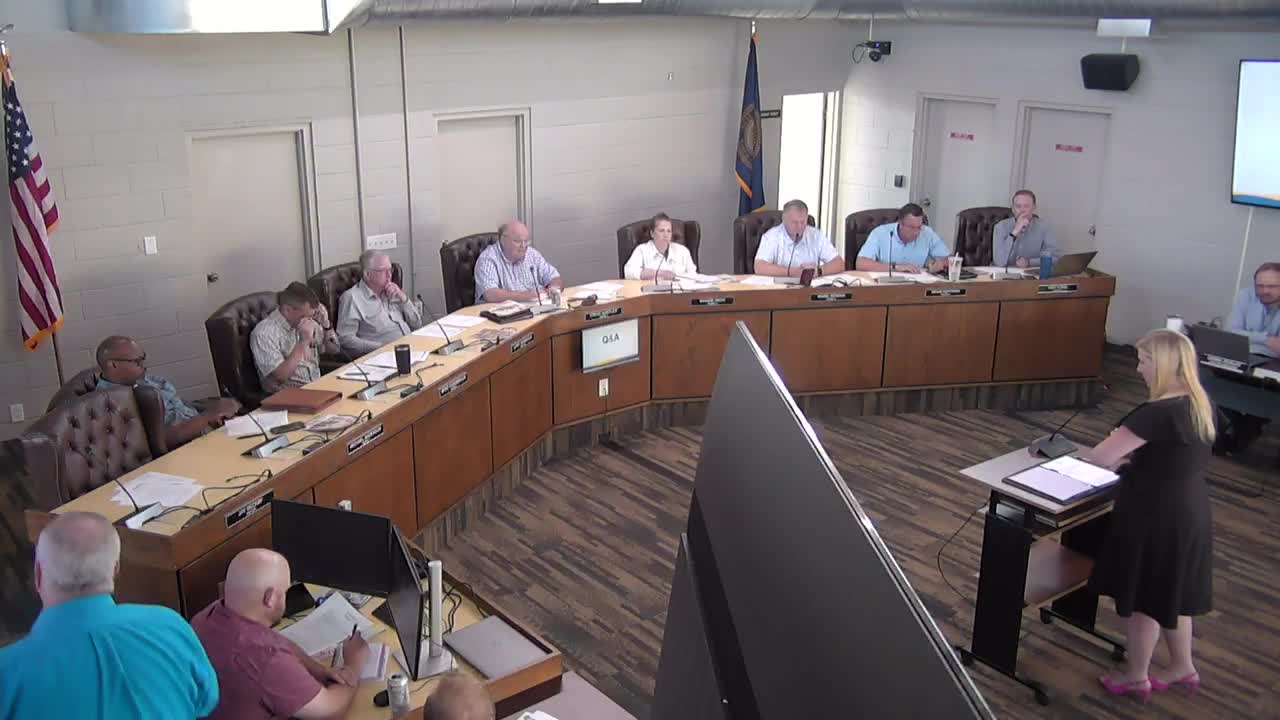
Summary
The Hastings Economic Development Corporation briefed the council on active industrial and housing projects, efforts to create shovel-ready industrial sites, and updates about the Hartwell Renewables project, while stressing the need for local site options to compete for new business recruitment.
The Hastings Economic Development Corporation (HEDC) told the City Council that housing and site-development work are now top priorities for local economic competitiveness, and that the Hartwell Renewables project remains active despite vendor and contractor changes.
"We will be looking to option property, and then we begin with some of the the due diligence," said Shannon, director of HEDC, describing ongoing work to identify and option potential industrial sites and to pay for phase-one environmental and utility studies. HEDC staff said a lack of shovel-ready land has blocked some recent recruitment opportunities and that creating 1–3 ready sites of varying sizes would improve Hastings' competitiveness.
Shannon described a range of local initiatives: a revolving loan fund (RLF) that will grow as existing CDBG-backed loans are repaid; Trailside Village housing moving quickly with land sold and "the dirt is definitely moving" on site preparations; and continued business retention and expansion (BRE) work with multiple manufacturers and downtown projects in progress. HEDC noted it has nearly $1 million in locally revolving funds and seven active RLF projects in the community.
On Hartwell Renewables, Shannon said the project is still expected to move forward despite recent contractor changes and that she has met with financial partners and cargo contacts. "We just have some transition with some of the contractors and who the vendors are gonna be," she said, adding that HEDC remains confident the project is progressing.
Ron Tillery, director of the Phelps County Development Corporation, also spoke to the council earlier about Holdrege's LB 840 experience and reiterated that locally administered LB 840 funds can target workforce housing, down-payment assistance and gap financing for expansions. HEDC staff said they will coordinate site and housing work with city utilities and the comprehensive plan; the goal is to present more concrete site options to prospective employers.
Council members asked questions about land-optioning, the size and availability of industrial lots and whether HEDC would acquire land. Shannon said HEDC typically obtains option agreements to fix a price while performing due diligence and that land acquisition at scale is usually cost-prohibitive for the agency: "Land acquisition is something we can't do. I can't say we never would. We frankly can't afford to go buy farm ground for industrial development." She said HEDC pays for option and due-diligence costs and aims to present multiple competitive parcels.
What happens next: HEDC will continue option negotiations, begin phase-one studies on prioritized parcels and coordinate with the city on utility capacity and funding options; staff said they will provide more details to council as negotiations and due diligence proceed.