
Hastings officials hear overview of LB 840 local-option economic development tool
Get AI-powered insights, summaries, and transcripts
Subscribe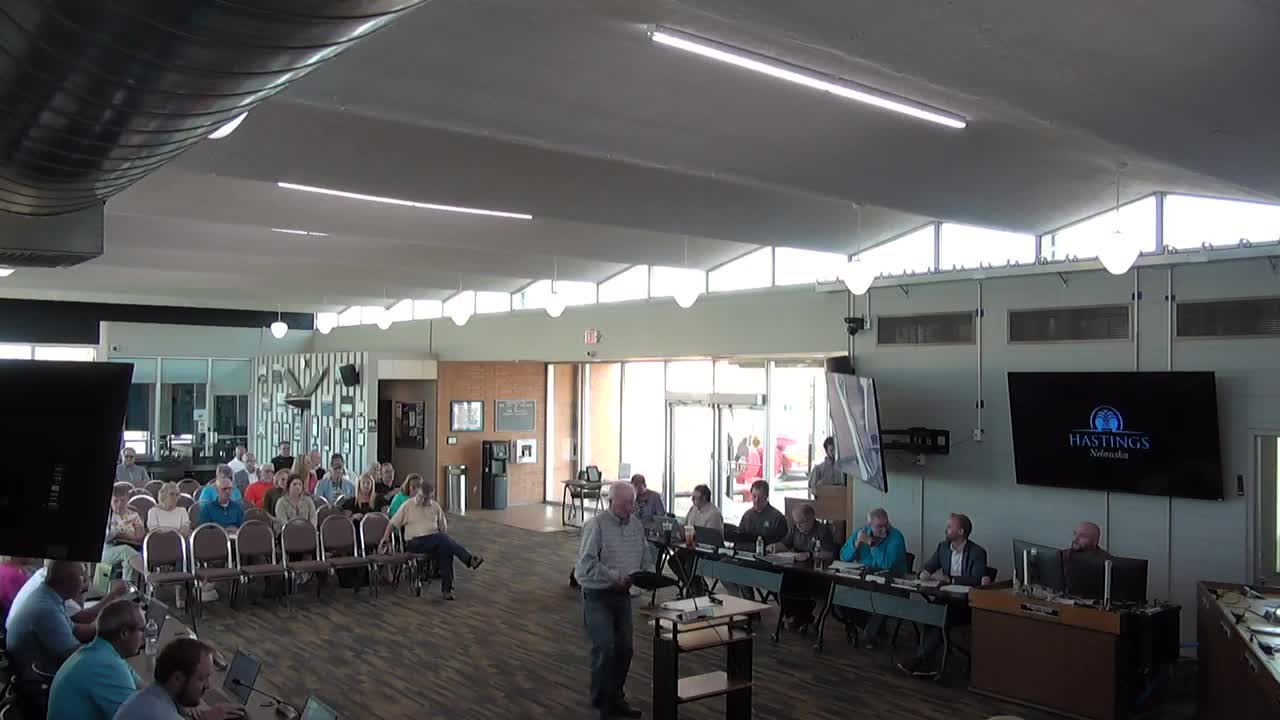
Summary
City staff, the Nebraska Department of Economic Development and area economic developers briefed the Hastings City Council on LB 840 (LOMIDA), explaining how voter-approved local plans and funding sources can be used to support business recruitment, housing, childcare and other eligible activities.
Hastings City Council members on Monday heard a detailed presentation about LB 840 — formally called the Local Option Municipal Economic Development Act and commonly abbreviated LOMIDA — from Nebraska Department of Economic Development staff and local practitioners, who said the tool gives cities local control over economic development dollars if voters approve a plan and a funding source.
The state and local presenters told the council the law requires a voter-approved plan that defines eligible businesses and activities and a separate ballot approval of the funding source. "It's the Local Option Municipal Economic Development Act. LOMIDA is what they call it too," said Kelly Giwicke, field representative for the Nebraska Department of Economic Development, introducing the program and its basic requirements.
The discussion matters because LB 840, first enacted in 1991, lets a municipality collect and hold funds for economic development projects specified in a locally approved plan. A plan must state the program's strategy, describe qualifying businesses and eligible activities, set revenue and budget limits, and create an oversight process including a citizen's advisory review committee (CARC). "Voters must approve 2 ballot items. The first 1 is the plan. This needs to be a well written plan and includes how and where the funds will be spent and then the funding source," Giwicke said. Presenters and council members discussed revenue options including a local-option sales tax, diversion of existing sales tax, utility transfers, grants and donations. Presenters said property-tax-based funding is uncommon and politically difficult.
State and local officials described common eligible activities under LB 840: grants or loans to qualified businesses, public works needed to attract projects, job training, housing construction or rehabilitation, early-childhood care and education, and even film production or tourism. "LB 8 40 funds must be kept separate from general funds," Giwicke told the council, and the statute requires public reporting and twice-yearly public hearings by the CARC.
Practitioners from Phelps County described how they use an LB 840 program in Holdrege to fund gap loans, down-payment assistance and other programs. "LB 8 40 is a difference maker on a local level," said Ron Tillery, director of the Phelps County Development Corporation, who described matching and gap-financing practices and said his program has supported housing moves and private investment in his county.
Council members and staff asked practical questions about timelines, ballot language and the interaction of an LB 840 program with existing local sales taxes. Presenters warned that two ballot actions are needed: voters approve the plan and also approve the funding source. Giwicke said, "If the sales tax passes but the plan does not, the Nebraska Department of Revenue will start collecting the tax, but they can't be spent until your plan actually passes the voters." Several council members pressed for a well-defined strategy and for early engagement of the Hastings Economic Development Corporation (HEDC) and local stakeholders to build public support.
Public comment began with resident Willis Hunt, who said he reviewed LOMIDA regulations and "I support 8 40 and I hope that through your efforts it will come about in Hastings, Nebraska." The council did not vote on any ordinance or ballot language at the meeting; presenters and council members described the discussion as exploratory and requested more staff work on timing and plan development before putting matters on a ballot.
What happens next: staff and HEDC will continue researching plan options, funding scenarios and voter-education needs. Council members identified the coming months as an appropriate time to test public support and to align any LB 840 effort with an expiring local sales-tax authorization.