Get Full Government Meeting Transcripts, Videos, & Alerts Forever!
Get email alerts on the Physician Assistant Compact And Supervision topic
No spam. Unsubscribe anytime.
Physician assistant groups back interstate compact and removal of rigid supervision rules to boost access
Summary
PA associations, educators and national compact staff urged the committee to pass the PA licensure compact and modernize supervision statutes (H2371/H2531/S1608/S1502), saying changes would shorten licensure waits, help staffing in rural and emergency settings and preserve collaborative practice rather than isolate PAs.
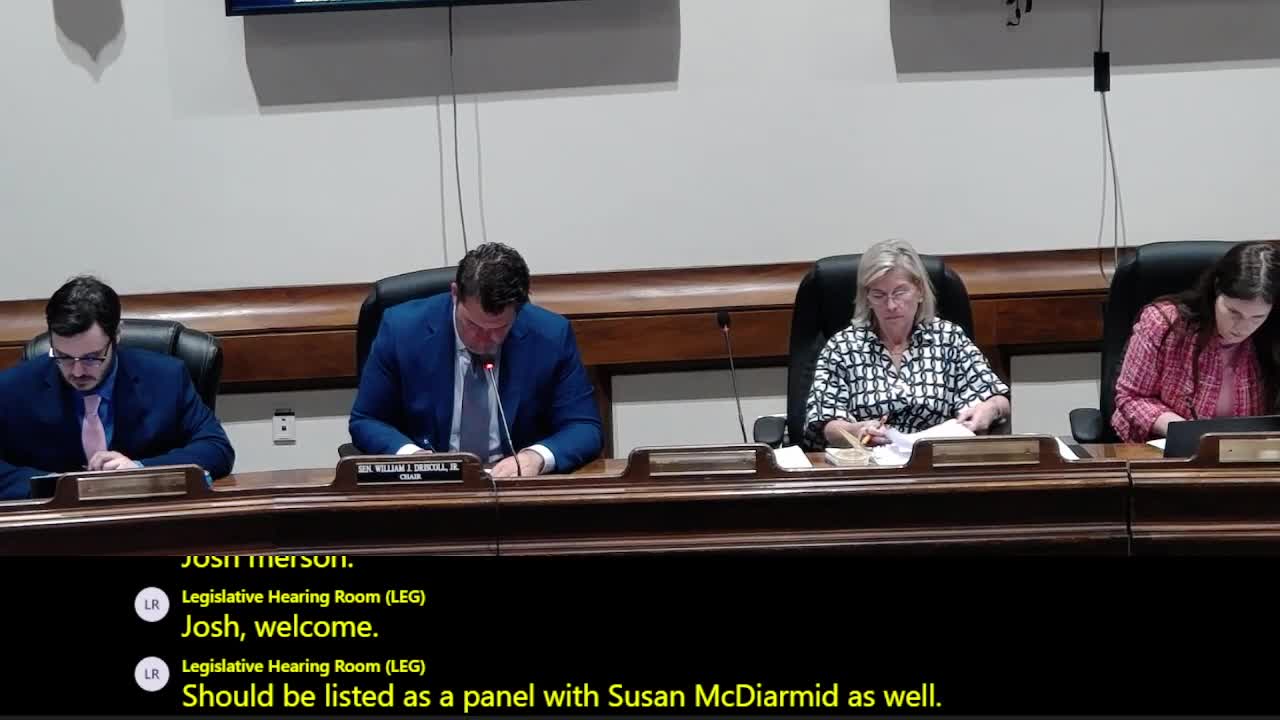
Representatives of physician assistants (PAs), PA educators and national compact officials urged the Joint Committee on Public Health to advance two related policy packages: (1) enact the PA Interstate Compact (H2531/S1608) to streamline multistate practice and (2) modernize Massachusetts supervision statutes (H2371/S1502) to remove mandatory state‑level supervisory wording and allow team‑based collaborative practice. Speakers including Josh Merson (Massachusetts Association of Physician Associates), Susan McDermott (interim program director, Westfield State PA program) and Michael Bartlett (American Academy of PAs) described long licensure delays for new and relocating PAs—three to eight months in Massachusetts, by one account—and the administrative burden on licensing boards and applicants. They urged compact membership to allow a compact privilege pathway and faster portability for experienced clinicians. Supporters said the supervision‑modernization bills do not change PAs’ scope of practice but remove an administrative requirement that a physician sign a supervisory agreement with every PA at the state level. Witnesses described real‑world examples where PAs lost patients or employment when a supervising physician retired or left and said modernizing the law would preserve continuity of care and expand provider flexibility in understaffed communities. Representatives said the compact preserves state authority: a PA practicing under a compact privilege must follow the laws of the state where the patient is located and states can require jurisprudence exams prior to granting compact privileges. The compact commission model includes centralized reporting of disciplinary actions to protect the public. Speakers noted the compact and supervision reforms already have regional precedents—several New England states had modernized practice language—and argued the measures would not cost the Commonwealth but would improve access across primary care, emergency departments and telehealth.