Lifetime Citizen Portal Access — AI Briefings, Alerts & Unlimited Follows
Whittier Council adopts amended resolution on federal immigration enforcement after weeks of public outcry
Loading...
Summary
After hours of public comment focused on masked federal agents, the Whittier City Council voted to adopt an amended resolution directing staff to pursue localized protections, funding for community services and requests to higher levels of government while legal counsel warned parts of a local ordinance could be preempted by federal law.
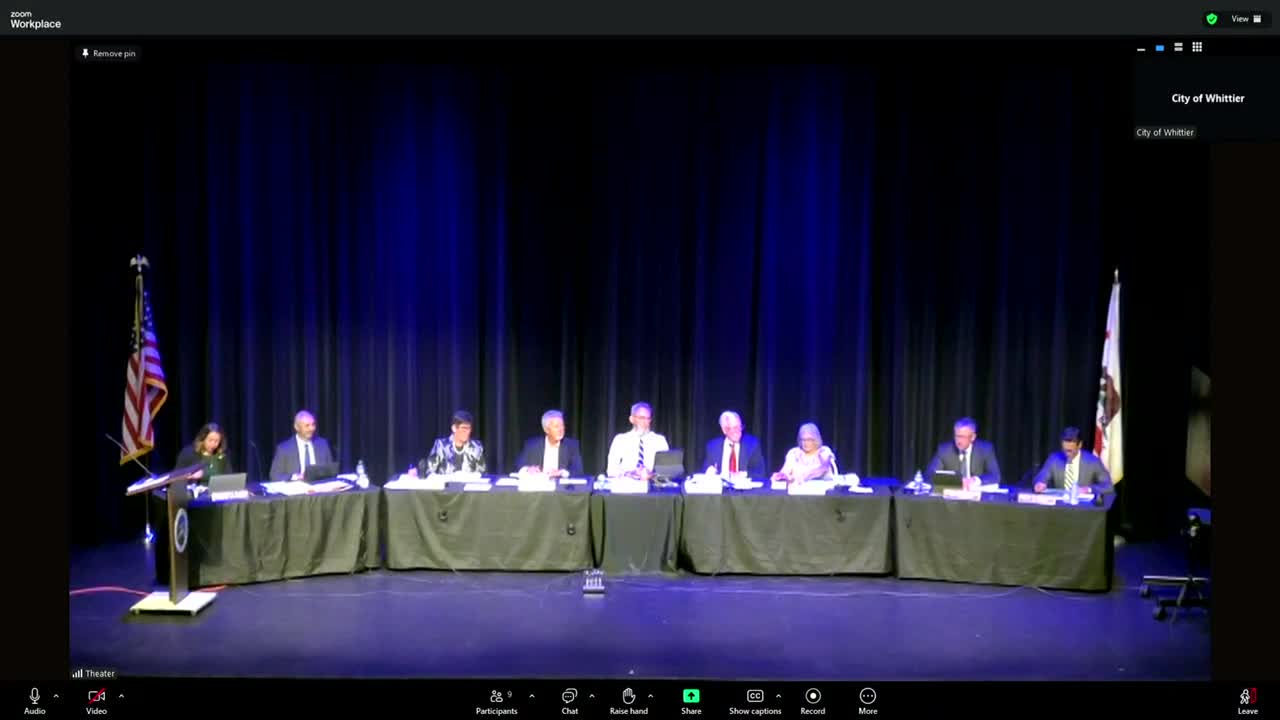
The Whittier City Council adopted an amended resolution addressing federal immigration enforcement after a wave of public comment calling for officers to unmask and identify themselves and for local protections for residents.
The action responds to weeks of community concern about masked agents and warrantless stops. Legal counsel told the council several provisions of a locally drafted ordinance would likely be preempted by federal law, but the council approved a package of measures intended to increase transparency and support residents.
David King, special counsel from the Hensley Law Group, told the council the firm had reviewed the ordinance language and related issues and warned that an ordinance that "dictates or tries to regulate ICE or federal immigration enforcement within the city of Whittier would very likely be preempted," citing the U.S. Constitution's supremacy clause and recent federal court activity. King summarized recent litigation: a class-action complaint resulted in a temporary restraining order in the Central District of California limiting suspicionless detention stops; the Ninth Circuit kept the TRO in place and the federal government has sought emergency relief at the U.S. Supreme Court.
Public commenters urged the council to act. Ronan Walsh, a third‑generation resident, said: "Pass the ordinance, enact the ordinance presented by council member Pacheco without watered down amendments." Brenda Victoria Castillo, president and CEO of the National Hispanic Media Coalition, told the council: "Being human is our greatest strength," and urged elected officials to protect children and families.
Council member Mary Anne Pacheco, who introduced the original ordinance draft, proposed and won several amendments to the staff resolution. The council approved directing staff to pursue the following actions: join Los Angeles and other jurisdictions in litigation to challenge federal enforcement practices; request that the state legislature consider elevating impersonation of law‑enforcement officers to a felony; direct staff not to share certain local data sources with federal immigration officials consistent with state law; provide funding for community assistance; and request regular updates from federal representatives.
Specific funding items added by the council include an additional one‑time allocation not to exceed $100,000 to support local outreach and emergency assistance (in addition to $30,000 previously provided to local partners), and a one‑time $50,000 allocation to support legal aid and community organizations assisting residents with immigration paperwork, subject to the city’s standard accountability procedures. The council also directed staff to provide monthly written updates to the council and public on implementation of the resolution’s directives.
The council adopted the amended resolution (listed in the agenda as an amended Resolution regarding enforcement of federal immigration laws). Roll‑call votes were recorded; the motion carried. Council member Warner said she would "abstain on sections 3 and 5," and Council member Pacheco recorded an abstention on section 2.1 as adopted; other members voted aye.
City staff said the amendments will be implemented through directed staff work and follow‑up reports; outside counsel and the city attorney will continue to advise the council on legal risk and next steps.
What happens next: Staff will return with implementation details and the city will send the requests and reports directed by the council. The legal limits King outlined mean any future ordinance that attempts to regulate federal immigration enforcement directly could face court challenges, so the council used a mix of local actions, requests to state and federal lawmakers, and funding for community services to respond to residents’ concerns.