Get Full Government Meeting Transcripts, Videos, & Alerts Forever!
Get email alerts on the Nuclear Study topic
No spam. Unsubscribe anytime.
Mixed testimony as lawmakers consider study commissions on nuclear energy
Summary
Supporters argued for a legislative commission to study nuclear energy’s role in decarbonization; opponents cited radioactive waste and legal and ethical concerns.
A range of witnesses urged the committee to create a balanced, expert-led commission to study whether nuclear energy — including new reactor technologies — should play a role in Massachusetts’ decarbonization plans.
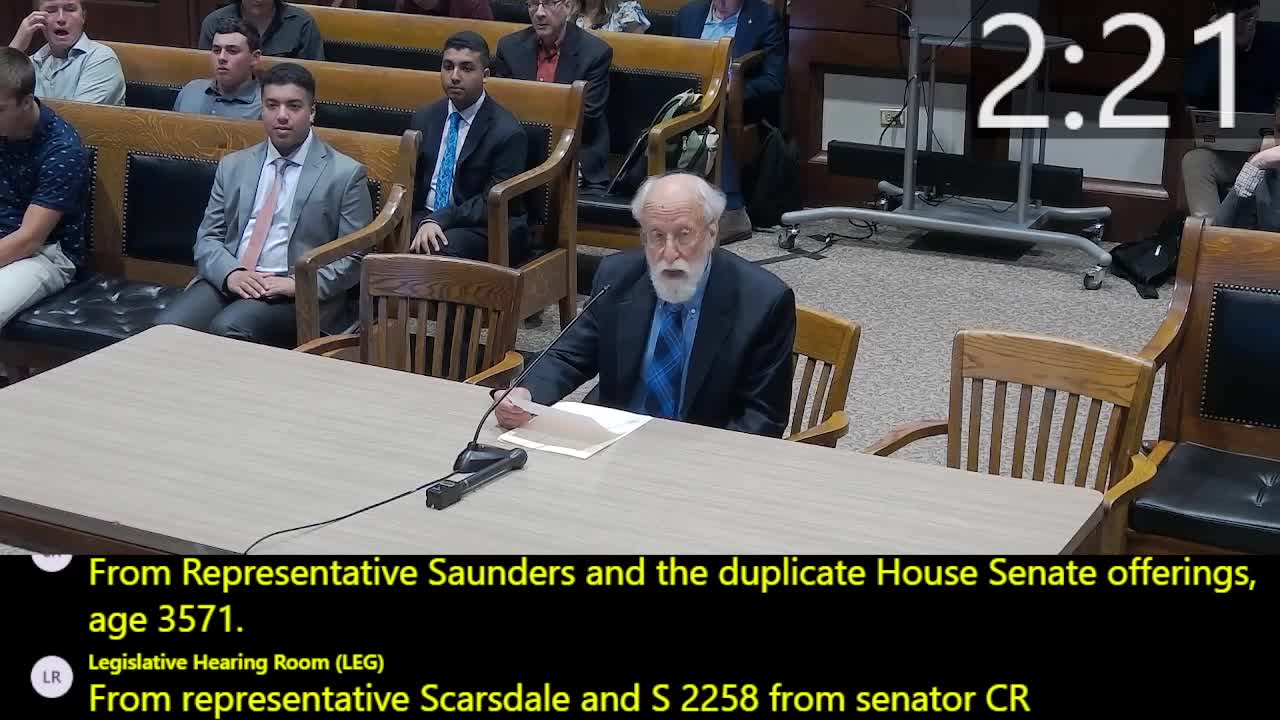
Supporters told the committee that careful study is needed now because nuclear projects have long lead times and because small modular reactors (SMRs) and other advanced technologies may be material to achieving deep decarbonization and grid reliability. Len Rodberg, a former nuclear-physics researcher and research director for Nuclear New York, said his modeling shows that adding dispatchable nuclear could lower costs and reduce emissions compared with relying mainly on solar and wind plus fossil backups. Several municipal utility and cooperative representatives, including Jim Leiden of the Massachusetts Municipal Wholesale Electric Company (MMWEC), said municipal utilities already have experience owning nuclear assets and that a commission would enable a “transparent” review that includes local public power interests.
Other witnesses opposed reopening nuclear as a near-term solution. Don Ogden and other opponents warned about the long-term toxicity of high-level radioactive waste and cited Chapter 503 of the Acts of 1982, which requires voter review for state approval of certain radioactive facilities. Some opponents argued that resurrecting nuclear policy would be politically fraught and morally problematic because of waste disposal and legacy liability.
Proponents emphasized that the bills (H.3512, H.3569, H.3571 and S.2258) would convene diverse stakeholders for a measured review rather than immediate commitments. Timothy McQuade and other citizen witnesses urged bipartisan study, noting potential federal incentives and R&D funding that could make timely evaluation valuable.
Why it matters: nuclear power is a firm, carbon-free generation source widely debated in energy planning. A commission could inform whether and how nuclear might complement renewables while identifying cost, safety and waste-management implications.
What’s next: committee members heard testimony on both sides and did not take a vote; some witnesses promised written reports and additional modeling for staff review.