Get Full Government Meeting Transcripts, Videos, & Alerts Forever!
Get email alerts on the Heat Shutoff Protections topic
No spam. Unsubscribe anytime.
Advocates and Public‑Health Experts Back Summer Shutoff Protections as Extreme Heat Increases
Summary
Representative Mindy Domb and public‑health and energy researchers urged the committee to expand current winter shutoff protections to include periods of extreme heat or a May 15–Sept 30 seasonal moratorium, citing disconnection data and heat‑related health risks.
BOSTON — Public‑health experts, researchers and Representative Mindy Domb urged the Joint Committee June 4 to approve H3972, a bill that would expand utility shutoff protections so customers suffering financial hardship could not be disconnected during a May 15–Sept 30 seasonal window and during any National Weather Service excessive heat warning or advisory.
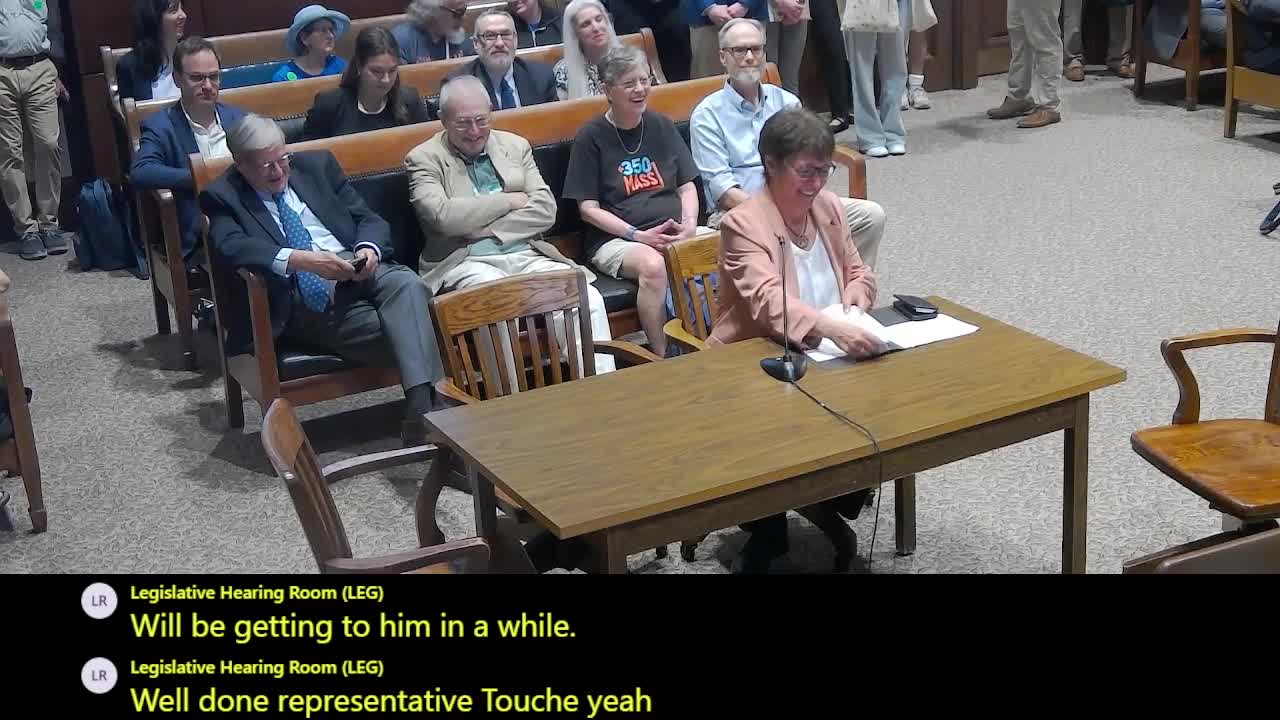
Representative Mindy Domb told the committee she filed the bill after reviewing state temperature trends and disconnection counts and said extreme heat is a growing public‑health threat that mirrors existing winter protections. "Extreme heat can lead to a variety of illnesses including heat exhaustion, heat stroke, and even heat‑related deaths," Domb said. She also urged the committee to support public‑education measures and Department of Public Utilities data collection on households that would have experienced shutoffs.
Researchers from the Energy Justice Lab and academic economists told the committee that shutoffs correlate with adverse health outcomes and that data collection on disconnections is incomplete nationwide; Massachusetts recorded more than 117,000 disconnects across 2023–2024 in the Lab's dashboard and a majority occurred May–September, speakers said. Professor Michael Ash of UMass Amherst said shutoffs during extreme temperatures heighten health risks for children, older adults and medically fragile people and cited published research linking earlier COVID‑era shutoff moratoria to reduced mortality.
Witnesses asked the committee to consider a statutory moratorium window and an automatic trigger tied to National Weather Service heat advisories; they also asked for better DPU reporting of disconnection data to inform future policy. The committee did not take a vote and requested the cited datasets and DPU reporting procedures be provided to members for follow up.