Get Full Government Meeting Transcripts, Videos, & Alerts Forever!
Get email alerts on the Bottle Bill topic
No spam. Unsubscribe anytime.
Supporters urge update to Massachusetts bottle bill, proposing 10¢ deposit and wider coverage
Summary
At a Joint Committee on Telecommunications, Utilities and Energy hearing, municipal officials, regional planners, environmental groups and retailers urged lawmakers to expand the state's 1982 bottle deposit law to cover more containers and raise the deposit to 10¢, citing falling redemption rates, rising municipal disposal costs and litter.
Supporters of modernizing Massachusetts' 1982 bottle deposit law told the Joint Committee on Telecommunications, Utilities and Energy that expanding the statute to cover bottled water, sports drinks and other containers and raising the deposit to 10¢ would reduce litter, boost recycling rates and save municipal budgets money.
The time for action is now, Leah Robbins, director of government affairs at the Metropolitan Area Planning Council, told the committee: "The time for action we believe is now." Robbins and other witnesses said municipalities are paying sharply higher costs to manage solid waste and that the current deposit law captures a shrinking share of containers.
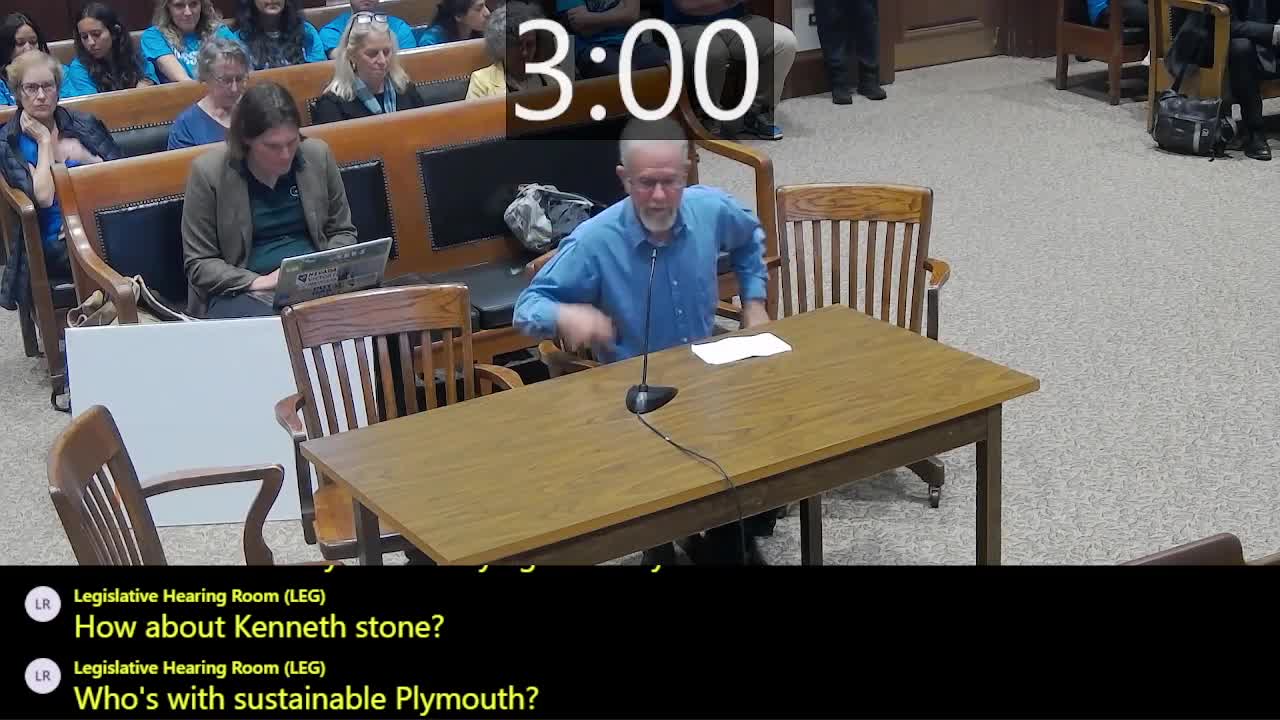
Proponents said three changes should be central: expand the list of covered containers to include noncarbonated beverages and small alcohol miniatures ("nips"), increase the deposit from 5¢ to 10¢, and raise handling fees paid to retailers and redemption centers. Ken Stone, chair of the Town of Plymouth recycling committee and a member of Sustainable Plymouth, said municipalities collect far more beverage containers now than when the law passed and urged the committee to "raise[ ] it to at least that minimum of 10¢." Mary Lou Nicholson, who leads shoreline cleanups for Be the Solution to Pollution, described large counts of uncovered plastic bottles collected in repeated cleanups.
The package drew support from municipal officials and the Mass Municipal Association, which said expanded coverage and a larger deposit would produce cleaner streets and parks and help local budgets strained by rising disposal and recycling processing costs. "By expanding the number of eligible containers and by increasing the deposit amount to 10¢, we'd be able to provide cleaner roads, parks and create savings to city and town budgets," Adam Chaplain, executive director of the Mass Municipal Association, said.
Business and industry witnesses argued for careful design. Steve Bockzanski of the Massachusetts Beverage Association said PET bottles and aluminum cans are 100% recyclable and stressed convenience for residents: many consumers prefer curbside or transfer‑station collection rather than reverse‑vending or split systems. Rob Melian of the Massachusetts Package Stores Association said local retailers support an updated law but pressed for a higher handling fee to compensate stores; he urged lawmakers not to repeat past proposals that failed to raise that fee.
Speakers offered data points that the committee can use in drafting: the deposit amount has remained 5¢ since 1982, statewide redemption rates cited by witnesses ranged from roughly 35–37% in recent years (witnesses say rates were substantially higher historically), and proponents estimate municipal savings in the mid tens of millions of dollars annually if returns increase and litter falls. Peter Blair of Just Zero and others pointed to comparisons with other states—Michigan and Oregon use 10¢ deposits and report much higher redemption rates.
Supporters asked the committee to advance the bills and restore a clean environment fund that would channel unclaimed deposits to recycling and municipal programs. Senator Cindy Creem, a bill sponsor, said, "Now is the time" to modernize the program.
The committee heard scores of individual residents, volunteer groups and municipal officials who largely aligned with proponents' themes. Opponents focused on system design, potential costs to consumers and the need to coordinate any expansion with improvements in curbside and transfer‑station infrastructure.
The hearing record will provide a range of technical and fiscal details to committee staff as members consider draft language. Sponsors asked for a favorable report to allow the Legislature to update the program this session.