Get Full Government Meeting Transcripts, Videos, & Alerts Forever!
Get email alerts on the Municipal Voices Gas topic
No spam. Unsubscribe anytime.
Towns Seek ‘Municipal Voices’ on Gas Pipe Replacements, Propose Planning Window and Transparency
Summary
Municipal officials and local advocates supported bills (S2248, H3446 and related proposals) to require gas companies to publish multi‑year pipe replacement plans, allow 90‑day local review, and to consider non‑pipeline alternatives before spending ratepayer money under GSEP.
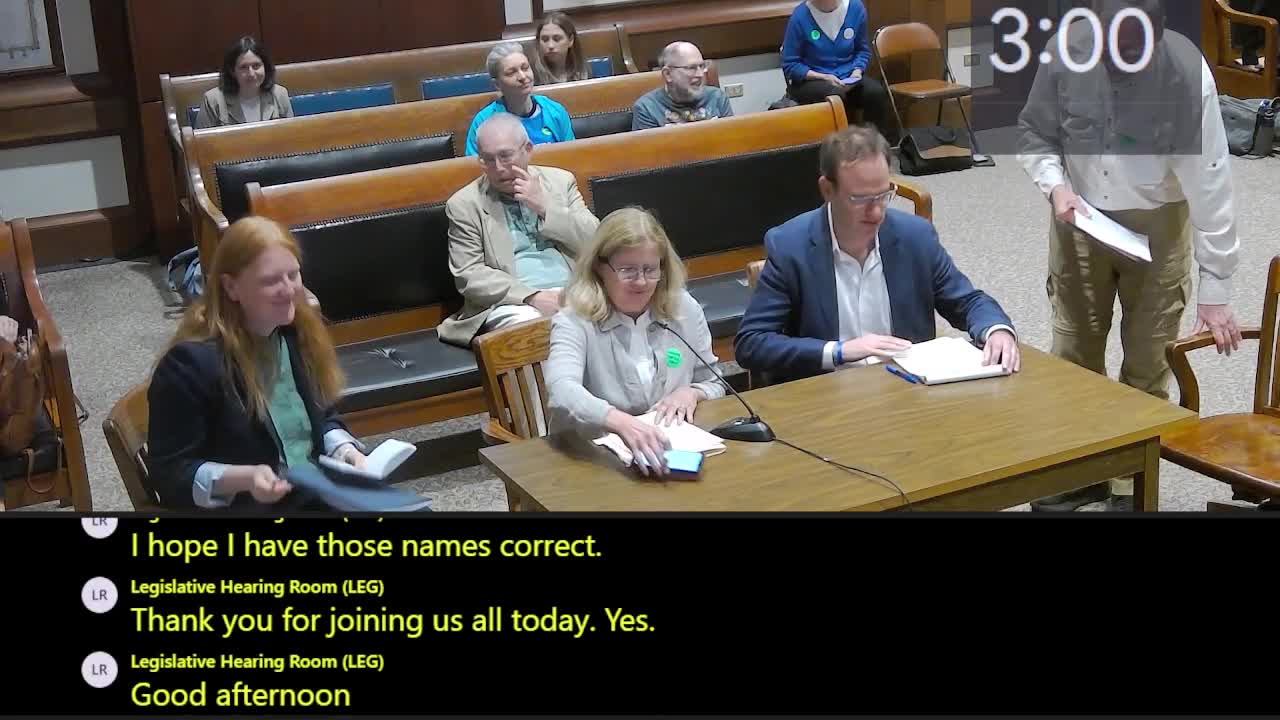
BOSTON — City and town officials and local climate groups urged the Joint Committee June 4 to pass legislation (S2248/H3446 and related measures) that would give municipalities more information, notice and limited authority over gas utility plans to replace pipelines and seek reimbursement through the Gas System Enhancement Plan (GSEP).
Speakers from Newton, Arlington, Wellesley, and other towns described repeated difficulties coordinating local road and capital projects with National Grid's gas main replacement plans. Newton and Arlington officials said they frequently learn of utility plans too late to coordinate municipal road work, and that some utility cost estimates made non‑pipeline alternatives appear cost‑prohibitive without full data. "We have essentially had no voice when decisions are made about work under our streets," Newton City Councilor Allison Leary said. Witnesses asked for a four‑year planning window, mandatory sharing of GSEP filings with municipalities, and a 90‑day municipal comment period so towns can propose non‑pipeline alternatives and coordinate capital projects.
Advocates said the bills would reduce the risk of stranded assets and focus ratepayer money where it achieves the most public benefit during the energy transition. Peter Bauer of Gas Transition Allies said municipal involvement is necessary because electrification is local and will occur neighborhood by neighborhood. Canton and other community witnesses emphasized the cumulative impact of pipeline replacement spending on customer bills and urged municipal input to avoid unnecessary or duplicative work.
Utilities and some stakeholders have argued for retaining centralized DPU approval of GSEP spending, but several municipal witnesses said more transparent notice to towns and explicit municipal opportunities to propose alternatives would enable better local planning and save ratepayer money.
The committee did not vote. Municipal and advocacy witnesses asked lawmakers to move quickly to give towns more notice and data so they can coordinate electrification and road work and minimize future bill impacts.