Get Full Government Meeting Transcripts, Videos, & Alerts Forever!
Get email alerts on the Utility Lobbying Prohibition topic
No spam. Unsubscribe anytime.
Lawmakers Weigh Bill to Bar Utilities From Charging Ratepayers for Lobbying, Promotions and Perks
Summary
Senate Bill S2239 and companion proposals would prohibit utilities from recovering the cost of lobbying, corporate promotions, trade‑association dues and certain perks from ratepayer funds; advocates said other states have saved customers money after similar laws.
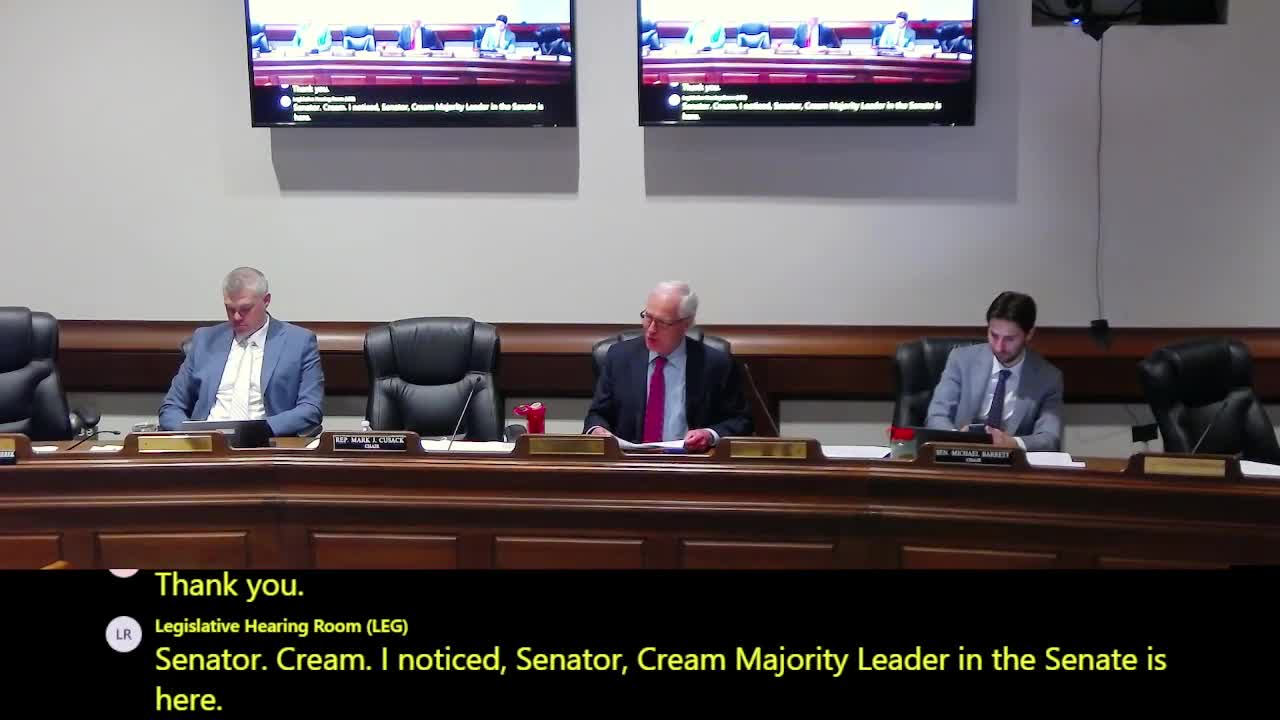
BOSTON — Lawmakers on the Joint Committee on Telecommunications, Utilities and Energy heard arguments June 4 for S2239, a bill that would bar gas and electric utilities from charging ratepayers for lobbying, marketing and certain corporate perks.
Supporters including environmental groups, consumer advocates and multiple municipal speakers said the measure — which mirrors laws recently passed in Colorado and Connecticut — would protect customers and raise transparency. Senator Michael Creem (testifying as majority leader during the hearing) said the bill would prohibit ratepayer recovery of lobbying fees, corporate promotions, apparel, trade association dues, travel and investor relations costs; it also would require line‑item reporting and provide enforcement authority to the DPU and the Attorney General.
Advocates called the law a common‑sense step at a time when household energy bills are high. Vic Mohanka of the Sierra Club said Colorado regulators used their law to deny $775,000 in charges during a recent rate case; Connecticut denied more than $600,000 in a separate case. Conservation Law Foundation and other groups urged an annual, line‑item disclosure so the public and regulators can see prohibited spending.
Utility representatives did not support a blanket prohibition in the same terms; they said some corporate communications have legitimate customer‑service value and asked for narrow definitions and clear enforcement standards. Several committee members said they would examine model state statutes and recent regulatory rulings as they consider statutory language.
The committee did not take a vote. Committee staff were asked to collect examples of disallowed charges and the outcomes of regulatory cases in other states to inform possible drafting options.