Get Full Government Meeting Transcripts, Videos, & Alerts Forever!
Get email alerts on the Retail Energy Market Reform topic
No spam. Unsubscribe anytime.
Suppliers Push Reforms, Not a Ban; Proposals Would Increase Licensing, Bonds and DPU Oversight
Summary
Industry groups and large suppliers told the Joint Committee they support targeted consumer protections and DPU oversight but oppose closing residential retail supply. They favored H3459/S2311, bills that propose higher licensing fees, bonding and a retail market oversight office.
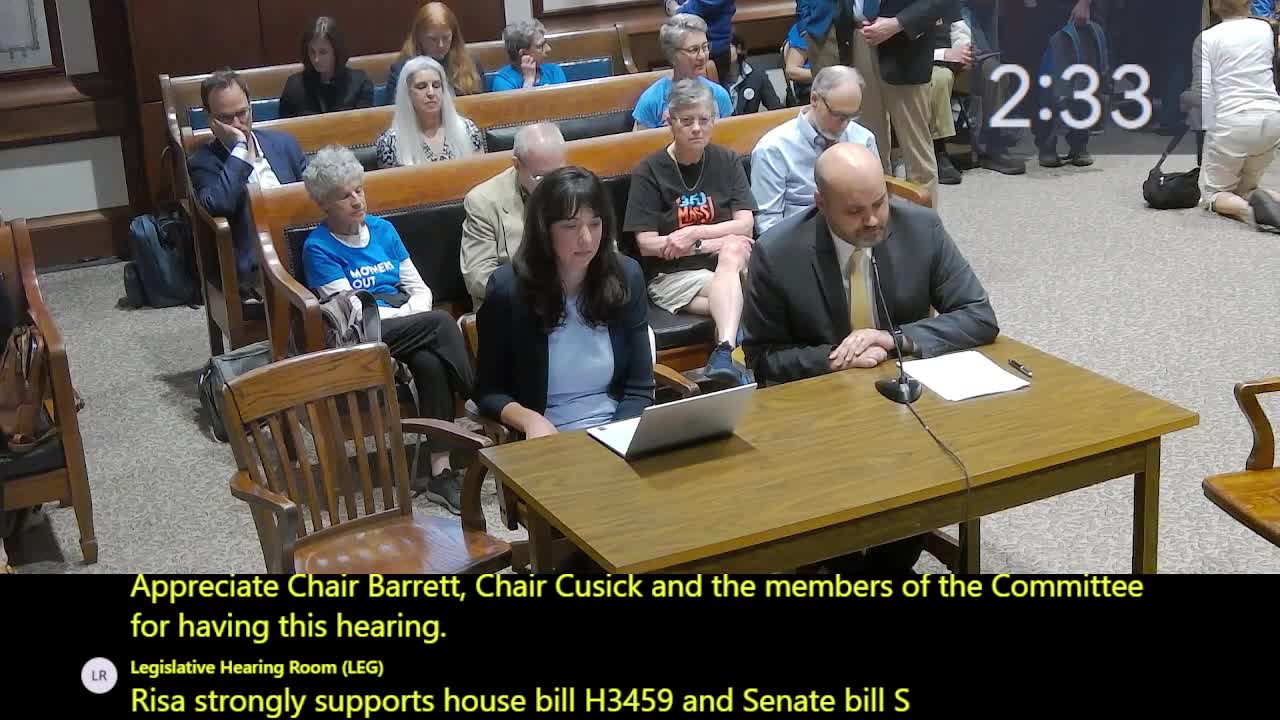
BOSTON — Retail energy suppliers and industry trade groups urged the Joint Committee June 4 to pursue market reforms rather than a wholesale ban on residential third‑party electric suppliers.
Representatives of supplier trade groups and large retail companies described proposed reform bills (H3459, S2311) that would raise licensing fees, require substantial bonds, clarify supplier responsibility for contracted marketers, and create a DPU office for retail market oversight. Frank Kaliva of the Retail Energy Supply Association and other supplier witnesses said the measures would weed out "fly‑by‑night" operators, improve enforcement and preserve consumer choice for customers who value fixed‑price contracts and renewable options.
Industry witnesses said competition has produced innovations — longer fixed terms, regional renewable sourcing and programs tied to smart meters — and that in many instances customers saved by shopping the market. Several suppliers also said they have already adopted voluntary steps in the DPU collaborative process, such as moratoria on enrolling low‑income customers and third‑party verification of door‑to‑door sales. The Retail Energy Advancement League, NRG, Constellation and other suppliers asked legislators to support H3459/S2311 and oppose measures that would close the residential market.
Opponents of market closure said consumer complaints are a small fraction of overall enrollments; industry witnesses cited Complaint counts in the low hundreds per year and noted DPU consumer‑protection dockets that implemented one‑page contract summaries and auto‑renewal notices. They argued that careful, enforceable reforms would preserve customer choice while addressing the specific harms raised by advocates and the Attorney General.
Legislators repeatedly pressed suppliers on automatic renewal provisions, incentive‑based marketing commissions and whether suppliers would accept limits on in‑person sales. Suppliers said they would negotiate specific protections — such as affirmative opt‑in for automatic renewal at initial enrollment, third‑party verification and bonding — but continued to resist a full residential market ban.
The committee did not vote. Legislators said they expected to weigh the Attorney General's and advocates' evidence against supplier proposals and DPU rule‑making before settling on statutory changes.