Get Full Government Meeting Transcripts, Videos, & Alerts Forever!
Get email alerts on the Double Poles Right Of Way topic
No spam. Unsubscribe anytime.
Cities, towns back bill to remove overdue double utility poles to improve safety and access
Summary
The Massachusetts Municipal Association and several town officials urged the Joint Committee to empower municipalities to remove and charge for long‑overdue double poles in the public right of way, citing safety, ADA access, and construction delay concerns.
Municipal officials told the Joint Committee that overdue double utility poles create safety hazards, accessibility problems, and costly construction delays, and they asked lawmakers to strengthen local authority to remove and recover costs for decommissioned or duplicate poles.
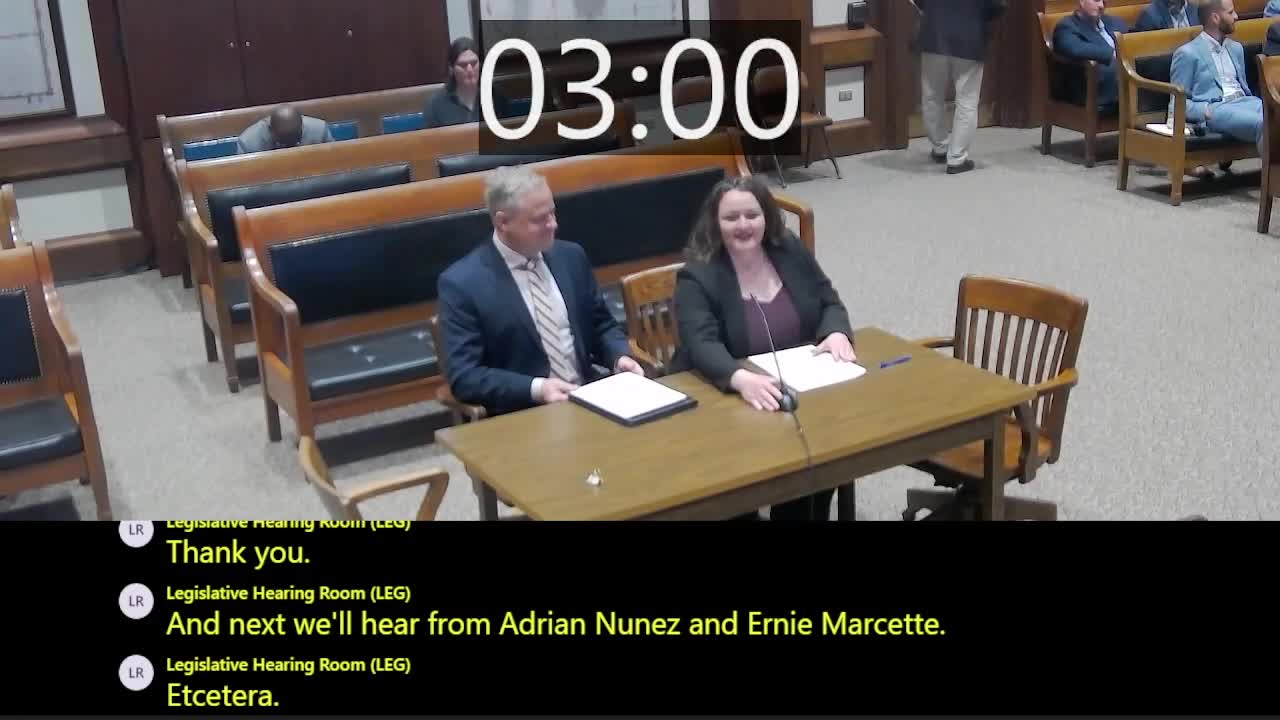
Adrianne Nunez, legislative analyst at the Massachusetts Municipal Association, said House 3462 and Senate 2250 (as referenced in testimony) would give cities and towns enforcement tools to require removal of double poles that exceed the statutory 90‑day removal period. "Double poles contribute to increased safety risks as well as concerns about accessibility," Nunez said, noting impacts for wheelchair users and people pushing strollers.
Jeremy Marcette, town administrator in Sherborn, said he has 30 years of municipal experience and has seen projects delayed — once by 18 months — because of pole relocation backlogs that increased project costs. "Overdue removal of double poles threatens safety, access, and responsible investment of public resources," Marcette said.
The bills would also allow municipalities to access the national joint utilities notification system, require disrupted infrastructure to be rebuilt to ADA standards when possible, and allow towns to assess fees to recover removal and construction overrun costs. Witnesses urged prompt committee action to avoid a growing backlog as the state pursues grid upgrades, broadband expansion, and EV‑charging programs that add pole work.
No committee vote was taken during the hearing.