Get Full Government Meeting Transcripts, Videos, & Alerts Forever!
Get email alerts on the Electric Ratepayer Protections topic
No spam. Unsubscribe anytime.
Lawmakers Hear Evidence of Higher Bills, Predatory Sales as They Consider Ban or Reform of Third‑Party Electric Suppliers
Summary
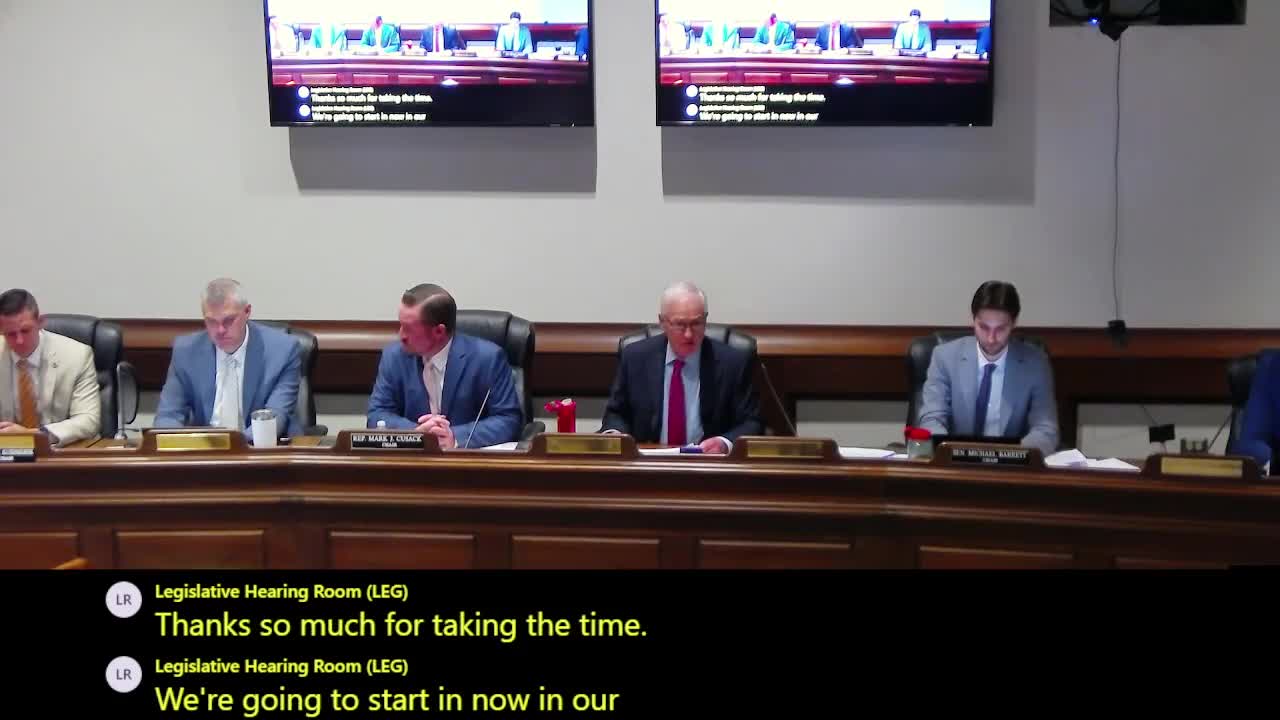
BOSTON — The Joint Committee on Telecommunications, Utilities and Energy heard hours of testimony June 4 on H3534 and S2255, legislation titled "an act relative to electric ratepayer protections" that would sharply limit or ban residential contracts with third‑party electric suppliers.
BOSTON — The Joint Committee on Telecommunications, Utilities and Energy heard hours of testimony June 4 on H3534 and S2255, legislation titled "an act relative to electric ratepayer protections" that would sharply limit or ban residential contracts with third‑party electric suppliers.
Proponents including the state Attorney General's Office, municipal leaders and consumer advocates told the committee that data show many residential customers pay substantially more under third‑party contracts than they would on the utilities’ basic service, and that aggressive marketing has concentrated enrollments in low‑income and environmental‑justice neighborhoods. "Electricity is an essential service," said Liz Anderson, chief of the Energy and Ratepayer Advocacy Division in the Attorney General's Office. "This market seriously undermines the state's objectives to keep utility bills affordable for all residents and to address historical inequities." She and others urged either a ban on residential third‑party supply or substantial reforms including bans on automatic contract renewals, restrictions on incentive‑based commissions for marketers, and price caps tied to utility basic service.
Municipal officials and consumer advocates offered local examples. Brian Swett, chief climate officer for the City of Boston, described Boston's municipal aggregation program, Boston Community Choice Electricity (BCCE), which the city says has provided a reliable rate and more renewables than basic service while saving residents and businesses more than $260 million over four years. He and other municipal speakers said third‑party suppliers frequently use door‑to‑door and in‑store marketing, sometimes impersonating city officials, and that a disproportionate share of supplier enrollments are in Dorchester, Mattapan and Roxbury.
Regional planning and consumer groups cited the Attorney General's data that residential customers of third‑party suppliers paid hundreds of millions more than they would have paid on basic service over recent years. Julie Curti of the Metropolitan Area Planning Council told legislators the figure was roughly $577 million over eight years; other witnesses referenced similar multi‑hundred‑million estimates over slightly different periods.
Suppliers and industry groups defended the retail market and urged reforms rather than a ban. Suppliers, municipal aggregation vendors and brokerage representatives said the market provides options — fixed multi‑year contracts, specialized renewable products and services such as time‑of‑use pricing and EV charging discounts — that some customers value. David Career of Constellation and David Holtz of NRG said the market lets customers hedge against volatile wholesale prices by locking in fixed terms. Industry witnesses also noted ongoing Department of Public Utilities (DPU) proceedings aimed at improving transparency, standardizing contract summaries, and strengthening oversight. Several supplier groups told the committee they support a licensing and bonding regime and other consumer protections but oppose a full residential market ban.
Committee members pressed witnesses on enforcement and remedies. Several legislators asked whether the Attorney General's office had used Massachusetts consumer‑protection statutes (M.G.L. c. 93A) to recover funds and sanction bad actors; witnesses said there have been enforcement actions but that the scale of the market and business reorganizations complicate remedies. Advocates said enforcement alone is insufficient because suppliers can change corporate names or exit the market under bankruptcy, leaving harmed customers without relief.
The breadth of testimony reflected divergent policy approaches: some witnesses called for an outright ban on residential retail suppliers starting in 2026 and preserved municipal aggregation and business access to suppliers; others recommended targeted reforms, including stronger DPU oversight, higher licensing bonds, expanded reporting to the Energy Switch MA comparison site, a prohibition on automatic renewals without explicit opt‑in, and restrictions on door‑to‑door marketing to protect vulnerable customers.
The committee did not take any formal votes at the hearing. Members asked staff to assemble the testimony and data referenced at today's hearing for further consideration.