Get Full Government Meeting Transcripts, Videos, & Alerts Forever!
Get email alerts on the Masssave Finance topic
No spam. Unsubscribe anytime.
Administration proposes securitization, Mass Save reforms and on‑bill financing to lower bills
Summary
The bill would change Mass Save administration, enable securitization of program costs, expand financing options including on‑bill recovery and utility‑led geothermal loops; witnesses urged careful cost comparisons and protections for ratepayers.
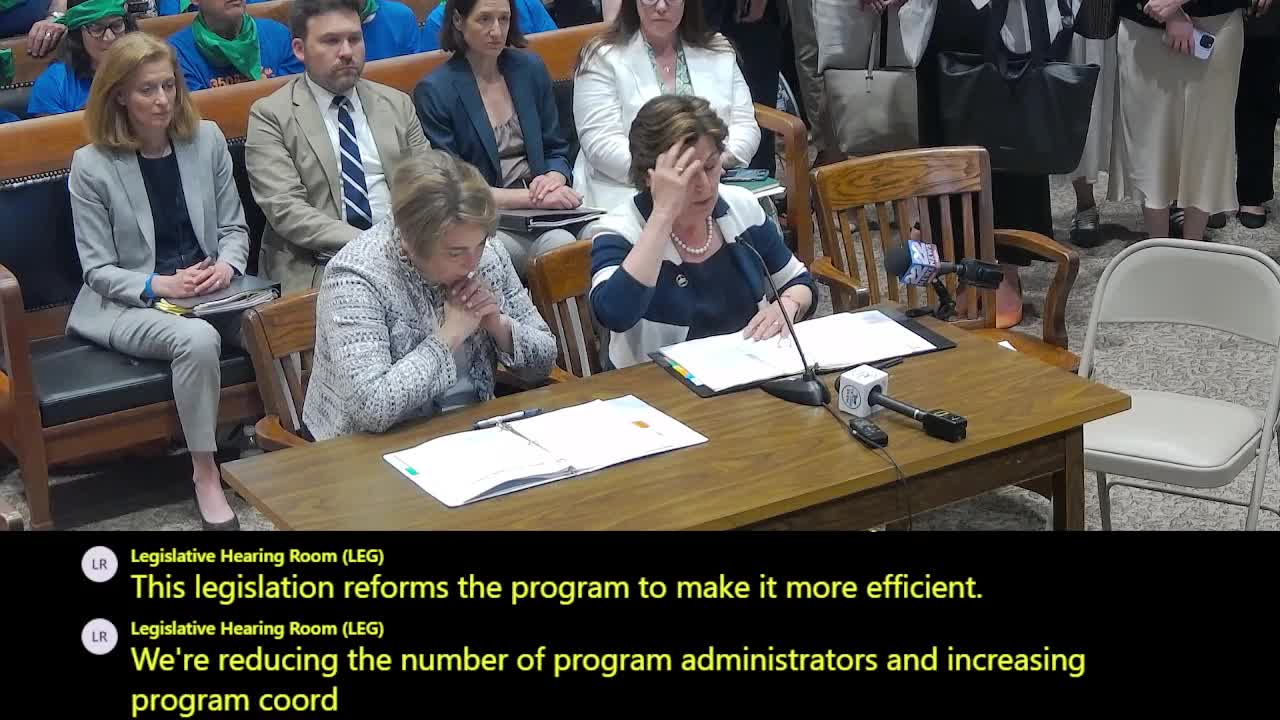
BOSTON — Administration witnesses told the Joint Committee the Energy Affordability Act would reform the Mass Save program, let utilities or the DPU use securitization to spread up‑front program costs, and create on‑bill or tariff‑based financing options so customers can get heat pumps and weatherization without large up‑front payments.
The secretary said securitization — issuing low‑cost bonds to pay for program cycles and recovering the debt over a longer term — could “conservatively save ratepayers more than $5,000,000,000 over 10 years” and that the DPU would have to review and find any securitization is in consumers’ interest before it proceeds. Administration staff said securitization proposals would be subject to DPU review and public comment.
The bill would also reduce the number of Mass Save program administrators, require more coordinated statewide procurement and data platforms, and expand customer financing options including an inclusive utility investment (IUI) model under which utilities or municipal light plants can finance upgrades and customers repay through a fixed monthly bill charge. Pilots cited included Ipswich’s reinvest project, which the witness said delivered modeled savings and electrification at participating homes.
Committee members repeatedly asked for apples‑to‑apples comparisons: would securitization increase or reduce “all‑in” lifetime costs once interest and tax effects are counted? Administration witnesses said statutory language directs DPU to examine overall cost and rates but agreed the committee may want clearer text ensuring explicit all‑in cost comparisons, including federal tax exemption impacts, before securitization authority is used broadly.
Consumer advocates and the National Consumer Law Center supported reforms that increase access for low‑ and moderate‑income customers, but urged caution on on‑bill financing and securitization language. Witnesses cited studies showing some programs elsewhere did not always reduce monthly bills for all participants and recommended stronger consumer protections, transparency about terms and reporting of outcomes.
Labor and union witnesses supported program changes that expand work opportunities, but requested prevailing wage and apprenticeship requirements for projects funded or built under the new mechanisms.