Get Full Government Meeting Transcripts, Videos, & Alerts Forever!
Get email alerts on the Municipal Light Plants topic
No spam. Unsubscribe anytime.
Municipal utilities push mutual‑aid protections and highlight lower rates, clean‑energy gains
Summary
Municipal Light Plant representatives and advisers told the Joint Committee that proposed bills clarifying mutual‑aid protections will let locally owned utilities safely help neighboring communities during storms and non‑emergency work, and highlighted lower rates and progress toward emissions goals.
Representatives of Massachusetts municipal light plants (MLPs) and supporting organizations urged the committee to back bills that clarify liability and employment protections for MLP crews providing mutual aid and to allow certain interlocal service arrangements.
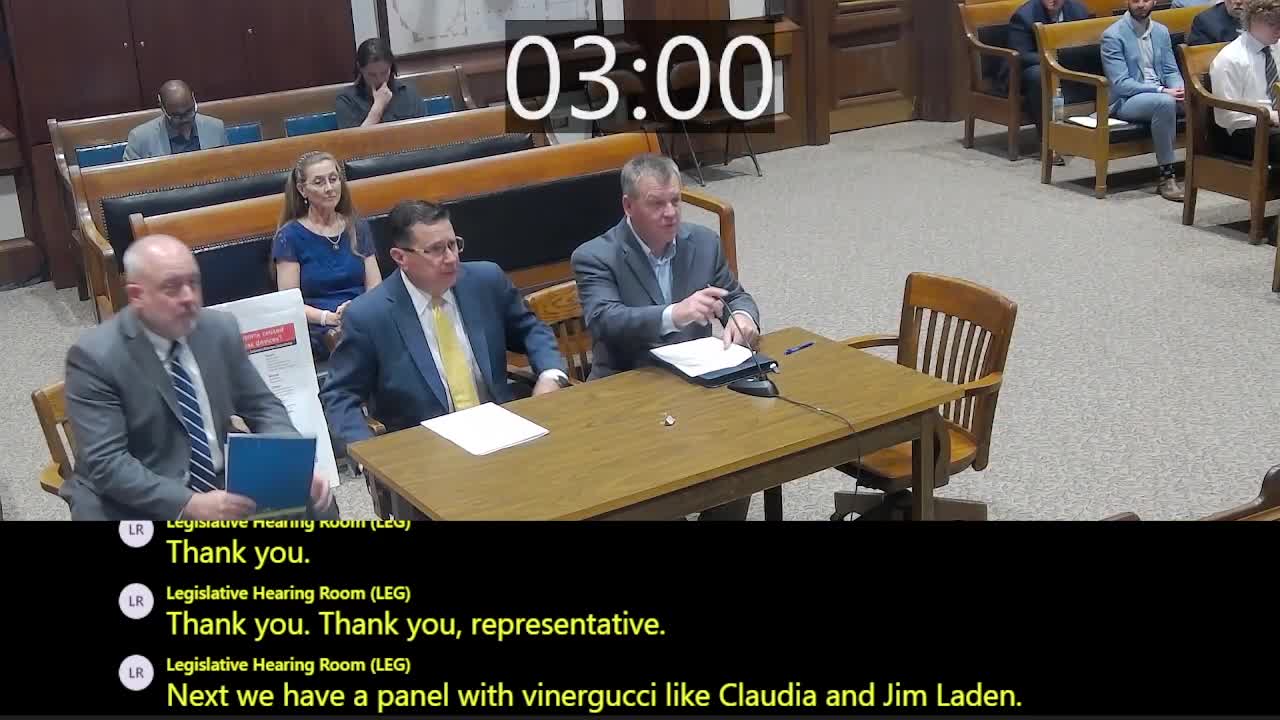
Michael Cloutier, general manager of the Middleton Electric Light Department and chair of the MEEAM legislative committee, described MLPs as nonprofit, locally controlled utilities that return revenue to local infrastructure and deliver lower rates. "We deliver lower rates by reinvesting our revenue back into our local infrastructure," Cloutier said, and he asked the committee to support House 34‑86 and House 33‑30 and their Senate companions to secure protections for mutual‑aid crews.
Vincent Raguchi, chief strategy officer at Energy New England, told lawmakers that ENE member utilities reached the 2030 emissions‑reduction goal five years early through long‑term clean‑energy contracts and that customers of municipal providers often pay significantly less per kilowatt‑hour than investor‑owned utility customers. "Any clients on average pay between 14 and 19 cents per kilowatt hour compared to the 25 to 31 cents that IOU customers pay," Raguchi said.
Witnesses said the mutual‑aid bills (including H3486/S2252 and H3330/S2277 as referenced in testimony) clarify protections for workers who travel across municipal or utility boundaries to restore service after storms and in non‑emergency situations, ensuring those employees have proper coverage if injured while assisting other communities.
The committee also heard from the Massachusetts Municipal Wholesale Electric Company (MMWEC/EMWIC) via Jim Leiden, who later testified opposing separate governance changes (discussed in another article). Leiden and other witnesses noted the role of joint action agencies in issuing tax‑exempt financing for renewables and warned that governance changes could disrupt local control and project competitiveness.
No committee vote was taken; supporters asked that the mutual‑aid and related clarifying bills be reported favorably so MLPs can continue cross‑jurisdictional assistance during emergencies.
The primary bills referenced were House 34‑86 and Senate 22‑52 (emergency mutual aid protections) and House 33‑30 and Senate 22‑77 (non‑emergency mutual aid and interlocal service clarifications).