Get Full Government Meeting Transcripts, Videos, & Alerts Forever!
Get email alerts on the Smart Meters Opt Out topic
No spam. Unsubscribe anytime.
Residents and advocates urge no‑fee smart‑meter opt‑out, cite health and equity concerns
Summary
Multiple witnesses told the Joint Committee on Telecommunications, Utilities and Energy that Massachusetts should guarantee a no‑fee opt‑out from wireless “smart” meters and require notification and alternative analog meters for those who request them, citing health harms, uneven fees, and equity concerns.
Lawmakers heard hours of testimony calling for a no‑fee opt‑out from wireless smart meters and for utilities to provide non‑transmitting analog meters by request.
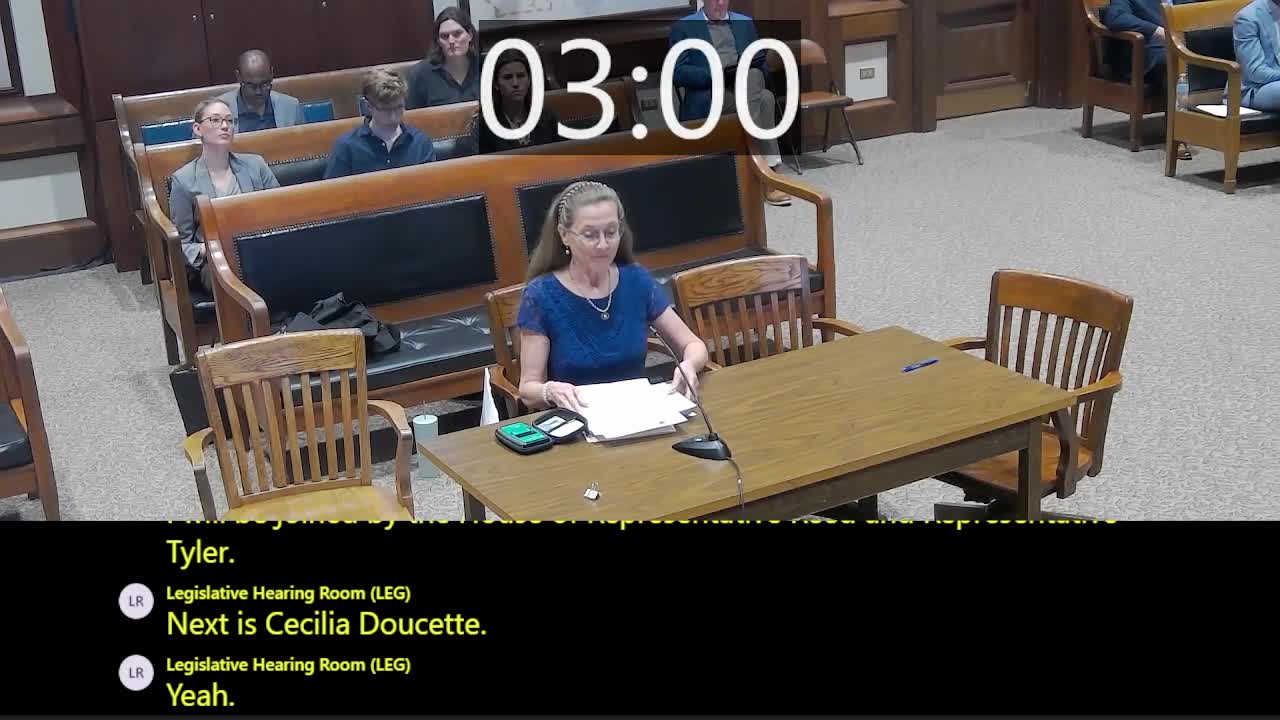
Advocates told the Joint Committee on Telecommunications, Utilities and Energy that mandatory smart‑meter rollouts by the state’s investor‑owned utilities are harming medically vulnerable people and imposing disproportionate fees on low‑income households. “No one should have to pay extra money to opt out of having a smart meter,” said Lisa Octaviano, who testified that her family experienced symptoms she attributed to smart‑meter radiation. “Consumers should have informed consent.”
The witnesses said the Department of Public Utilities (DPU) has ordered non‑advanced meters in some cases but that utilities are charging monthly opt‑out fees that range from about $26 to $34 per month for electric customers and higher in municipal examples. Patricia Burke of Safetec International noted fee levels in Massachusetts are higher than some other states and said fees are not cost‑based. “National Grid’s opt‑out fee in New York is $17.71 per month for both gas and electric; Massachusetts only charges $26 a month for electric,” Burke said.
The testimony included personal accounts from people who said installation of transmitting meters caused new or worsening health problems. Courtney Gilardi described her children’s ongoing symptoms and said a pediatrician advised avoiding radio‑frequency (RF) exposure. “No one should have to choose between their home and their health,” Gilardi said. Amelia Coco Gelardi, who said she is 17 and has medical electromagnetic sensitivity, asked legislators for a no‑fee opt‑out and for notification and removal options.
Witnesses also pressed the committee on process and standards. Several speakers questioned whether Federal Communications Commission (FCC) exposure guidelines adequately address chronic, cumulative, or combined exposures and pointed to a 2021 U.S. Court of Appeals decision that criticized the FCC’s record on updated safety evidence. They urged the Legislature to act rather than wait for federal rulemaking.
Proponents argued the issue also raises equity and disability access concerns: people who already face financial strain or who have disabilities may be least able to pay opt‑out fees or to relocate. Jean Lemieux, president of the Massachusetts Association for the Chemically Injured, said the bills would protect people with chemical sensitivities and other vulnerabilities and asked the committee to report H3551 and S2306 favorably.
Committee members asked witnesses for supporting studies and citations; several witnesses said they had provided sources in written testimony. No formal committee vote occurred during the hearing.
The bills discussed include Senate 2306 and House 3551 (primarily framed as no‑fee smart‑meter opt‑out and notification bills), and related filings such as S2301/H3351 referenced by witnesses. DPU’s smart‑meter rollout and the FCC’s safety guidelines were central to several witnesses’ concerns.
The committee hearing concluded the public‑comment segment on the smart‑meter bills after several hours of testimony; committee members did not make a public decision during the session. The Legislature may schedule follow‑up action as the bills proceed through committee and floor consideration.