Get Full Government Meeting Transcripts, Videos, & Alerts Forever!
Get email alerts on the Chapter 61b Belmont topic
No spam. Unsubscribe anytime.
Belmont Officials, Residents Ask Legislature to Close 61(b) Country‑club Tax Break
Summary
Belmont residents and town leaders urged the committee to exempt privately owned golf courses from Chapter 61(b) preferential tax treatment after town meeting petitioned state lawmakers to remove the country‑club tax break to raise municipal revenue for schools and public services.
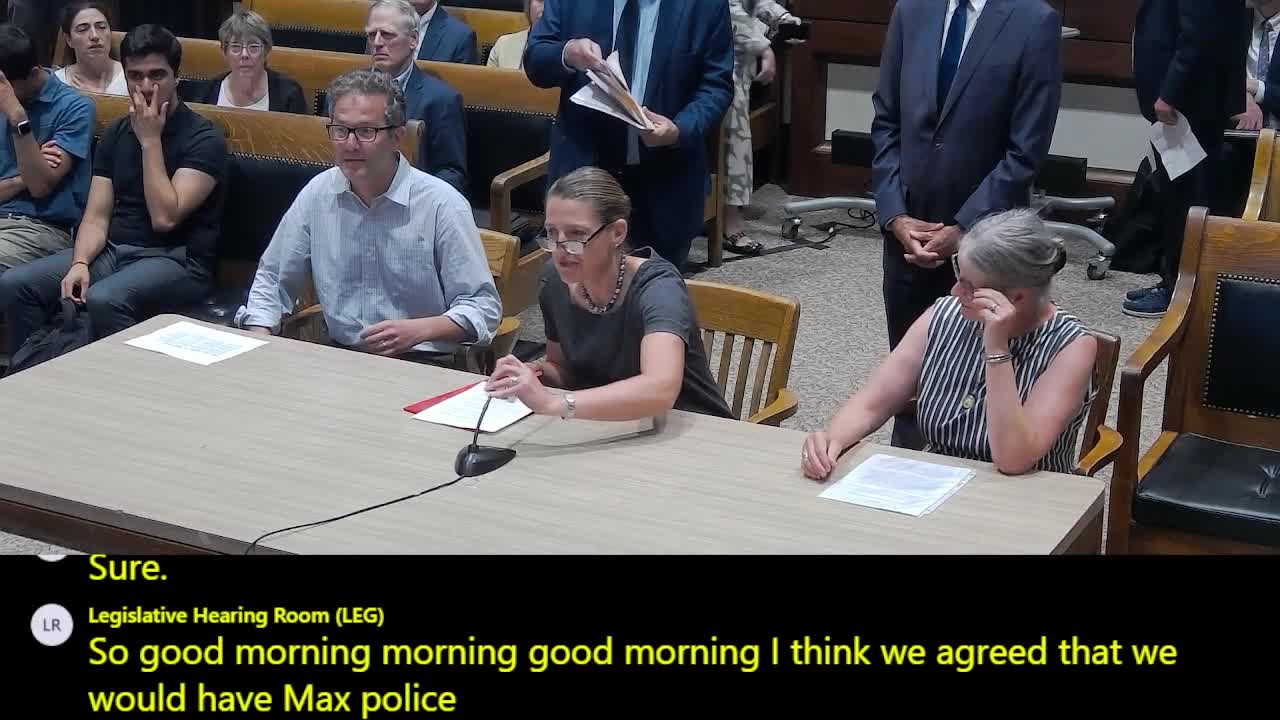
BOSTON — Residents and officials from Belmont described to the Joint Committee on Revenue how a single privately owned golf course in their 4.7‑square‑mile town receives a substantial property tax reduction under Chapter 61(b), and urged lawmakers to approve a local option to remove that break so the town can increase revenue for schools, public safety and public works.
Max Police, a Belmont resident who led the citizen petition, explained that Chapter 61(b) was originally created in the 1970s to encourage conservation, but he and others told the committee the Country Club Golf Course occupies 134 acres of prime real estate and is the only property in Belmont claiming the 61(b) exclusion. Elizabeth Dionne, a Belmont select‑board member, said Belmont relies heavily on residential property taxes (roughly 95/5 residential/commercial split) and recently approved large overrides to pay for a new middle/high school, library and recreation facilities; she said the town cannot force the privately owned club to develop but can ask it to “pay its fair share.”
Testimony described the club’s current effective tax payment as 25% of the assessed amount because of the Chapter 61(b) treatment; town officials said the tax benefit reduces annual town revenue by roughly $400,000 in the town’s estimates, and that full taxation of the club could generate roughly $600,000 in annual property tax receipts for local services.
Representative and senator colleagues and municipal officials said they tried to engage the country club directly but found it difficult to get agreement. Committee members asked whether other nonprofits and institutions in town (schools, Habitat, religious entities) claimed similar exemptions; witnesses said four of Belmont’s five largest property owners are nonprofits that do not pay property taxes and that the town also hosts a farm that is exempt under Chapter 61A.
Belmont asked the committee to report H.3970 favorably; no vote was taken.