Get Full Government Meeting Transcripts, Videos, & Alerts Forever!
Get email alerts on the Teacher Retirement topic
No spam. Unsubscribe anytime.
Committee hears widespread testimony supporting legislative fix to 2001 ‘Retirement Plus’ rollout for long‑service teachers
Summary
Hundreds of educators, union leaders and several legislators urged the Joint Committee on Public Service to report favorably on House Bill 2932 and Senate Bill 1884, which would give a one‑time opportunity for teachers hired before July 1, 2001 to opt into the state Retirement Plus plan by making buyback payments.
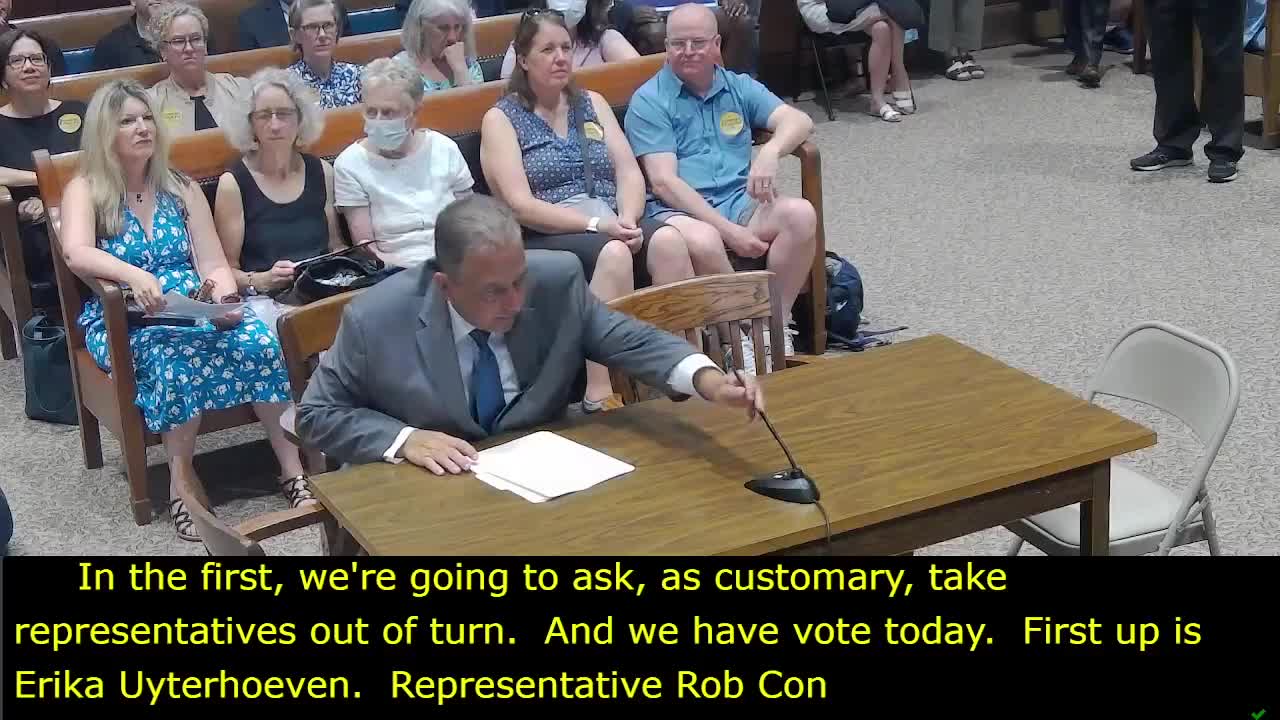
State lawmakers on the Joint Committee on Public Service heard more than two hours of testimony July 16 from educators, union leaders and legislators urging a legislative fix to the flawed 2001 rollout of the Retirement Plus teacher retirement option.
Representative Rob Consalvo (D‑14th Suffolk) opened the teacher testimony, asking the committee to “favorably report and support” House Bill 2932, a petition he and House leadership filed to provide affected teachers a one‑time opportunity to buy into Retirement Plus. Consalvo said supporters included the Boston Teachers Union and AFT Massachusetts and noted the House has passed related language in prior sessions.
The bills’ backers said the initial Retirement Plus enrollment window in February–July 2001 was administratively chaotic and excluded many veteran educators through no fault of their own. Chrissy Lynch, president of the Massachusetts AFL‑CIO, told the committee, “Through no fault of their own, thousands of hardworking educators unfairly fell through the cracks.” Jessica Tang, president of AFT Massachusetts, called the program’s rollout “flawed and inconsistent at best.”
Union leaders and dozens of individual teachers described recurring problems: mailed election packets that were not received, confusing or misleading communications, human resources offices that relied on pay‑stub language and told teachers they were enrolled when they were not, and jammed fax lines during the 2001 window. Eric Berg, president of the Boston Teachers Union, summarized the remedy sought: a one‑time opt‑in that would require participating teachers to make the same buyback payments—plus interest—as others who enrolled, and to pay an ongoing contribution rate of 11% going forward.
Several teachers described personal consequences. Amy Piacitelli, a 30‑year Boston Public Schools teacher, said a payroll error that showed an 11% deduction on her paystub misled her; the payroll mistake was later corrected and cost her four years of creditable service. John Jacoby, a 35‑year teacher from North Adams, told the committee he discovered only in 2021 that MTRS records showed no returned election form in 2001 and that appeals were unsuccessful.
Supporters cited numbers offered by unions and retirement advocates: the Massachusetts Teachers Association said roughly 6,500 members may be affected; MTRS material cited during testimony noted that about 40% of election packets were not returned in 2001. Witnesses said lost opportunity forced many seasoned educators to plan for three to five additional years of work to reach the maximum benefit, in some cases increasing retirement service from about 35 years to 39.
Senator Liz Miranda (D‑2nd Suffolk), a cosponsor of Senate Bill 1884, framed the measure as corrective, not a giveaway: “This bill is not a handout to teachers. It would require back payment for those who originally missed out in opting in,” she said, urging a favorable report.
Committee members did not take a vote at the hearing. Multiple union representatives said they had worked with the Massachusetts Teachers Retirement Board and other stakeholders on technical language and expected a legislative solution that would permit buybacks and equalize treatment for teachers hired before July 1, 2001.
Supporters asked the committee to move the bills quickly so affected educators could plan retirements and school districts could realize projected savings tied to earlier retirements. No formal amendments or formal motions were made during the hearing.
The committee accepted written testimony through the posted deadline; supporters said they will continue to press for a favorable report and legislative action this session.