Get Full Government Meeting Transcripts, Videos, & Alerts Forever!
Get email alerts on the Vehicle Noise Regulation topic
No spam. Unsubscribe anytime.
Noise Advocates Back Bill Regulating Modified Exhausts; Auto Clubs Warn of Unintended Consequences
Summary
Supporters of S1716, including Quiet Communities and public health scientists, urged the committee to regulate modified vehicle exhaust systems because of chronic noise harms; the Massachusetts Association of Automobile Clubs opposed the bill, saying it may be unenforceable and could affect historic or specialty vehicles.
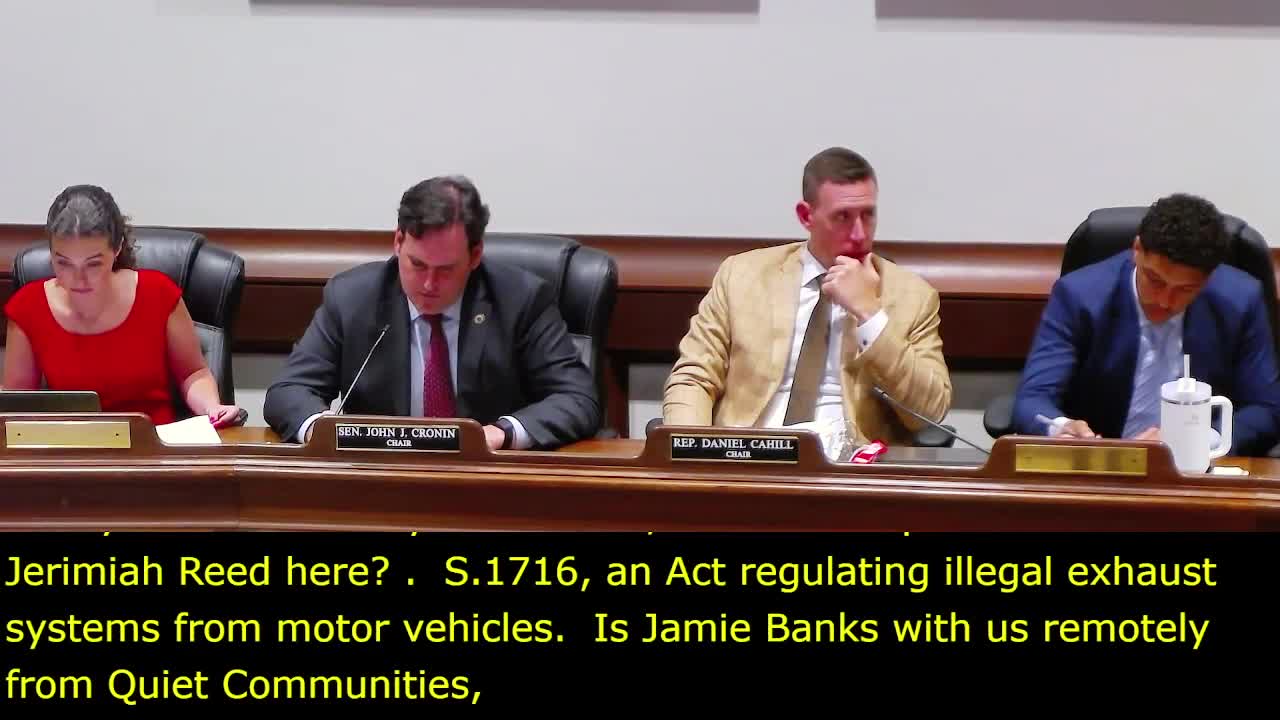
Witnesses for and against Senate Bill 1716 testified about modified vehicle exhaust noise before the Joint Committee on Public Safety and Homeland Security. Proponents described chronic vehicle noise as a public‑health hazard; opponents said the bill as written would be difficult to enforce and could unintentionally restrict historic and specialty vehicles.
Jamie Banks, founder and president of Quiet Communities, described vehicle noise with strong low‑frequency components that travels long distances and contributes to chronic stress, sleep disruption and long‑term health risks, including cardiovascular disease and sleep‑related harms. Banks, a public‑health scientist and chair of the American Public Health Association noise and health committee, pointed to studies linking chronic noise to heart disease, stroke, sleep disruption and other health outcomes and urged the legislature to enact S1716.
William Ellis, president of the Massachusetts Association of Automobile Clubs, testified in opposition. Ellis said many historic or low-production vehicles have no original-equipment manufacturer (OEM) replacement parts; under the bill as he read it those cars could effectively be banned. He said different federal and neighboring-state decibel standards make enforcement complicated and suggested the Department of Motor Vehicles should lead regulatory work and that the bill be revised to exclude certain vehicles.
No committee action or vote was recorded during the hearing; members recessed for roll call following testimony.