Get Full Government Meeting Transcripts, Videos, & Alerts Forever!
Get email alerts on the Accessibility Housing And Employment topic
No spam. Unsubscribe anytime.
Disability, housing and advocacy groups urge passage of Senate Bill 17-33 to expand accessibility in work and housing
Summary
Multiple disability advocates, service providers, and individuals testified in support of S17-33, which would expand the Architectural Access Board's authority to require adaptable and accessible workspaces and housing conversions to improve employment access and reduce wait times for accessible units.
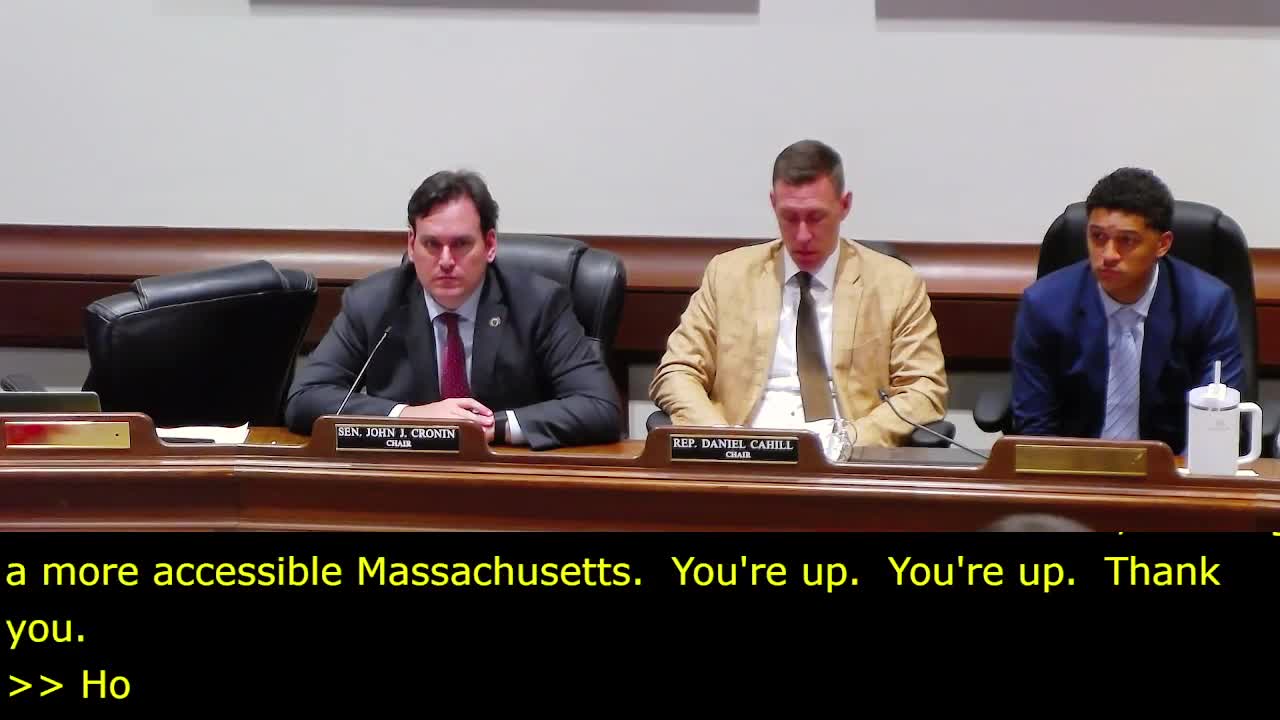
Advocates, independent living centers and people with disabilities told the Joint Committee on Public Safety and Homeland Security that Senate Bill 17-33, "An Act Building a More Accessible Massachusetts," should be reported favorably because it would expand requirements and enforcement for workplace accessibility and adaptable housing units.
Chris Ho, testifying in favor, said the bill would give the Architectural Access Board (AAB) permitting‑stage authority to require accessibility in employee areas and to allow variances where needed; he argued that making spaces accessible at initial construction or gut renovation is far cheaper than retrofitting later. Benji Kemper of the Center for Living and Working recounted long wait times for accessible public housing — testimony cited an estimate that a nonelderly applicant could wait decades for an accessible unit — and said adaptable units would free fully accessible units for those who need them most. Joe Balliol of Easterseals Massachusetts described employment barriers and the consequences for youth with disabilities who lose early work opportunities because employers' spaces are not accessible.
Individuals with lived experience described daily barriers at hospitals, workplaces and apartments that are not accessible, including inaccessible doors and the need to rely on freight elevators or co‑workers to reach workspaces. Michael Kennedy, Sam LaRue and others urged closing loopholes that permit noncompliant conversions of pre‑1991 buildings into housing without adaptable units. Testimony emphasized that better enforcement of accessibility at the permitting stage would help people with disabilities remain in their communities and reduce institutionalization or homelessness.
No committee action was taken at the hearing; witnesses asked the committee to advance S17-33 so the AAB can address employee-area and housing-conversion gaps in accessibility law.