Get Full Government Meeting Transcripts, Videos, & Alerts Forever!
Get email alerts on the Fire Code State Properties topic
No spam. Unsubscribe anytime.
Fire officials and lawmakers call to close loophole exempting state-owned properties from local fire-code enforcement
Summary
Fire chiefs and Boston Fire Department officials told the committee that local fire departments lack authority to enforce fire-code standards on many state-owned buildings and urged legislation to allow local enforcement to ensure life-safety systems are maintained.
Representative Rob Consalvo (recorded as Rob Consabo in the transcript) told the joint committee that House Bill 2577 would close a longstanding loophole that leaves state-owned properties outside local fire-code enforcement. He said the change would affect cities and towns across the commonwealth and particularly matters in Boston because of the number of state-owned high-rise buildings there.
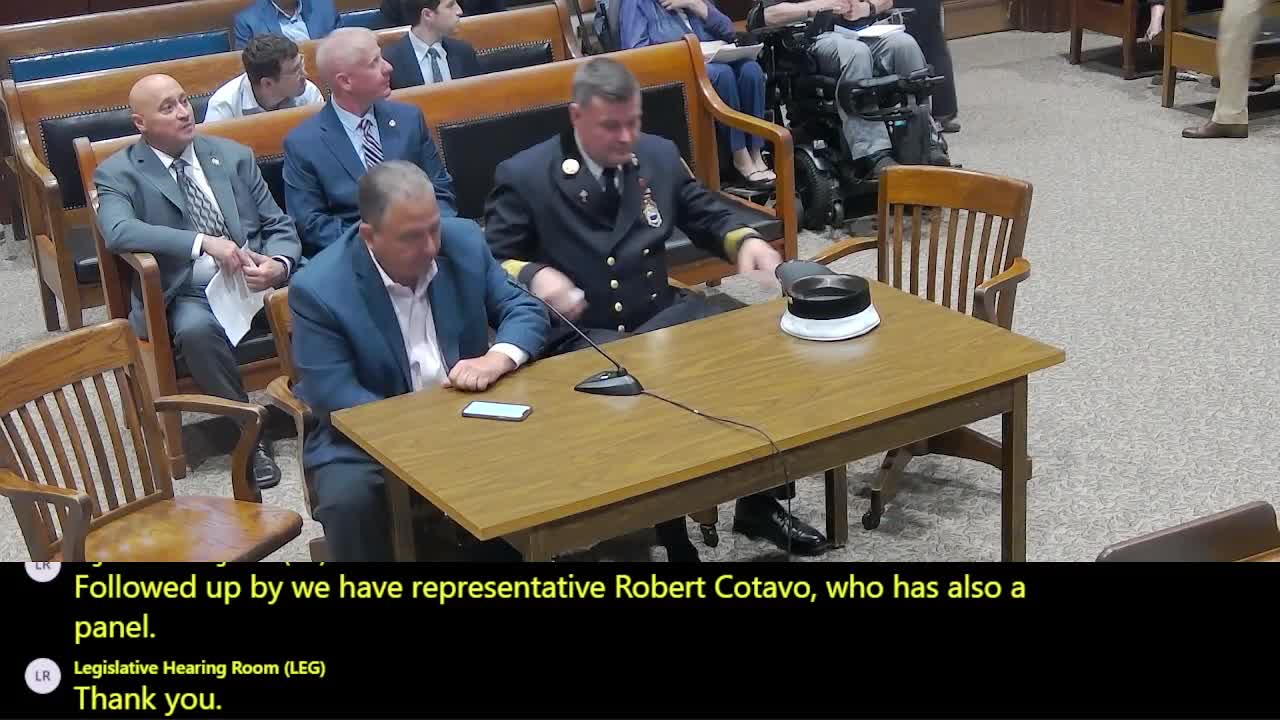
Pat Ellis, chief of operations and former fire marshal for the Boston Fire Department, testified that local fire officials routinely find life-safety systems in disrepair on state properties but lack the authority to compel repairs. "When the general public learns of this... they find it difficult to believe and don't understand how or why the state fire code wouldn't apply to state properties," Ellis said. He told the committee local officials provide plan reviews for state projects as a courtesy but have no permit authority and that recommendations can be accepted or ignored by the state agency in charge.
Ellis said state-owned facilities vary widely in age and hazard profile, from modern high-rises to nineteenth-century buildings, and described instances in which systems—sprinklers and standpipes—had failed, referring to an example at a state college where standpipes and every sprinkler in the building froze while occupied by students.
Representatives of the Fire Chiefs Association of Massachusetts and the Professional Firefighters of Massachusetts supported related fire-safety bills discussed at the hearing, including legislation to create a statewide coordination structure for technical rescue teams and measures to allow local adoption of automatic sprinkler requirements and an appeals path for sprinkler decisions. Chief Patrick Purcell, president of the Fire Chiefs Association, said the legislation would mirror the state's HAZMAT system and standardize training, equipment, and funding for technical rescue resources.
The committee took testimony on House Bill 2577 and several related fire-safety bills; no committee votes on these bills were recorded at the hearing.