Get Full Government Meeting Transcripts, Videos, & Alerts Forever!
Get email alerts on the Adaptable Housing topic
No spam. Unsubscribe anytime.
Committee hears broad support for bill to expand adaptable housing for seniors and people with disabilities
Summary
At a joint public safety and homeland security hearing, lawmakers and disability advocates urged passage of House Bill 2569 to expand the Architectural Access Board's authority so older buildings and employee-only areas become adaptable and more accessible to seniors and people with disabilities.
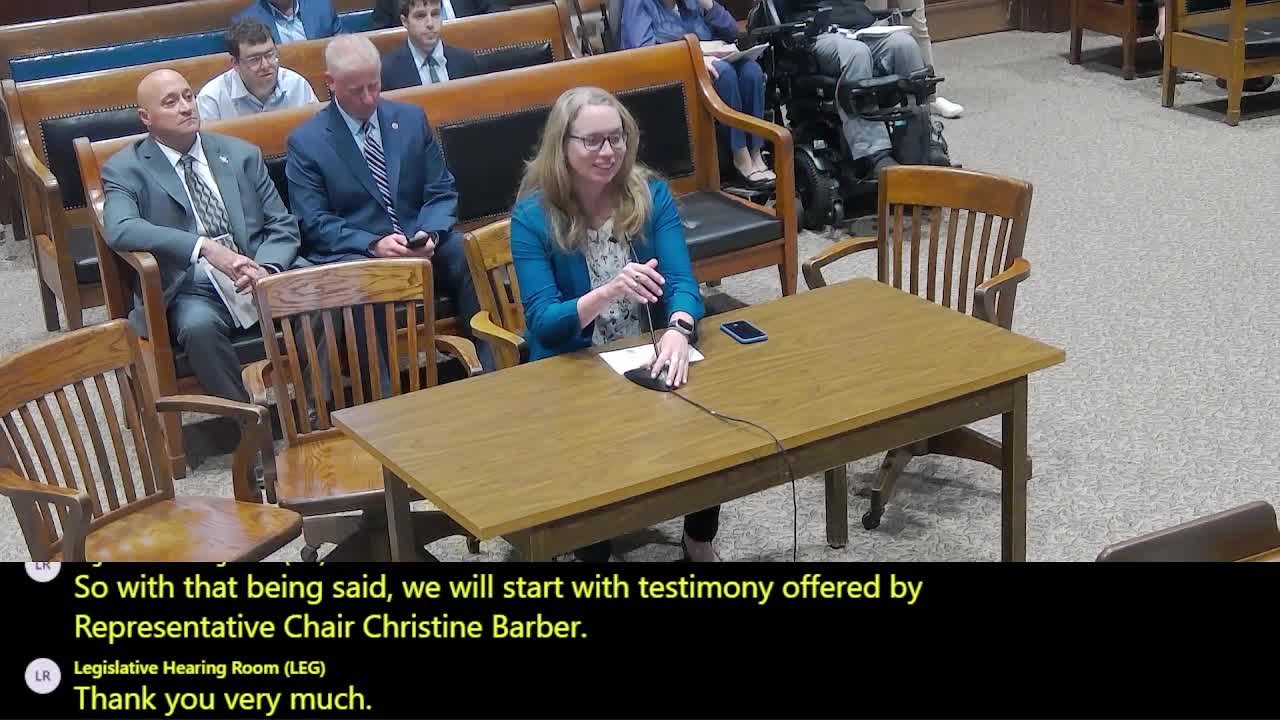
Representative Christine Barber, sponsor of House Bill 2569, told the Joint Committee on Public Safety and Homeland Security that her bill would expand adaptable housing for people with disabilities and seniors by closing gaps in the Massachusetts building code and Architectural Access Board jurisdiction.
"I am here in support of my bill, house 25 69, an act expanding adaptable housing for people with disabilities and seniors. This comes before this committee because it is about the architectural access board," Barber said. She told the committee the bill would require accessibility and adaptability when older buildings are rehabilitated and would extend adaptable requirements to employee areas in workplaces.
Advocates and disability-rights organizations gave detailed testimony on why advocates say the change is needed. R. Fineman, director of advocacy at the Disability Policy Consortium, described the scale of need: "Nearly a quarter of disabled people in Massachusetts live in poverty... and nearly half, 44 percent of disabled adults in Massachusetts are, burdened by housing costs versus 26 percent of non disabled adults." He said accessible and adaptable units are scarce and take years to become available.
Multiple speakers said making units adaptable is often inexpensive during rehabilitation. Amber Patel, a council member with the Massachusetts Developmental Disabilities Council and a lifelong wheelchair user, described how inaccessible housing affected her daily life: "Being robbed of my independence in this way is a strain on my family and on my mental health." Joshua Gladstone of the Massachusetts Developmental Disability Council said the association’s survey work found affordable and accessible housing was the top priority for respondents.
Carol Steinberg, a longtime member of the Massachusetts Architectural Access Board, testified that the board has two jurisdictional gaps the bill would fix: buildings converted to housing from older structures and employee-only areas that currently fall outside the board’s purview. Steinberg noted the board’s origin in 1968 and urged passage so jurisdictions cannot exclude employees or converted older buildings from accessibility requirements.
Independent-living organizations and advocates described individual cases of people who had to live in nursing homes or inaccessible units for lack of affordable, adaptable housing. Benji Kemper of the Center for Living and Working recounted clients who could not bathe or access basic parts of their apartments because doorways and fixtures were not adaptable.
The committee took testimony but recorded no vote on the bill during the hearing.
Ending: Supporters urged lawmakers to approve the bill this session as a step toward expanding affordable, adaptable housing across the commonwealth.