Get Full Government Meeting Transcripts, Videos, & Alerts Forever!
Get email alerts on the Synthetic Drugs In Corrections topic
No spam. Unsubscribe anytime.
Committee Hears Bill to Treat Synthetic Drugs in Jails as Felonies; Witnesses Cite Health, Safety Risks
Summary
Senate Bill 1753 would classify possession, distribution or use of class C synthetic drugs inside correctional facilities as felony offenses carrying a minimum 2½-year sentence. Questioners and witnesses highlighted smuggling via mail, health risks to staff from secondhand exposure, and enforcement challenges.
A bill that would strengthen penalties for possession, distribution and use of synthetic (class C) drugs inside correctional facilities was presented to the Joint Committee on Public Safety and Homeland Security. Witnesses urged the committee to favorably report Senate Bill 1753, saying current law does not explicitly prohibit these substances in jails and prisons and that a statutory fix is necessary.
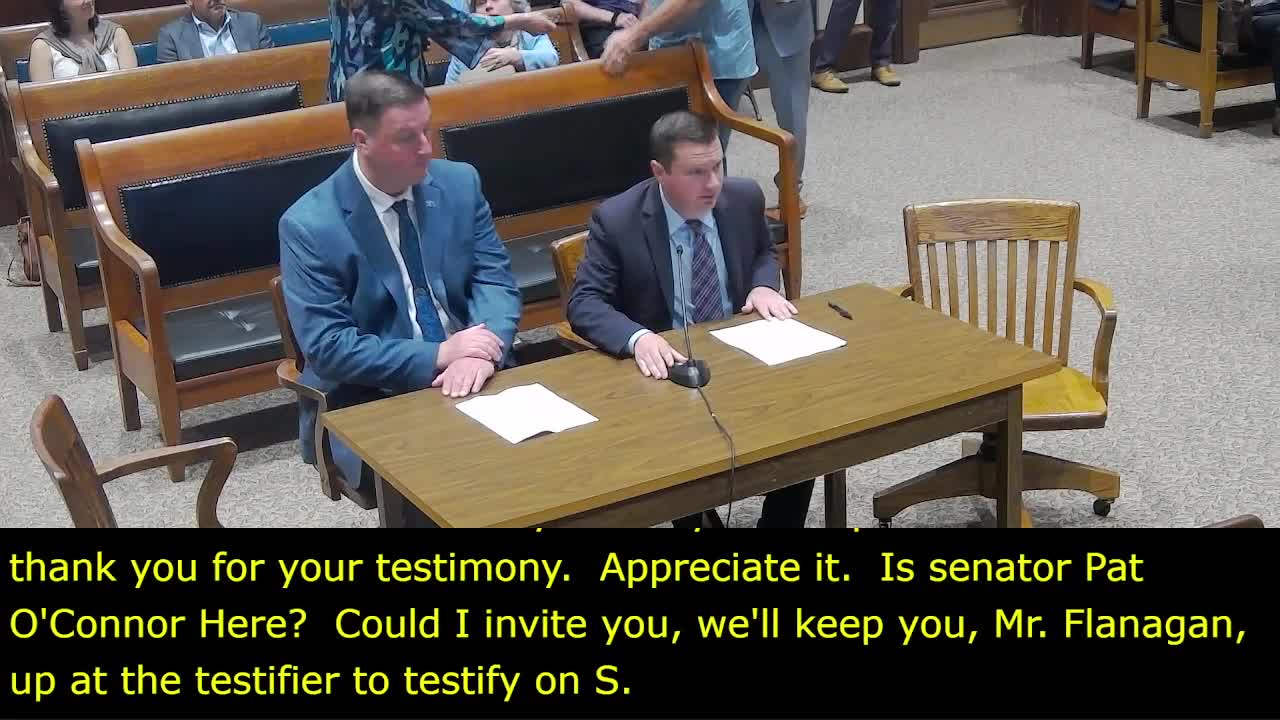
A senator testifying in support said the bill would make distribution, possession and use of class C synthetic drugs in correctional facilities a felony punishable by a minimum 2½‑year term, which could run consecutively or concurrently with existing sentences. Kevin Flanagan of the Massachusetts Correction Officers Federated Union said synthetic drugs such as K2 have reached “crisis level” in jails and prisons, describing erratic inmate behavior, apparent loss of consciousness among staff exposed secondhand, and difficulty in detection because substances can be applied to paper and other vectors.
Witnesses described that synthetic compounds are often smuggled through the mail — a sheet of paper can be treated with a water‑soluble synthetic and passed among inmates — and said photocopying mail has been used as a partial countermeasure. Flanagan said staff have required emergency medical response, including hospitalization, after exposure; he urged the committee to give district attorneys authority to prosecute these offenses and to release the bill for a full floor vote.
No formal action was taken at this hearing. Committee members thanked witnesses and asked procedural questions such as whether the bill had a House companion; witnesses said it did not.