Get Full Government Meeting Transcripts, Videos, & Alerts Forever!
Get email alerts on the Lung Cancer Screening topic
No spam. Unsubscribe anytime.
Doctors and advocates back bill requiring lung cancer screening notices at tobacco retailers
Summary
Clinicians, researchers and patient advocates urged the Joint Committee on Public Health to approve S 1554, which would require notices about low-dose CT lung screening and the state quit line at tobacco points of sale, arguing screening is underused and early detection saves lives.
Clinicians, researchers and patient advocates urged the Joint Committee on Public Health to approve Senate Bill 15-54, a measure that would require tobacco retailers to post information at point-of-sale about lung cancer screening and the state quit line.
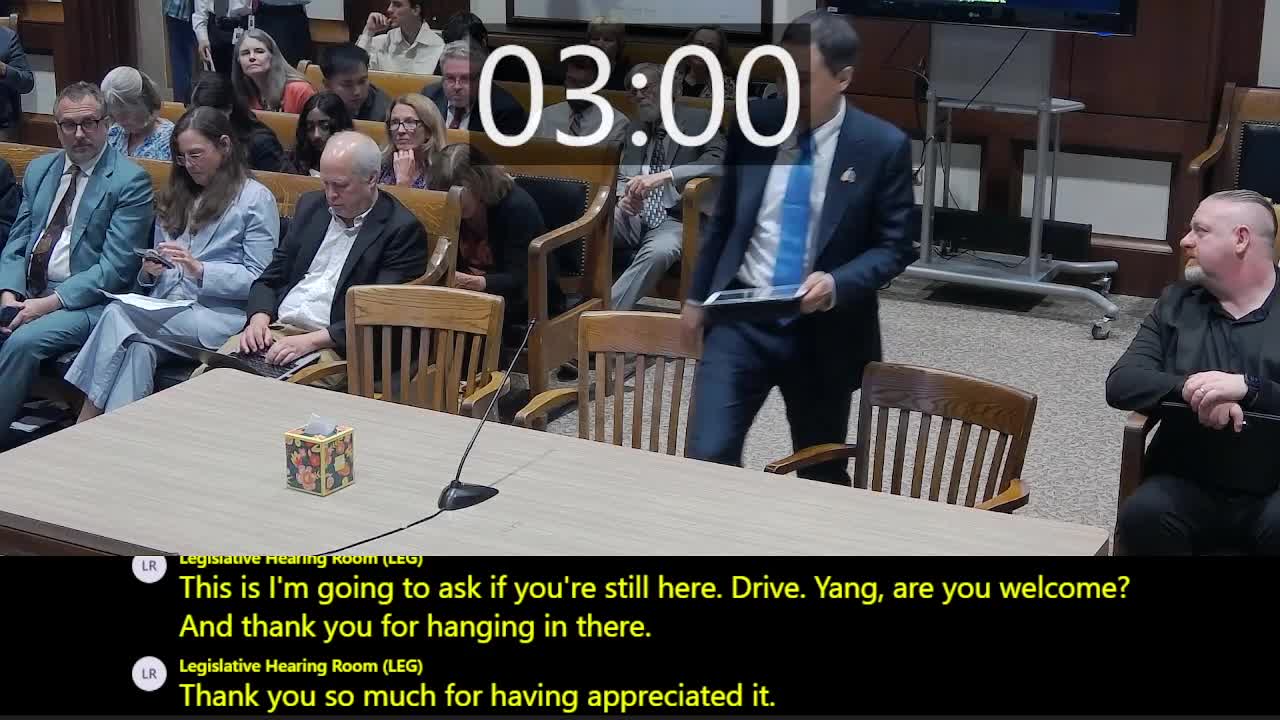
"Only 24 percent of eligible residents in Mass are screened for lung cancer every year," lung surgeon Dr. Jeff Yang told the committee. "Adding a notice about lung cancer screening is a low-cost addition that would reach millions of high-risk citizens in the most underserved communities and undoubtedly save thousands of lives."
The medical witnesses — thoracic surgeons, medical oncologists and screening advocates — emphasized screeninga painless low-dose CT scan that takes minutesreduces lung cancer mortality by 20 to 33 percent in large trials and produces high cure rates when cancers are detected early. Dr. Jacob Sands, a thoracic medical oncologist at Dana-Farber, said many patients seek care only after incurable late-stage disease has developed: "I see patients every clinic day...with metastatic lung cancer that's no longer considered curable. These patients were never offered lung screening and know nothing about it despite qualifying."
Patient advocates and families added practical arguments: signage and quitline referrals reach high-risk people at the point of purchase and can increase screening awareness and quit attempts. The American Lung Cancer Screening Initiative and clinicians presented cost analyses suggesting earlier detection lowers overall health-care spending by preventing expensive late-stage care.
What happened next: committee members took testimony and proponents asked for a favorable report. No committee vote was recorded at the hearing.
Ending: Doctors and survivor-advocates asked the committee to advance S 15-54 as a simple, low-cost public-health step to increase early detection and save lives.