Get Full Government Meeting Transcripts, Videos, & Alerts Forever!
Get email alerts on the Supplement Restrictions Minors topic
No spam. Unsubscribe anytime.
Physicians and advocates urge ban on sales of diet‑pills and muscle‑building supplements to minors; industry warns of preemption concerns
Summary
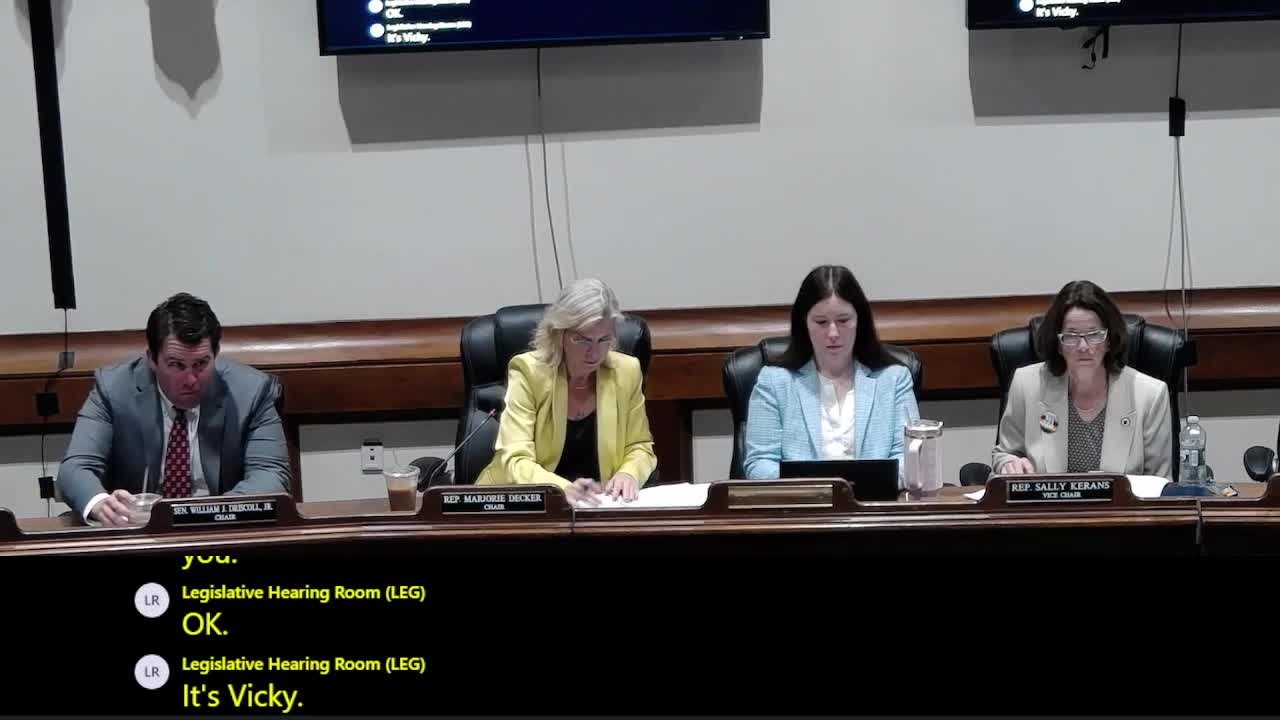
The Joint Committee on Public Health heard competing testimony on proposals to prohibit sales of over‑the‑counter diet pills and muscle‑building supplements to minors, with physicians citing ER data and industry raising preemption concerns under federal law.
The Joint Committee on Public Health heard competing testimony over bills that would restrict sales of over‑the‑counter diet pills and muscle‑building supplements to minors.
Medical testimony and data: Dr. Brynn Austin, a professor of pediatrics and public‑health researcher, told the committee that rigorous studies show these products can be adulterated with prescription drugs, steroids and other dangerous chemicals and that they are associated with serious harms. “The CDC estimates that 23,000 Americans are sent to emergency rooms every year due to supplements with fully a quarter due to the weight loss category alone,” Dr. Austin said, and added that youth using weight‑loss or muscle‑building supplements have higher rates of severe medical harm in federal adverse‑events data.
Clinicians and youth: Pediatricians and eating‑disorder treatment providers at the hearing said the American Academy of Pediatrics does not recommend adolescent use of these products; witnesses described social‑media pressure on teens to use supplements to meet unrealistic body ideals. Young witnesses described personal experience with deceptive marketing and worsening body image after using OTC products.
Industry testimony: The Council for Responsible Nutrition and the Natural Products Association warned the committee that broad state‑level restrictions would conflict with the federal Dietary Supplement Health and Education Act (DSHEA), arguing that certain ingredients are common food components and that DSHEA preempts non‑identical state labeling or ingredient rules. Industry representatives also warned of retail compliance challenges and potential legal challenges on preemption and interstate‑commerce grounds.
Committee response: Legislators asked clinical witnesses about links between supplements and eating disorders and pressed industry representatives on safety claims and whether any companies use these products therapeutically for eating‑disorder recovery. Industry witnesses rejected that characterization and pointed to federal oversight structures. The committee did not vote; proponents urged pursuit of restrictions to protect minors and asked staff to examine legal and implementation options.