Lifetime Citizen Portal Access — AI Briefings, Alerts & Unlimited Follows
Mass. public hearing draws hours of testimony on removing vaccine religious exemptions and a proposed ‘Community Immunity’ law
Loading...
Summary
The Joint Committee on Public Health heard hours of testimony May 29 on multiple bills that would change Massachusetts’ school‑immunization rules, including measures to eliminate nonmedical exemptions and a proposal to let minors consent to preventive care.
The Joint Committee on Public Health heard hours of testimony May 29 on several bills that would change Massachusetts’ school‑immunization rules, including House Bill 2554 and Senate Bill 1557 to eliminate nonmedical exemptions, Senate Bill 1618 (the Community Immunity Act) to centralize exemption management and allow minors to consent to preventive care, and related proposals. Supporters said the measures are needed to shore up gaps in school reporting and protect medically vulnerable residents. Opponents said the bills would strip religious and parental rights, force some families out of public school, and risk widening mistrust of public health.
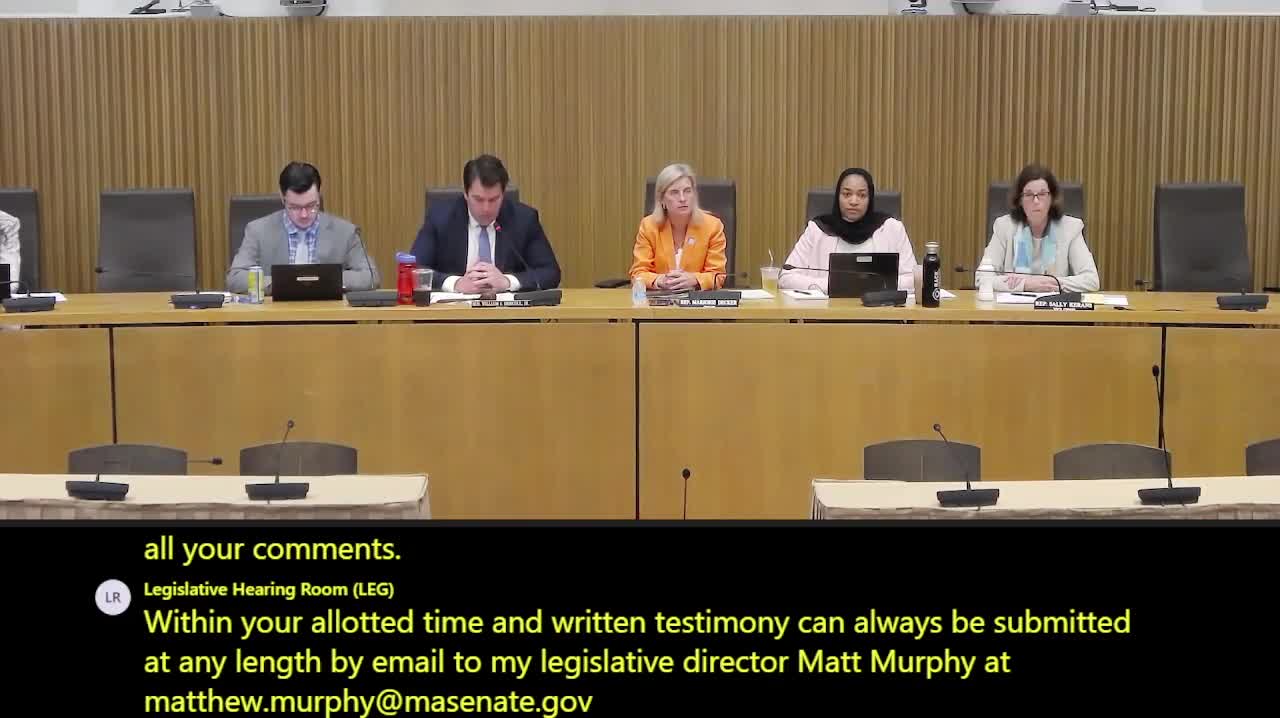
The hearing, convened by Senate Co‑Chair William Driscoll and House Co‑Chair Representative Decker, drew dozens of speakers representing physicians’ groups, advocacy coalitions and many parents. “Every year that passes without this public health infrastructure bill becoming law is a gross abdication of our sworn responsibilities to our constituents,” said Senator Rebecca Rausch, sponsor of the Community Immunity Act, arguing the state’s school vaccination dataset is incomplete and that localized gaps leave pockets of students exposed.
Why it matters: Proponents pointed to county and school‑level data showing some kindergarten classrooms fall below the 95 percent MMR threshold widely cited to prevent measles transmission and to recent measles outbreaks nationally. They told the committee that removing nonmedical exemptions or centralizing exemption management would raise vaccine coverage and protect infants and immunocompromised people who cannot be vaccinated. Opponents argued the problem is chiefly a “gap” population of students with incomplete records, not families asserting sincere religious objections, and warned that removing the exemption would exclude children from school, harm special‑needs students, and risk constitutional challenges.
What proponents said
- Senator Rausch and several pediatricians described local clusters of under‑immunized students and incomplete reporting to the Department of Public Health (DPH). “These are statutory infrastructure problems, and they require a statutory infrastructure solution,” Rausch told the committee, referencing maps included in her packet that she said show hundreds of schools without reported data.
- Pediatricians and infectious‑disease clinicians for medical societies and groups including the Massachusetts chapter of the American Academy of Pediatrics, March of Dimes and Massachusetts Families for Vaccines urged eliminating nonmedical exemptions. Dr. Marybeth Miyodo, a pediatrician and former chapter president of the AAP‑Massachusetts, told the committee she had ‘‘held [an infant’s] hand as he died’’ from pertussis and said rising exemption rates in some schools were creating risk for children who cannot be protected by vaccination.
- Public‑health researchers and economists testified that removing or tightening nonmedical exemptions has raised vaccine coverage in other states and that centralizing reporting and exemption management at DPH would standardize implementation across districts, easing the burden on school staff who are not public‑health specialists.
What opponents said
- Dozens of parents, homeschooling families, clergy and some clinicians opposed removal of the religious exemption and objected to provisions in the Community Immunity Act that would let minors consent to preventive care without parental notice. Speakers framed their positions as matters of conscience, bodily autonomy and parental authority and described a range of personal and family medical experiences they said justify an exemption.
- Parents and advocates also warned of downstream effects: families who cannot comply, they said, would remove children from public school or relocate out of state; special‑needs students could lose services; and modest increases in reported compliance could mask displacement of unvaccinated children from the public system.
Legal and process issues
- Witnesses on both sides cited recent court decisions and constitutional questions. Several speakers noted the Massachusetts Supreme Judicial Court’s recent opinion in Care and Protection of Eve, and legal counsel warned the committee that removing religious exemptions could trigger high‑stakes litigation under state constitutional protections of religious exercise and the right to education.
- Multiple witnesses — including school nurses and parents — told committee members that the largest data problem is the “gap” (students who lack complete records), not the small number of students with religious exemptions. Several urged lawmakers to prioritize improving reporting and outreach rather than removing the exemption.
Selected data and examples cited at the hearing
- Senator Rausch: said the statewide DPH dataset was only about 69 percent complete and pointed to maps in her packet showing schools with no reported immunization data.
- Pediatric testimony: Dr. Miyodo and others cited county‑ and kindergarten‑level drops in MMR coverage and singled out a set of schools with MMR rates well under 95 percent; one pediatrician said she saw an MMR drop from 100 percent to 88 percent in a single kindergarten over recent years.
- Coalition testimony: advocates for eliminating exemptions noted national measles counts and said recent years have seen outbreaks in multiple states; March of Dimes cited more than 1,000 confirmed U.S. measles cases in 2025 (nationwide figures reported to the committee).
Hearing outcome and next steps
- The session was a public hearing and produced no committee votes or formal actions. Lawmakers on the panel asked technical and legal questions and said they are collecting testimony; multiple speakers asked for follow‑up from legislators. Committee members did not indicate a timetable for a report or floor action.
Speakers quoted in this article are listed in the article’s speaker inventory. The full hearing transcript and written testimony were submitted to the committee and are available through the committee office.
Ending: The debate illustrated a long‑running split in Massachusetts: lawmakers and clinicians who favor stronger, centralized rules to reduce outbreak risk, and families and advocates who warn that removing religious exemptions or allowing minor consent would punish children and pose legal and ethical problems. The committee will consider written materials and legal analyses as it decides whether to move any of the bills out of committee.