Get Full Government Meeting Transcripts, Videos, & Alerts Forever!
Get email alerts on the Primary Care Access topic
No spam. Unsubscribe anytime.
Witnesses urge state to boost primary care spending, create Medicaid GME and payment reforms in H2537
Summary
Supporters including Healthcare for All, Massachusetts Medical Society and community health leaders told the Joint Committee on Public Health that H2537 would raise primary care spending targets, establish a Medicaid graduate medical education program and set a commercial payment floor to shore up community clinics and expand access.
Advocates, physicians and health center leaders told the Joint Committee on Public Health that House Bill 2537 is intended to strengthen primary care by increasing spending, changing payment models and boosting the workforce.
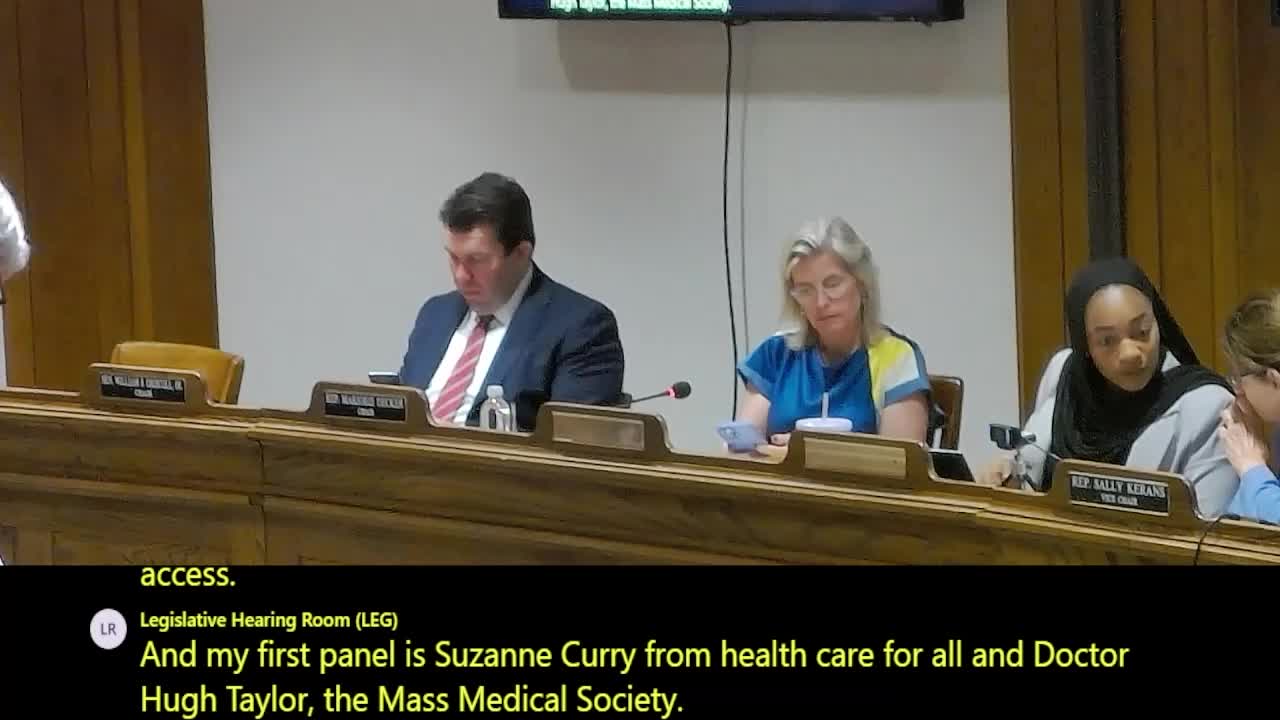
Suzanne Curry, director of policy initiatives at Healthcare for All, said calls to the organization’s helpline spiked with people reporting difficulty finding primary care, and she urged a “multi‑pronged approach” that includes raising the state’s primary care spending target to at least 12 percent within four years, creating a permanent primary care task force, and establishing a Medicaid graduate medical education (GME) program.
Hugh Taylor, a family physician and past president of the Massachusetts Medical Society, said specialists support the bill because a robust primary care system reduces mortality and total costs. “Primary care focuses on preventive medicine and care coordination,” Taylor said, explaining that continuous, comprehensive primary care helps catch conditions earlier.
Residency program leaders and community clinic directors described workforce gains from local training. Dr. Nicholas Wida, program director for the Greater Lawrence Family Medicine Residency, said community‑based residencies retain physicians where they train and called for Medicaid GME reimbursement (the bill would allow Medicaid to reimburse up to 50 percent of residency costs to leverage federal matching funds).
The bill also would set a commercial payment floor so federally qualified health centers are not paid less by commercial insurers than by MassHealth, and would authorize a Medicaid GME program to expand residency spots focused on underserved areas.
No formal committee vote was recorded at the hearing. Witnesses asked the committee for a favorable report to move the bill forward to technical review and drafting.
Ending: Supporters said the package is a suite of policies tested in other states to expand primary care access; committee staff will review details for statutory drafting.