Get Full Government Meeting Transcripts, Videos, & Alerts Forever!
Get email alerts on the Buprenorphine Access topic
No spam. Unsubscribe anytime.
Support grows for bill letting pharmacists initiate and manage buprenorphine in community pharmacies
Summary
Researchers, pharmacists and public‑health experts told the committee that S.1635 would expand access to buprenorphine for opioid use disorder by allowing pharmacists, under collaborative agreements, to initiate and continue treatment in community settings.
Supporters of S.1635 told the Joint Committee on Public Health that authorizing pharmacists to start and maintain patients on buprenorphine—under collaborative practice agreements and with appropriate payment—would expand access to life‑saving treatment.
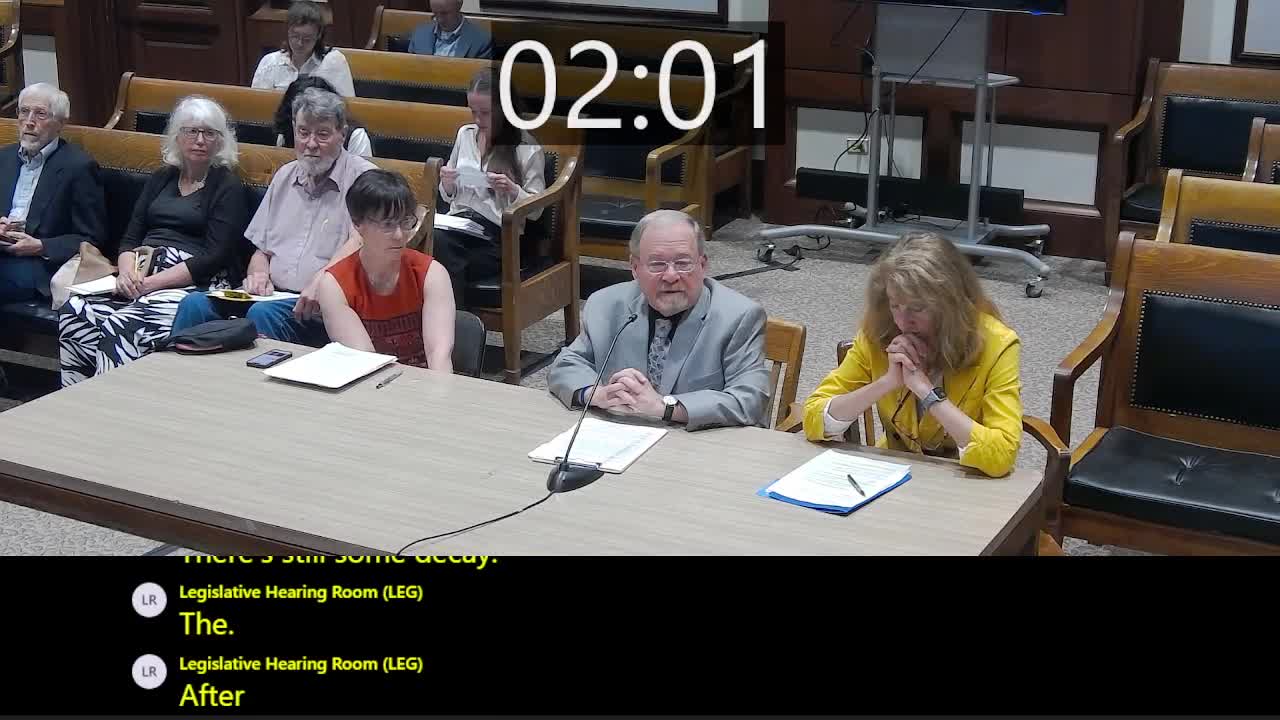
Jeffrey Paul Bratberg, a pharmacist and university faculty member, described pharmacists’ successful public-health roles during COVID‑19 and their existing collaborative practice work in hospital settings. “Let pharmacists prescribe addiction medicine in Massachusetts and enable them to be rewarded for helping defeat this public-health problem,” he said.
Tracy Green, an epidemiologist who said she leads work on opioid and overdose research, described a randomized study published in the New England Journal of Medicine that partnered pharmacists with remote physicians to initiate buprenorphine in community pharmacies. The study started 100 patients in pharmacy-based care; 89 percent of those patients were still in care at 30 days compared with 17 percent in usual care, she said, and testified that pharmacists can help address local drug‑supply risks and provide low‑barrier initiation.
Why it matters: Witnesses argued buprenorphine cuts overdose deaths by at least half when people get access but remain underused; expanding pharmacist authority could reach patients who face stigmas, transportation barriers or instability and could be implemented quickly in community pharmacies.
Payment and oversight: Testimony stressed that sustainable implementation requires payment for pharmacist services and clear collaborative protocols; speakers urged the committee to pair practice authority expansion with reimbursement provisions from companion bills.
Next steps: Supporters asked the committee to report S.1635 favorably and proposed amendments to ensure insurers cover pharmacist-provided services and that training and monitoring structures be in place.