Get Full Government Meeting Transcripts, Videos, & Alerts Forever!
Get email alerts on the Transfer Fee Housing Fund topic
No spam. Unsubscribe anytime.
Cape and island leaders push state option for luxury transfer fee to fund local housing
Summary
Municipal and nonprofit leaders from Cape Cod, Martha’s Vineyard and Nantucket urged the committee to advance a local option luxury real estate transfer fee (S.14‑34) to create locally controlled housing funds for seasonal and expensive markets.
Leaders from Cape Cod, Martha’s Vineyard and Nantucket told the joint committee that a local option luxury real‑estate transfer fee (Senate Bill 14‑34, as discussed) would generate a local, dedicated revenue stream for affordable and attainable housing in island and coastal communities where market prices and seasonal short‑term rentals have sharply depleted year‑round housing.
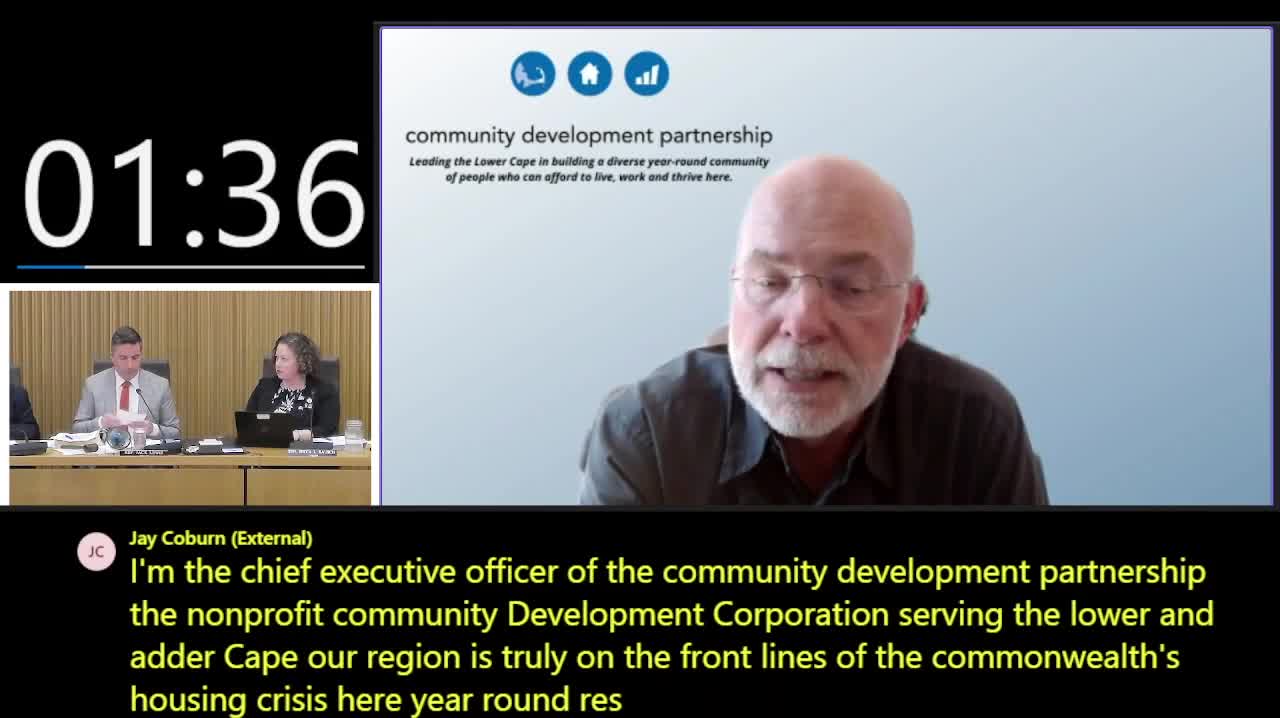
Speakers including the Community Development Partnership (Lower & Outer Cape), Nantucket island officials, the Nantucket Land Bank and the Martha’s Vineyard housing planner said local home prices and second‑home demand have priced out year‑round workers and that local funds would let communities buy and deed‑restrict housing, support rental and ownership programs, and leverage state and federal grants.
On Nantucket, officials said the island’s land‑bank transfer fee model (Chapter 699 of the Acts of 1983) successfully preserved open space and that a housing bank funded through a luxury transfer fee could similarly preserve year‑round housing. Nantucket witnesses estimated large annual transfer‑fee revenues in the tens of millions in strong market years; one witness cited $1.35 billion in 2024 island real‑estate transactions and said a modest half‑percent fee on high‑end transactions would produce substantial local funding.
Cape and island advocates argued the fee would not depress transaction activity, and noted that several Cape towns had filed home‑rule petitions for local fees. Proponents proposed local control with options for exemptions (e.g., primary residence transfers, affordable housing transactions) and a statewide portion remitted to the state’s seasonal communities or housing trust to finance other priorities.
Why it matters: Regional speakers framed the fee as a pragmatic, locally generated revenue tool to address extreme housing price pressure and workforce shortages driven by short‑term rentals and second‑home purchases. They urged the committee to report the bill favorably as an enabling, optional tool for affected communities.
Committee status: The bill was discussed at the hearing with testimony from municipal and nonprofit leaders; no final vote or committee action was recorded in the transcript.