Get Full Government Meeting Transcripts, Videos, & Alerts Forever!
Get email alerts on the Naloxone Trust Fund topic
No spam. Unsubscribe anytime.
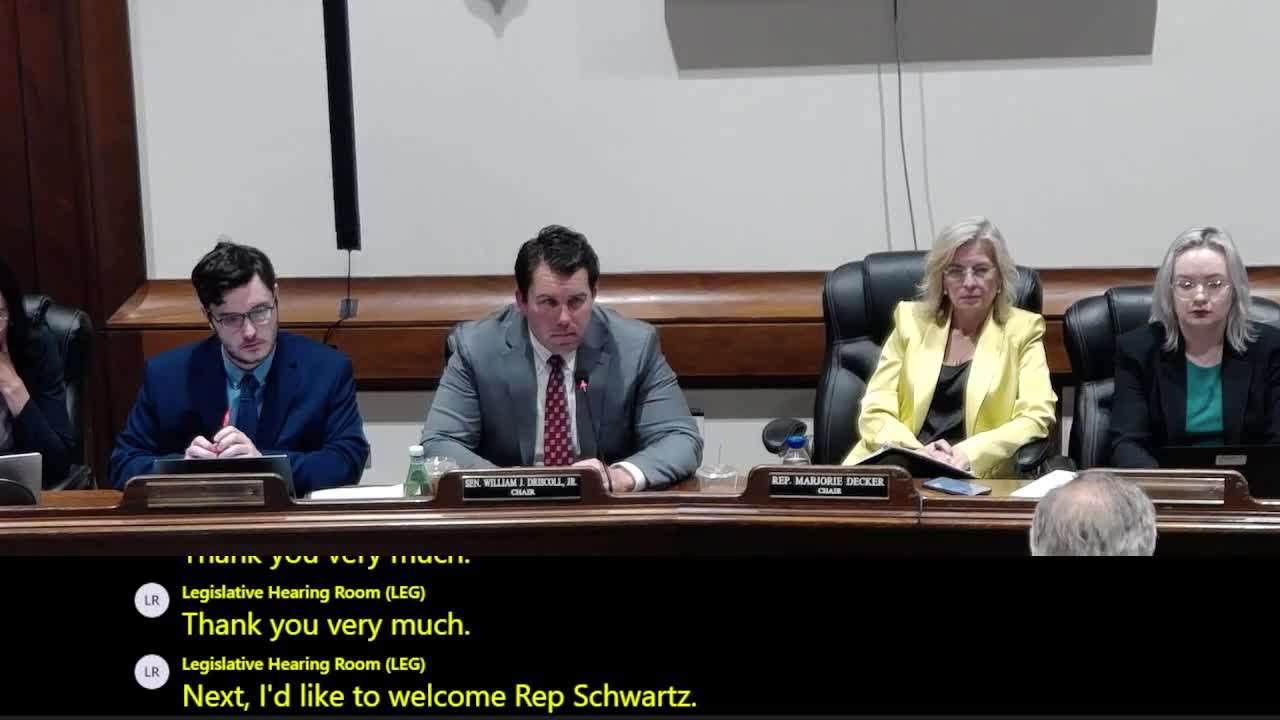
Supporters urge creation of naloxone purchase trust fund to put rescue kits in hospitals and community sites
Summary
Lawmakers heard testimony that a bulk-purchase trust fund would let hospitals and other institutions supply naloxone to at‑risk patients on discharge and to community organizations without billing complications.
At a Joint Committee on Public Health hearing, clinicians and lawmakers urged the creation of a naloxone purchase trust fund (filed as S.1551 and H.2535) to bulk‑buy naloxone and supply hospitals, clinics and community organizations so patients leave care with a rescue kit in hand.
Representative Greg Schwartz (sponsor, H.2535) described emergency-department clinicians’ concerns that prescribing naloxone alone does not ensure patients leave with a dose: patients may not fill prescriptions or lack access to pharmacies. He said a trust fund would “enable them to buy in bulk” and distribute naloxone free to patients and their families.
Dr. Scott Weiner, an emergency physician and addiction specialist at Brigham and Women’s Hospital, told the committee that roughly half of Massachusetts emergency departments currently dispense naloxone at discharge and that billing and reimbursement obstacles keep some hospitals from handing kits to patients. He proposed a model like vaccine bulk‑purchase programs—insurers pay into a fund, the Commonwealth bulk purchases naloxone and DPH dispenses it to hospitals and clinics.
Why it matters: Testimony emphasized that patients leaving hospitals are at particularly high risk of overdose and that giving naloxone on discharge saves lives. Witnesses said written solutions for reimbursement and bulk buying would increase equitable distribution without adding cost to individual hospitals or patients.
Supporters also noted existing community programs distributing naloxone and said hospital distribution is the final high-risk gap. Heather Susie, an emergency nurse, described repeatedly seeing naloxone reverse overdoses and urged the fund as a cost‑effective, equitable step that eliminates patient‑level billing barriers.
Next steps: Sponsors asked the committee to report S.1551/H.2535 favorably. Witnesses and hospital associations offered technical amendments for committee consideration to align the fund with recent legislation and to allow the fund to operate through negotiated bulk purchasing.