Get Full Government Meeting Transcripts, Videos, & Alerts Forever!
Get email alerts on the Rent Stabilization topic
No spam. Unsubscribe anytime.
Lawmakers, tenants and advocates urge committee to let cities adopt rent stabilization
Summary
Hundreds of speakers and dozens of organizations told the Joint Committee on Municipalities and Regional Government that lifting a statewide ban and allowing local rent stabilization (S.1447) would protect renters from steep increases and displacement while allowing exemptions for new construction and small owner-occupied landlords.
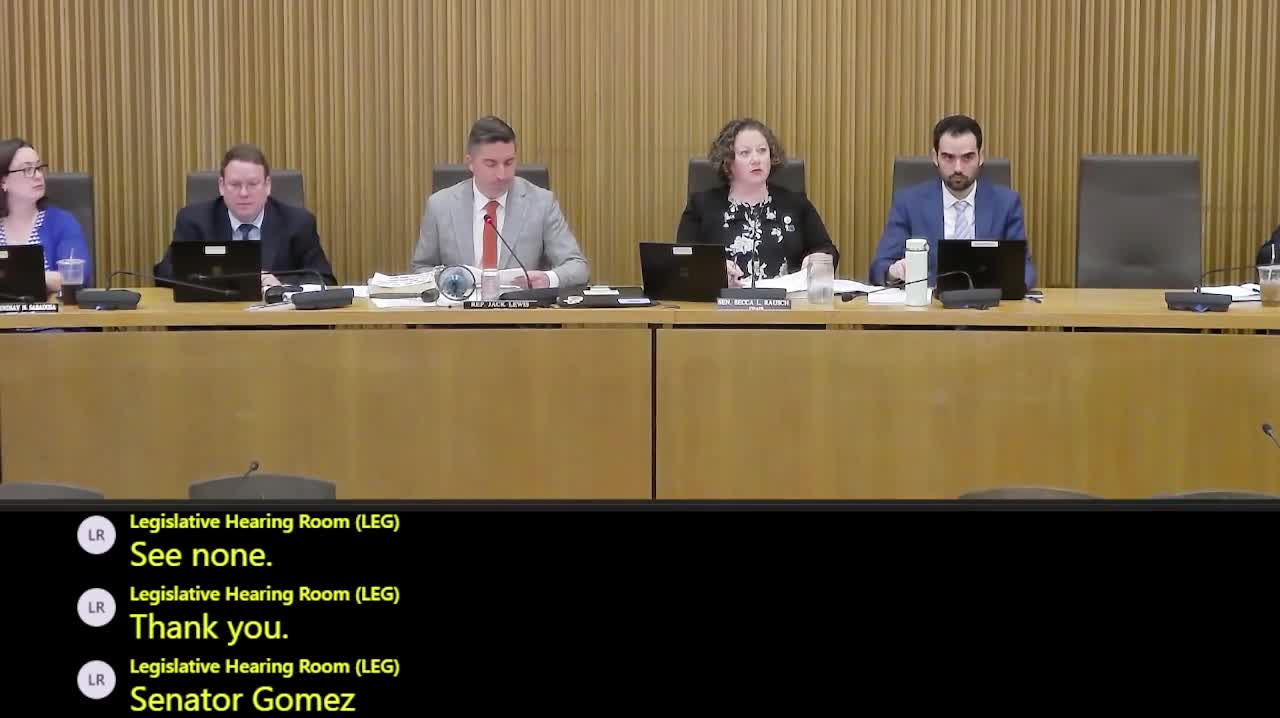
The Joint Committee on Municipalities and Regional Government heard hours of testimony supporting Senate Bill 14-47, which would lift the statewide ban on rent stabilization and allow municipalities to impose local caps on rent increases and just-cause eviction rules.
Proponents said the measure would be voluntary for cities and towns and include exemptions for new construction and small owner-occupied landlords. They argued that the state’s housing emergency — including a reported 55% rise in two‑bedroom rents since 2010 and rapid investor purchases of apartment buildings — is driving displacement, homelessness and community instability.
Advocates from tenant groups, unions and community organizations described tenants’ firsthand experiences: abrupt rent hikes, no-fault evictions after corporate purchases, families forced to move out of school districts and older adults priced out of long-term housing. “This bill is about stability,” said Senator Adam Gomez, identifying himself as the bill’s co‑filed sponsor and representing the Hampden area. He told the committee the measure would “allow cities and towns at their discretion to enact common sense local policies to cap egregious rent increases and prevent no‑fault evictions.”
Tenant leaders and organizers testified that corporate buyers and private‑equity landlords are using acquisition strategies and rapid rent increases that local shelters, voucher programs and emergency rental assistance cannot keep pace with. Springfield tenants, organizers with Springfield No One Leaves, community legal aid lawyers and social service providers described rapid increases and evictions that they say have pushed families into hotels, cars and homelessness.
Unions and public‑health groups also supported the bill, saying housing stability reduces health care costs and helps workers stay in their communities. Kevin Brusso of the Massachusetts AFL‑CIO testified that the statewide ban’s removal would not undermine new housing construction because the bill exempts new developments and owner‑occupied landlords.
Small landlords and owner‑operators also testified — many opposing a statewide change — saying rent stabilization could squeeze margins that sustain maintenance and repair, and that rising insurance, taxes and utilities already pressure small and immigrant landlord‑owners. Several speakers described long eviction processes and legal costs after problem tenants, urging policymakers to couple tenant protections with measures that support small property owners.
Why it matters: Testimony framed S.1447 as an immediate tool local governments could use now, while the state’s longer‑term production and preservation efforts continue. Proponents emphasized it is a locally optional policy intended to limit dramatic, investor‑driven increases; opponents warned of unintended consequences for small landlords and for housing supply if measures are poorly designed.
The hearing recorded extensive public testimony but did not include a committee vote on S.1447. Chairs and members heard requests for further amendments that would keep exemptions for new construction, protect small landlords, and add implementation guardrails so stabilization is locally tailored.
Officials and organizations referenced during testimony included local elected officials, tenant associations, SEIU Local 509, City Life / Vida Urbana, Springfield No One Leaves, CHAPA (the Citizens’ Housing and Planning Association), the Massachusetts AFL‑CIO, community health and homeless services providers, and municipal leaders from Lynn, Somerville, Revere, Nantucket and other communities.
The committee did not record a final action during the hearing; sponsors and advocates asked members to report the bill favorably so municipalities would have the option to adopt stabilizing rules.
Ending: The hearing ended after many hours of testimony with committee chairs thanking speakers and noting written testimony would be accepted. The committee did not announce a date for further action on S.1447 during the session recorded in this transcript.