Get Full Government Meeting Transcripts, Videos, & Alerts Forever!
Get email alerts on the Pans Pandas Study topic
No spam. Unsubscribe anytime.
Families and clinicians press for state study of PANS/PANDAS prevalence in psychiatric settings
Summary
Dozens of parents, clinicians and young people testified that PANS/PANDAS — an autoimmune‑triggered neuropsychiatric syndrome — is often missed and that S.1415 should direct DMH and DESE to study prevalence among children in psychiatric hospitals and therapeutic day schools.
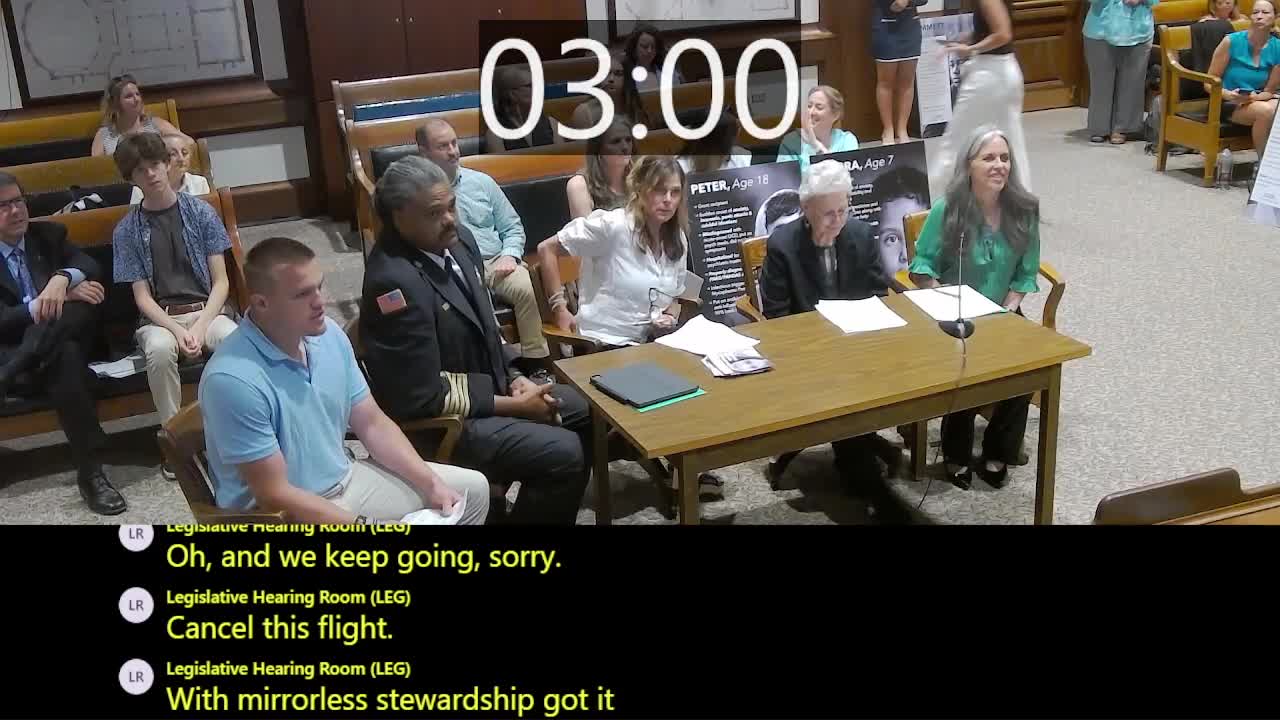
The committee heard extensive testimony on S.1415, a resolve directing the Department of Mental Health, with DESE support, to study and report on the prevalence of PANS/PANDAS among children served in psychiatric hospitals and therapeutic day schools.
Parents, clinicians, educators and people with lived experience described prolonged misdiagnosis, repeated hospitalizations, costly out‑of‑district placements and family trauma when medical causes to abrupt psychiatric symptoms were not considered. Several speakers recounted children who developed sudden‑onset obsessive‑compulsive disorder, severe anxiety, tics, food refusal or suicidal ideation after infections such as strep or Lyme disease, and who improved after immune‑targeted medical treatment.
Margaret Chapman, a psychiatric clinical nurse specialist, said DMH’s eligibility rules have historically excluded children whose psychiatric symptoms are secondary to medical illness and that legislative direction is needed to ensure agencies screen for treatable medical causes. Multiple parents described cases in which children were labeled treatment‑resistant, placed in restrictive settings, or had Child Protective Services reports filed before PANS/PANDAS was identified.
Witnesses urged the committee to authorize an interagency inventory and a five‑year strategic plan to coordinate services, clarify coverage and reduce barriers to care. Supporters argued the study would generate data needed to expedite diagnosis and reduce unnecessary placements and costs. Lawmakers expressed strong sympathy; several members said they would support moving the measure forward and noted the committee has advanced related proposals in prior sessions.
No committee vote was recorded at the hearing. Several testifiers offered to help craft implementation details for the study and to provide data about clinical and educational impacts.