Get Full Government Meeting Transcripts, Videos, & Alerts Forever!
Get email alerts on the Good Samaritan Education topic
No spam. Unsubscribe anytime.
Parents and lawmakers press schools to teach Good Samaritan protections and substance‑use prevention
Summary
Tamika Perry and sponsors urged the committee to require school substance‑use prevention policies to include education on immunity under Good Samaritan laws, arguing the change could reduce overdose abandonment and save lives.
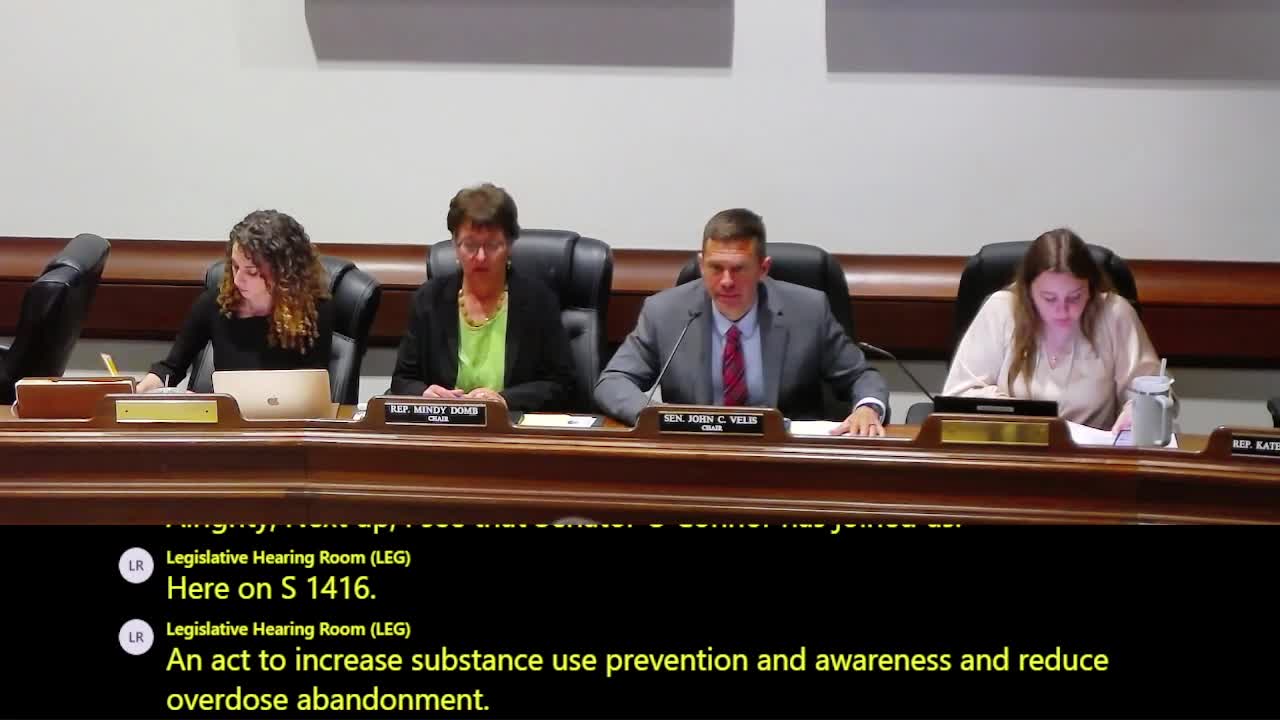
A panel of parents, lawmakers and advocates urged the committee to advance S.1416, legislation that would require public schools’ substance‑use prevention policies to teach both the dangers of addictive substances and the immunity available under Good Samaritan laws.
Senator Patrick O’Connor, who took the bill out of order, described the measure as a recurring priority that has been favorably reported by the committee in prior sessions. He said education on the Good Samaritan law could reduce overdose deaths; he cited National Institutes of Health research linking Good Samaritan law awareness to reductions in opioid‑related fatalities.
Tamika Perry told the committee that her 20‑year‑old son, Kai, died of a polysubstance overdose and that bystanders in the room did not call 911, likely out of fear of arrest. She urged stronger school education about legal immunity so that young people understand they can call for help. Representative Kate Donahue and Senator Collins expressed support, noting that education must be paired with better discharge planning and post‑event supports.
Witnesses argued the curriculum should be practical: define legal protections, teach recognition of an overdose, and incorporate naloxone education. The sponsors requested that the committee report the bill favorably so districts would be required to include Good Samaritan protections in prevention curricula.
No roll call or vote was recorded; sponsors requested further consideration and indicated they would provide additional data during committee deliberations.