Get Full Government Meeting Transcripts, Videos, & Alerts Forever!
Get email alerts on the Primary Care Workforce topic
No spam. Unsubscribe anytime.
Physicians, legislators press to expand loan‑repayment to bolster primary care access
Summary
Witnesses including the Massachusetts Medical Society and western Massachusetts clinicians urged expansion of the MA Repay loan‑repayment program (bills H2205/S1385) to recruit and retain primary care physicians across underserved regions.
Boston — Medical associations, a state senator and frontline family physicians told the Joint Committee on Mental Health, Substance Use and Recovery that expanding Massachusetts’ loan‑repayment program for primary care physicians could ease appointment delays and staffing shortages.
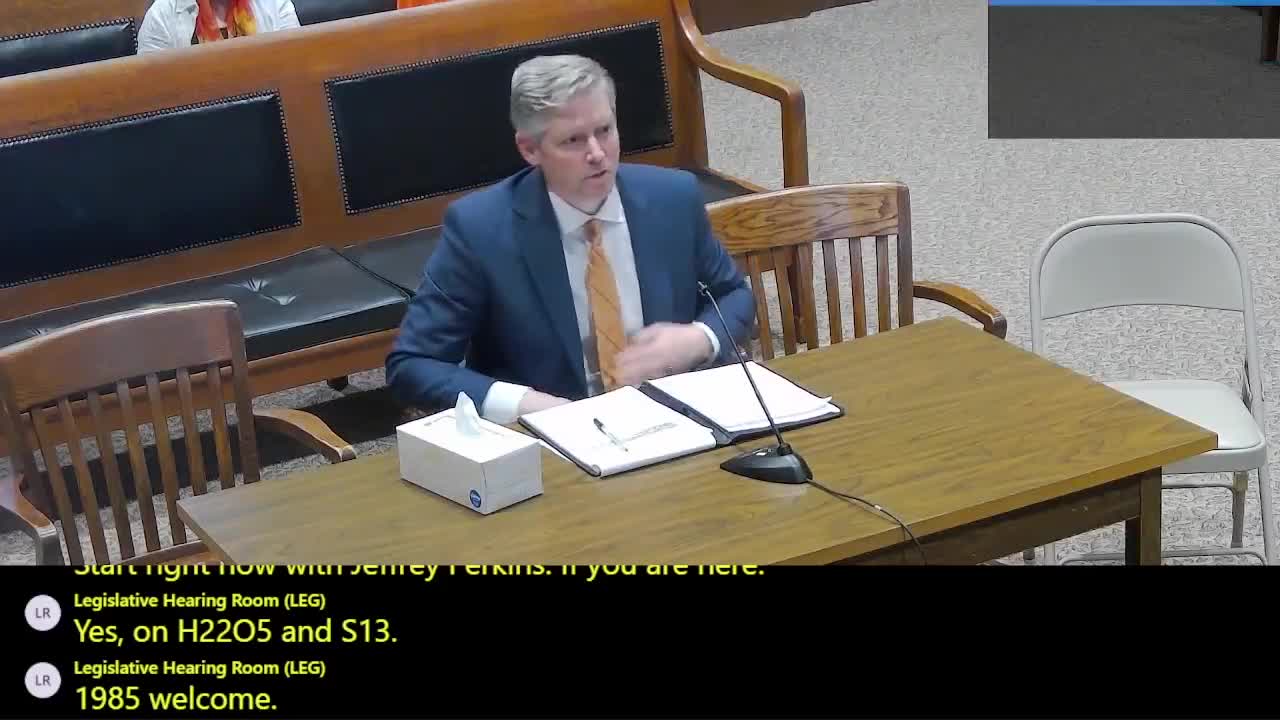
Jeff Perkins, legislative and regulatory affairs counsel for the Massachusetts Medical Society, urged support for H2205 and S1385 to broaden eligibility for the state’s MA Repay loan repayment program so more primary care physicians working in diverse practice settings can participate. “We know that loan‑repayment programs are a great recruitment and retention tool for physicians,” Perkins said.
Perkins noted competing data points and the complexity of the problem: while Massachusetts has “the most physicians per capita of any state,” it ranks poorly for the number of primary care doctors actually seeing patients. He cited a Health Policy Commission report and a 2023 survey showing that 41 percent of Massachusetts residents reported difficulty accessing care.
Sen. Jo Comerford, a filer of the bill, told the committee the expansion would add eligibility for physicians serving a significant public‑payer patient population outside federally qualified health centers, while stressing that funding must be sufficient so community health centers are not crowded out.
Local practitioners described the operational strain. Dr. Kate Atkinson, a family physician in western Massachusetts, said her practice of roughly 8,000 patients includes integrated behavioral health and addiction care, yet the clinic has an 800‑person waiting list and canceled Saturday hours because of financial pressure. “Most of the people in primary care have left primary care to go to more lucrative settings,” she told the panel.
Why it matters: Witnesses said stronger primary care capacity improves outcomes and lowers systemic costs by reducing avoidable emergency care. They urged financial incentives and program flexibility to keep recent graduates and mid‑career clinicians in primary care.
What the bills propose: H2205 and S1385 would expand eligibility for existing state loan‑repayment assistance so more physicians practicing primary care in predominantly private or mixed payer settings could qualify, not only those based in community health centers.
What was not decided: No funding level was established during testimony. Committee members and witnesses agreed that the policy would require new appropriations to avoid reducing support for current recipients at community health centers.
Ending: Supporters asked the committee to report the bills favorably and called for a coordinated funding plan to ensure the expansion recruits clinicians into underserved areas without weakening existing safety‑net providers.