Get Full Government Meeting Transcripts, Videos, & Alerts Forever!
Get email alerts on the Naloxone Schools topic
No spam. Unsubscribe anytime.
Doctors, students and harm‑reduction groups urge requirement for naloxone in schools
Summary
A coalition of clinicians, students and harm‑reduction advocates told lawmakers S.1422 — requiring naloxone in school nurse offices and training for secondary students — would prevent overdoses and reduce stigma around substance use.
Medical professionals, school‑age advocates and young people urged the committee to report S.1422 favorably, a bill that would require school districts to establish naloxone (Narcan) overdose‑prevention programs, maintain naloxone in the nurse’s office and offer training for secondary students.
Dr. Sarah Bagley, an addiction medicine physician at Boston Medical Center, told the committee that naloxone is a proven, lifesaving intervention and that young people have asked for prevention education in schools. Dr. Jesse Callahan, an adolescent medicine and addiction specialist, said his national survey of school nurses found widespread voluntary naloxone stocking but incomplete data on statewide coverage; he urged a universal requirement so all schools are prepared.
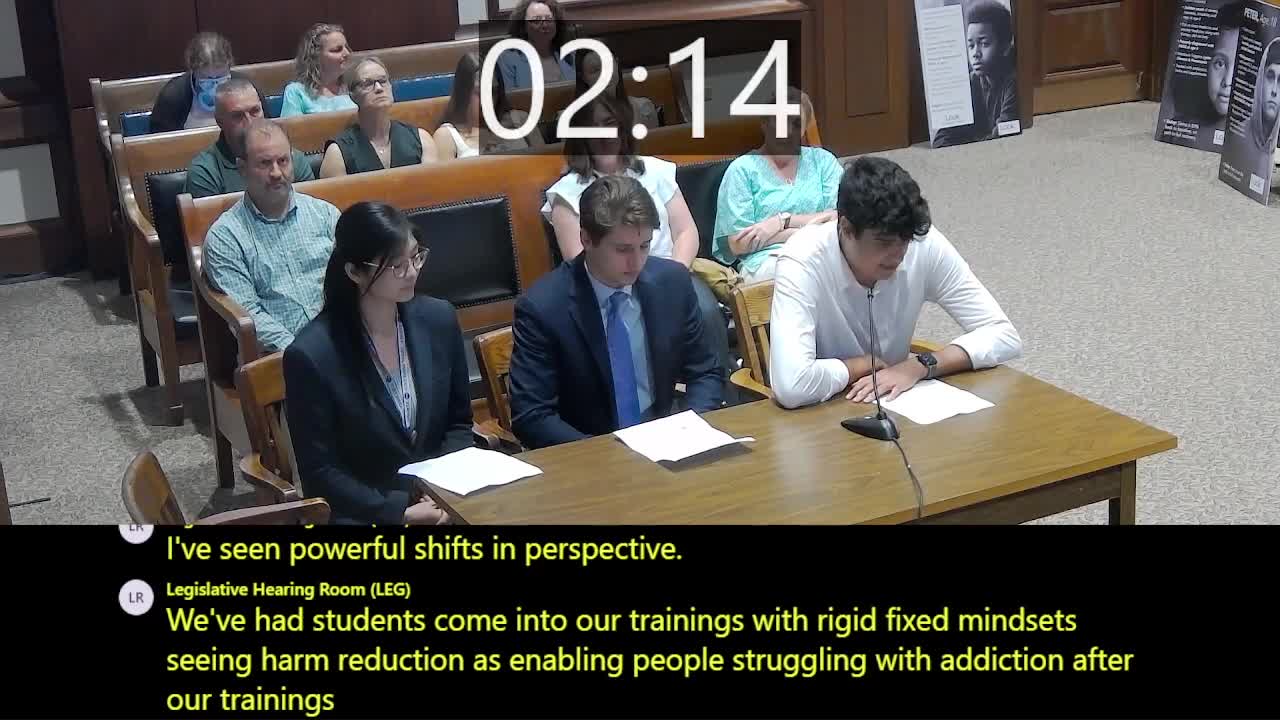
Young harm‑reduction organizers described brief trainings that shift attitudes and empower students to act. Yotam Sivan and Jamie Sanislo, recent graduates and founders of a student outreach initiative, told the committee they have trained thousands of high‑school and college students and said that training plus access “cultivates a culture of care.” Speakers urged pairing naloxone availability with youth‑centered education about recognizing overdoses, the Good Samaritan law and when to call 911.
Clinicians suggested two technical improvements to the bill: a requirement to report campus overdose events to DPH and an evaluation of education programs’ effectiveness. Some members raised questions about whether naloxone access encourages drug use; witnesses cited research finding no increase in use and said early education reduces stigma and can connect youth to services.
The committee received broad proponent testimony but recorded no vote at the hearing. Witnesses offered to assist with implementation details and data collection to help the Legislature ensure school programs reach students equitably.