Get Full Government Meeting Transcripts, Videos, & Alerts Forever!
Get email alerts on the 988 On Student Id topic
No spam. Unsubscribe anytime.
Advocates, students and crisis centers urge adding 988 to student ID cards to reach youth in crisis
Summary
Witnesses told the joint committee that printing the 988 suicide and crisis lifeline on student identification cards would normalize use, raise awareness, and could save lives; multiple crisis centers and a student survivor urged a favorable report for H.2221/S.1384.
The Joint Committee on Mental Health, Substance Use and Recovery heard broad support for bills H.2221 and S.1384 to require public and charter schools and institutions of higher education to print the 988 suicide and crisis lifeline on student ID cards.
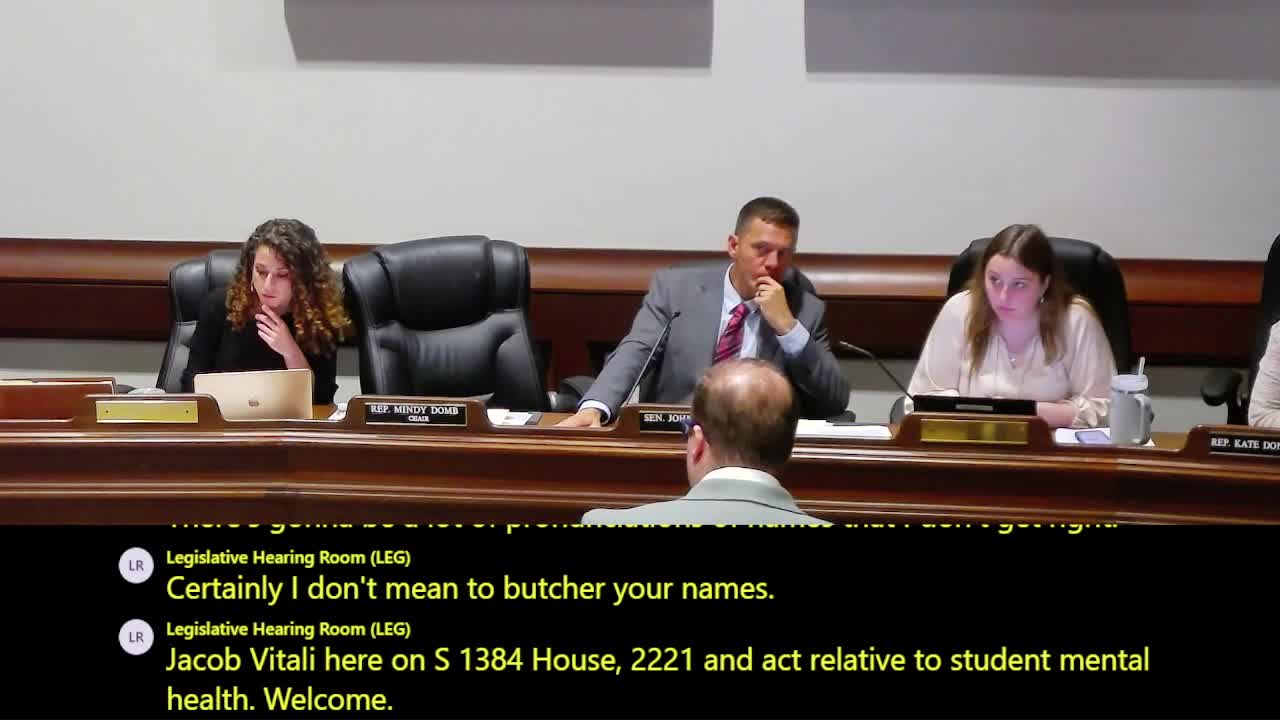
Testimony came from students, family members, mental‑health advocates and 988 call center leaders who described youth suicide and suicidal ideation rates and urged a low‑cost, universal step to put help in students’ hands. Jacob Vitale, a survivor who testified about childhood bullying and long struggles with depression, said the measure “is simple but vital” and described how printing 988 on IDs could raise awareness and reduce stigma.
Jessica LaRochelle of the Massachusetts Association for Mental Health cited state Department of Public Health data showing high levels of suicidal ideation among young people and noted that national polls show substantial portions of the public remain unaware of 988. Eileen Davis, director of Call2Talk (the Commonwealth’s 988 call center), described 988 as a 24/7 confidential resource that connects callers to trained crisis counselors and said placing the number on IDs is a cost‑effective step many states have adopted.
Witnesses emphasized that adding 988 to IDs complements other measures such as school‑based prevention and teacher training; they said the number should be normalized in handbooks, posters and outreach. Committee members asked about how youth learn about 988 today and whether printing the number on IDs would reduce 911 calls; witnesses said it would increase awareness and could keep some crises out of emergency departments.
No formal action was taken at the hearing. Supporters urged the committee to report the bills favorably; several members expressed sympathy and interest in moving the measure forward.