Get Full Government Meeting Transcripts, Videos, & Alerts Forever!
Get email alerts on the Psychedelic Therapies topic
No spam. Unsubscribe anytime.
Senators, providers urge narrow pilot to study psilocybin therapy in licensed clinics
Summary
A joint committee hearing heard proponents call for a tightly controlled pilot to study psilocybin and similar psychedelic-assisted therapies in licensed medical settings and to distinguish that approach from last year’s broader ballot question.
Senate and House committee members heard testimony on S.1400, a bill authorizing a limited pilot to study the use of psychedelics in licensed mental‑health treatment settings.
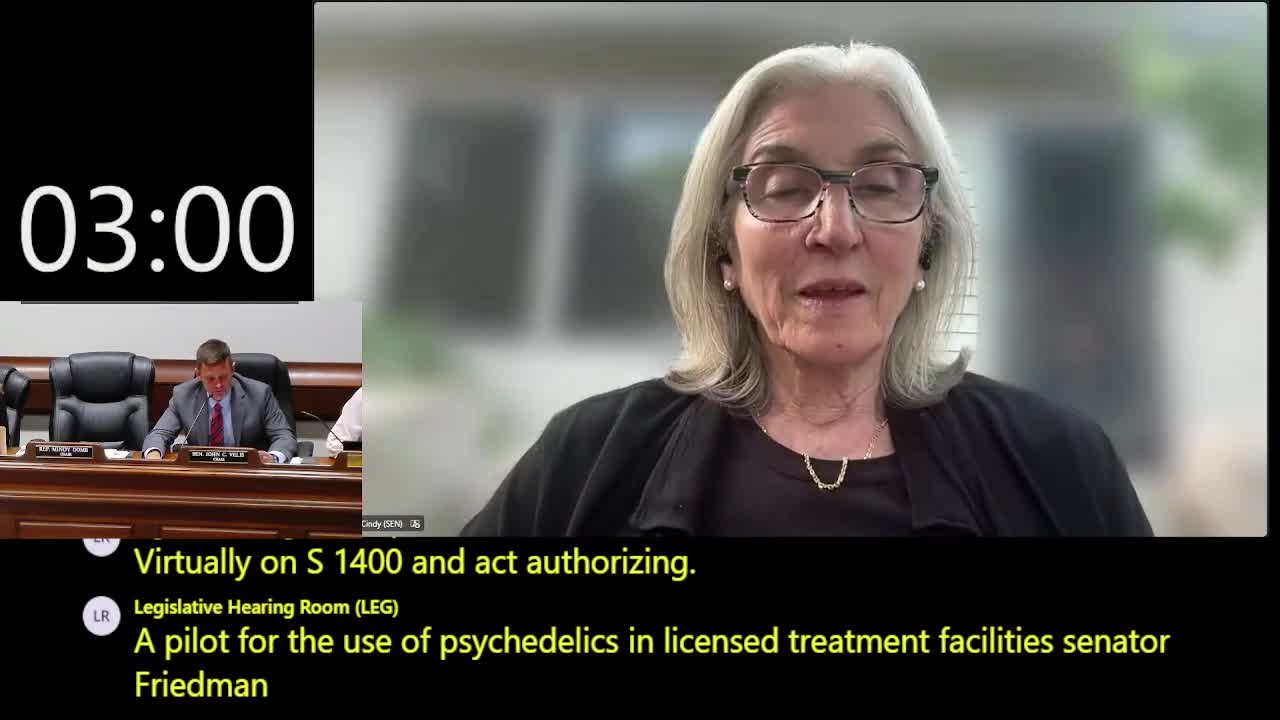
Proponents told the Joint Committee on Mental Health, Substance Use and Recovery that the measure would allow carefully supervised, medical research into psychedelic‑assisted therapy while avoiding broad decriminalization measures voters rejected last year. Senator Eric Friedman, speaking virtually, said the bill would authorize up to three specialized clinics to use psychedelics under DPH oversight and to report patient outcomes for development of treatment protocols.
Advocates from Control Z and clinical leaders described a medical model for psychedelic treatment that pairs rigorous screening, on‑site dosing, licensed clinicians and structured follow‑up. Colin Beatty, chief executive of Control Z, said the pilot would “allow for the same successful medical model” used in other complex care settings and stressed the difference from last year’s ballot question 4. Dr. Edwin Raffi, a board‑certified psychiatrist, said pilot sites would adopt inclusion and exclusion criteria, safety monitoring and adverse‑event reporting aligned with IRB standards.
Committee members pressed witnesses about which molecules would be allowed and how regulators would decide. Witnesses said the bill as written focuses on psilocybin and that DPH licensing and rulemaking would set clinical details, including which specific compounds are eligible for pilot use. Speakers repeatedly emphasized non‑clinical forms of access — home growing, unmonitored retreats, or broad decriminalization — are not part of the proposal.
No committee vote was taken. The hearing included questions about risks, the need for clear clinical protocols, and the importance of partnering with established academic research centers. Advocates offered to provide written protocols and operational details to help the committee and DPH craft rules.
The hearing closed with general support among proponents for a measured, medically supervised path to expanding treatment options for people with treatment‑resistant depression, PTSD and substance use disorders, while repeatedly distinguishing the bill from broad decriminalization efforts.