Get Full Government Meeting Transcripts, Videos, & Alerts Forever!
Get email alerts on the Open Town Meeting Remote Participation topic
No spam. Unsubscribe anytime.
Wayland, Concord and others ask Legislature to allow remote participation at open town meeting
Summary
Lawmakers heard panels and residents urging either a statewide option or home rule for towns to permit remote audiovisual participation and voting at open town meetings, with proponents detailing security checks, costs and equity benefits and opponents warning of reduced deliberation.
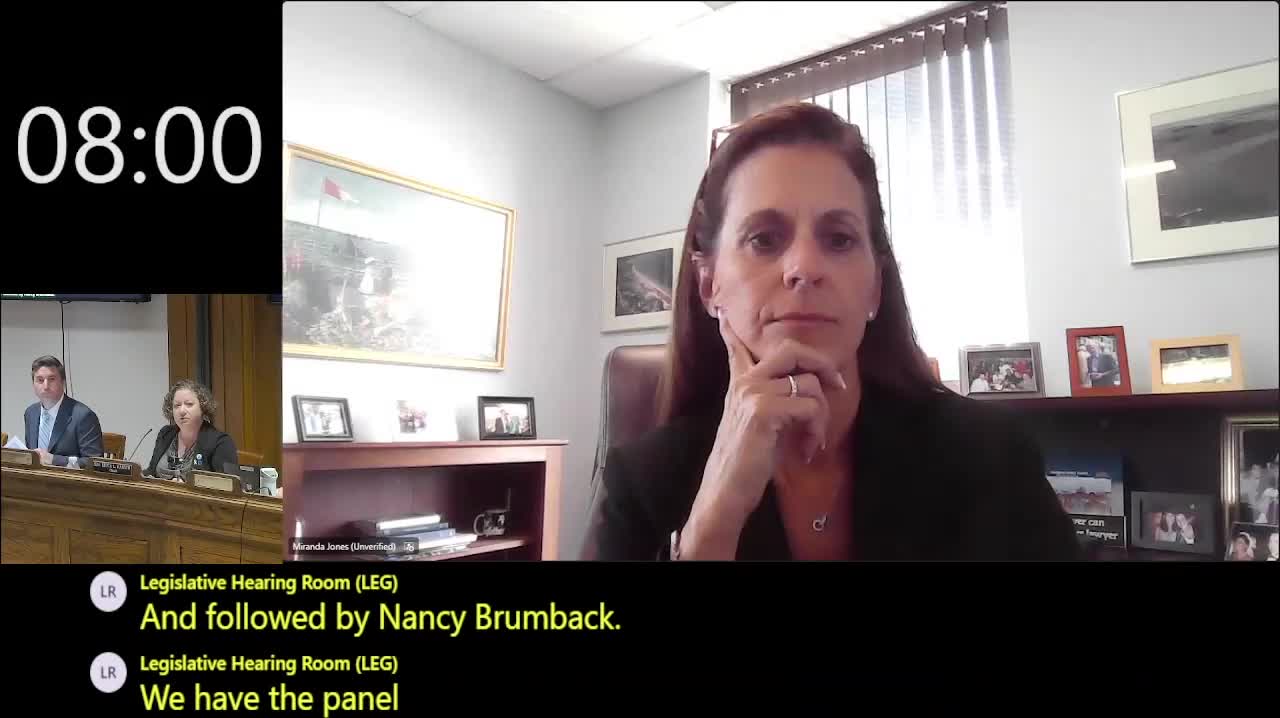
Legislators on the Joint Committee on Municipalities and Regional Government on Tuesday heard competing testimony on bills that would let towns authorize remote audiovisual participation and voting at open town meeting. Supporters said enabling remote participation would expand access for parents, people with disabilities, caregivers and workers; opponents warned it could weaken deliberation. Proponents said the change would give towns a choice, not compel them to change. Tom Fay, a member of the Wayland Select Board, described the town’s multi-year work and asked the committee to allow Wayland and other towns to be “first movers.” Miranda Jones, Wayland’s town moderator, said Wayland’s Electronic Voting Implementation Subcommittee has studied the legal and procedural issues and advised that pilot tests be permitted if the Legislature does not yet want a wholesale statewide change. David Bernstein, chair of Wayland’s electronic voting committee, described a system that uses a preissued login, a clerk-led audiovisual check-in, continuous rechecks to detect impersonation and a public audit table so voters can confirm that the system recorded their vote. “We’re only asking for permission,” Bernstein said. He told the committee the vendor rental model Wayland uses costs on the order of $20,000–$40,000 for large meetings, and smaller meetings cost less; he said town-staff check‑in costs are modest. Supporters from other towns and civic groups repeated equity arguments. Leah Sawyer, a parent and disabled voter, said she could not attend a recent town meeting and therefore could not vote on a school budget override for which she had strongly advocated. Nancy Brumbach, legislative specialist for the League of Women Voters of Massachusetts, said municipal meetings already use remote access widely and asked the committee to report the bill favorably on behalf of over 40 local Leagues. Opponents said remote access risks turning deliberative sessions into parallel, private votes. Erica Cole told the panel that remote attendees could skip listening and “tune in only for the vote,” and urged the committee to preserve in‑person deliberation. Other witnesses suggested pilot programs and safeguards to balance access with the integrity of deliberation. The bills under consideration include a Wayland home rule petition (H.2272) and a proposed statewide local option (H.2274). Committee members asked about costs, impersonation safeguards and whether towns could pilot the approach if the Legislature favored a cautious, local-option rollout. No committee vote was taken.