Get Full Government Meeting Transcripts, Videos, & Alerts Forever!
Get email alerts on the Ai Image Voice topic
No spam. Unsubscribe anytime.
Actors, SAG‑AFTRA urge state to expand publicity rights to cover AI image and voice misuse
Summary
Representatives from SAG‑AFTRA New England and local actors told the committee that updating Massachusetts' right‑of‑publicity law to include likeness and voice — and post‑mortem rights — is necessary to protect workers from unauthorized AI use of images and voices.
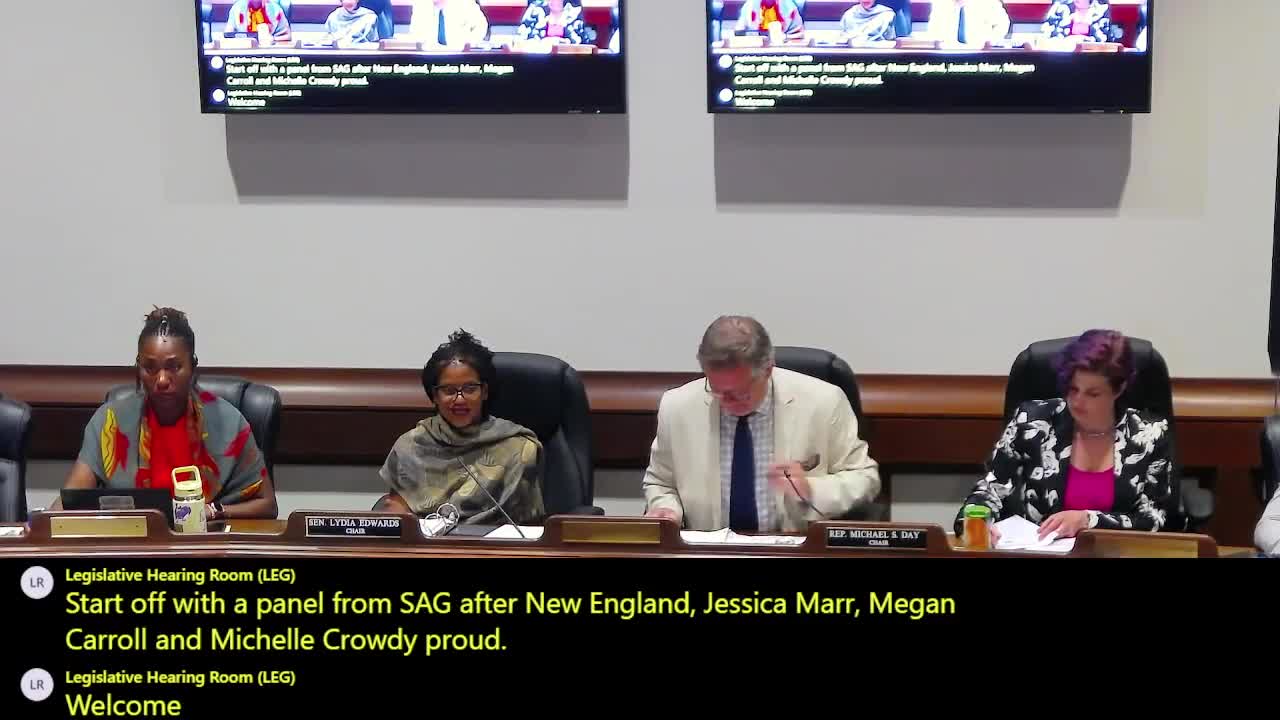
SAG‑AFTRA New England representatives and working actors testified in support of H.1615, a proposal to expand Massachusetts' right‑of‑publicity law to expressly protect an individual's image, voice and post‑mortem rights from unauthorized commercial use, including generative‑AI synthesis. Jessica Marr, executive director of SAG‑AFTRA New England, described the union’s membership and said the bill would add likeness and voice to current protections and extend certain post‑mortem rights when heirs can demonstrate active, authorized use. “This bill provides crucial AI guardrails to protect individuals from having their image or voice used without their consent or compensation,” Marr said, framing the proposal as a labor and intellectual‑property protection for performers and lesser‑known working artists as well as stars. Actors told the panel how modern production workflows can produce high‑fidelity digitized replicas of a body or face that can later be reused without consent. Meghan Carroll said on‑set scanning can produce “a digital replica of my face and my body” and that producers can then alter wardrobe and other attributes without a performer’s ongoing consent. Committee members pressed witnesses on how the proposal would treat viral, amateur videos and everyday recordings; witnesses emphasized consent, compensation and the need to distinguish long‑term commercial exploitation from ephemeral, noncommercial speech. The committee accepted written follow‑up and asked sponsors and SAG‑AFTRA to provide model statutory language and examples to refine the bill.