Get Full Government Meeting Transcripts, Videos, & Alerts Forever!
Get email alerts on the Economic Abuse topic
No spam. Unsubscribe anytime.
Survivors and advocates press lawmakers for new civil remedies for coerced debt
Summary
Victims, legal services providers and researchers urged the Joint Committee on the Judiciary to pass legislation (H.1694/S.1147) that would pause collection and allow courts to discharge coerced debt incurred through fraud, force or coercion in abusive relationships.
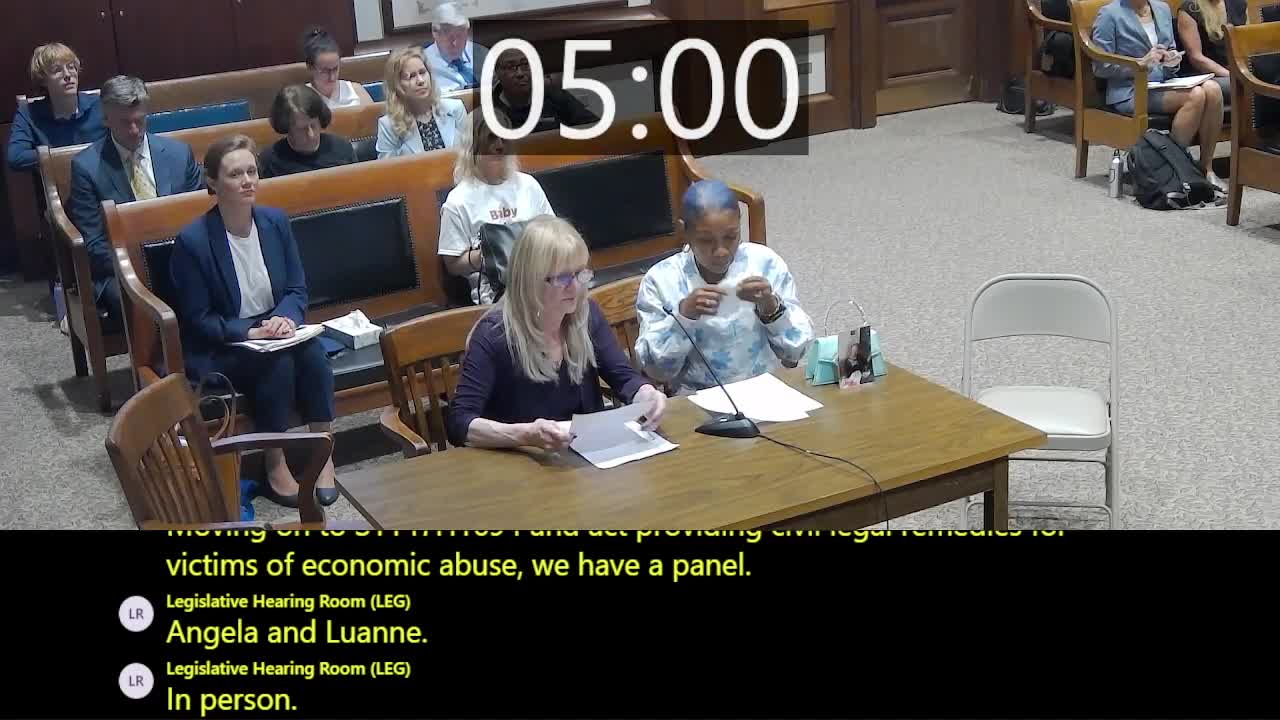
Survivors of domestic and intimate‑partner violence, legal aid attorneys and researchers told the Joint Committee on the Judiciary that current consumer and family‑law remedies leave victims of economic abuse without a reliable path to financial recovery. Witnesses described a common pattern: an abusive partner coerces or forges credit, opens accounts in a victim’s name, or forces the victim to incur loans. The resulting debt and credit damage can prevent survivors from obtaining housing, employment, or transportation and hinder their ability to leave abusive relationships. Multiple witnesses described personal cases to the committee. Lou Anne of Revere said an abuser stole credit‑card information and used tens of thousands of dollars in her name; she testified the debt damaged her credit and left her unable to enjoy retirement. Angela Cotton Carrasquillo and others described collections calls, lawsuits and the emotional toll of being pursued for debts they said they did not freely consent to. One former small‑business owner said she was forced to repay cards opened by her partner and even pawned her engagement ring to meet payroll. Legal-service advocates from Greater Boston Legal Services and other organizations explained practical limits of current law. They said survivors frequently lack a straightforward civil remedy: consumer‑protection or criminal‑theft routes are slow or ineffective; family‑court relief under current statutes (for example, orders to assign debt) does not compel a third‑party creditor to accept that assignment; and proving fraud after years can be difficult without specialized legal help. Advocates said that in states with specific coerced‑debt statutes, creditors often dismiss collection actions once presented with evidence of abuse, avoiding costly litigation. Researchers and clinicians testified on prevalence and impact. Dr. Adrienne Adams, a longtime scholar of economic abuse, cited research showing economic abuse is nearly universal within intimate‑partner violence and explained that coerced debt is a documented tactic abusers use to trap partners. Coalition witnesses said some service providers see dozens or hundreds of coerced‑debt cases a year. The bills H.1694 and S.1147 would create a survivor‑centered civil path: a filing or statement could trigger a pause on collections while courts evaluate the claim; courts could order creditors to remove coerced debts from credit reports and could issue debt‑discharge or assignment orders where appropriate. The proposals include confidentiality protections and an enforcement route against creditors who ignore orders, and they preserve creditors’ ability to pursue the abuser (perpetrator) directly. Supporters argued the proposals would be trauma‑informed, reduce harassment by collectors, and speed survivors’ path to independence. Opponents did not testify directly at the hearing; committee members asked detailed questions about evidentiary standards, how credit reporting would be handled, and whether the legislation might create unintended consequences for lenders. Advocates said many operational questions can be addressed in drafting (standardized forms, court guidance and outreach to credit reporting agencies). The hearing included survivors, pro bono attorneys, legal‑services staff, policy researchers, and victims’ advocates. Witnesses urged the committee to report the bills favorably so courts and agencies can begin implementing the targeted remedies that, they said, would reduce long-term harm and support survivors’ safety and economic stability.