Get Full Government Meeting Transcripts, Videos, & Alerts Forever!
Get email alerts on the Esol Workforce Development topic
No spam. Unsubscribe anytime.
Advocates Tell Joint Committee ESOL Strategy Needed to Fill Workforce Gaps
Summary
Advocates, employers and community groups told the Joint Committee on Labor and Workforce Development that Massachusetts needs a coordinated, workforce‑focused strategy for English-for-speakers-of-other-languages programs to reduce long wait lists, boost wages and fill job vacancies.
Supporters of legislation to create a statewide strategy for English-language instruction told the Joint Committee on Labor and Workforce Development on Thursday that the state’s fragmented ESOL system is leaving thousands of residents on wait lists and costing the Commonwealth jobs and wages.
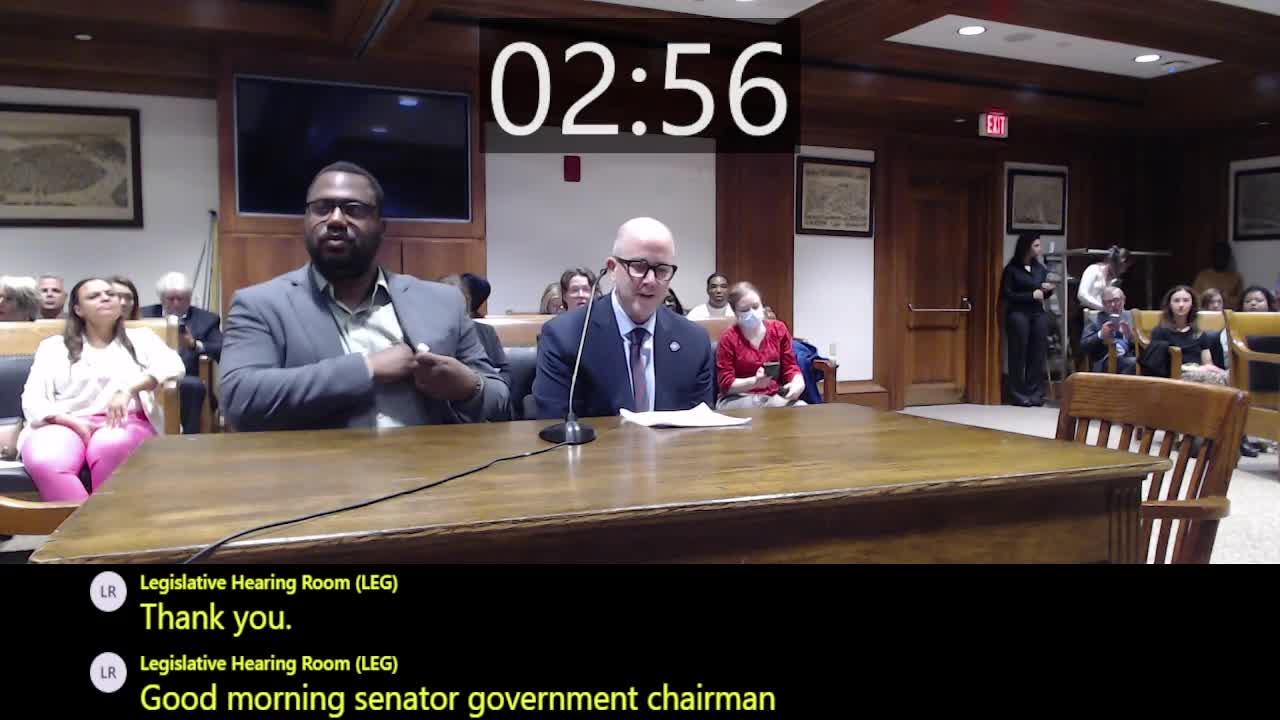
“My name's Keith Mahoney. . . . I’m pleased to be here today to support House 2080 and Senate 13 26, an act to promote economic mobility through ESOL,” said Keith Mahoney, vice president for public affairs at The Boston Foundation, urging the committee to report the bills favorably.
The testimony catalogued consistent problems: long wait lists for adult ESOL classes, programs that are not coordinated across agencies, and a lack of vocational or workplace‑focused English instruction. Organizations including SkillWorks, the Massachusetts Immigrant and Refugee Advocacy Coalition (MIRA), MassINC (policy center), English for New Bostonians and employers such as Alpha Chemical Services described a demand that outstrips available seats and emphasized the economic consequences.
Andre Green, executive director of SkillWorks, said “there are roughly 140,000 foreign born workers in Massachusetts who are currently on or underemployed,” and described ESOL barriers that prevent those workers from using their full skills. Several witnesses cited that more than 20,000 people remain on state and local wait lists and that workplace‑focused ESOL can increase annual wages for participants. Ben Foreman of MassINC and others pointed to rising returns to English proficiency in the Massachusetts labor market.
Employers and workforce providers asked the committee to prioritize two changes: (1) create a coordinator or lead office to develop and implement a statewide ESOL strategy that aligns adult education, workforce training and employers; and (2) expand and pilot vocational, job‑contextualized ESOL classes that teach industry‑specific vocabulary and workplace practices. Amy Nischman of JVS Boston described evidence from randomized trials and pilots showing vocational ESOL increases job placements and state revenues.
Community groups and small‑business participants gave concrete examples. Nikki Nesbeth, executive director of the Caribbean Youth Club, described helping Haitian immigrants access weatherization jobs after arranging language access supports and short‑term on‑the‑job translation. Gia Navarro, a Wakefield small‑business owner, said specialized entrepreneur ESOL helped her better market and run her craft business. Elise Doksevich, CEO of Alpha Chemical Services, described an employer‑sponsored on‑site ESOL program funded through the Workforce Training Fund that cost her company about $120,000 and led to promotions and productivity gains.
Witnesses also urged interagency coordination. Testimony noted ESOL funding and programs are spread across the Department of Elementary and Secondary Education, the Executive Office of Labor and Workforce Development, and the Office for Refugees and Immigrants. Several speakers recommended a single coordinator or a cabinet‑level lead to align funding, create a centralized or interoperable wait‑list, and prioritize industry needs in regions across the state.
Committee members did not take formal action on the bills at the hearing. Supporters urged a favorable report and recommended further work on program design, funding levels and pilot evaluation to measure outcomes and equity.
Ending: Advocates asked the committee to move the bills forward so the Commonwealth can better align English instruction with employers’ needs and reduce waiting lists, arguing that doing so would increase wages, fill vacancies and strengthen immigrant integration into the workforce.