Get Full Government Meeting Transcripts, Videos, & Alerts Forever!
Get email alerts on the Antisemitism Definition topic
No spam. Unsubscribe anytime.
Heated, divided public comment on IHRA antisemitism definition as Joint Judiciary hears bill
Summary
Dozens of speakers testified for and against a bill to adopt the International Holocaust Remembrance Alliance definition of antisemitism. Supporters said the definition clarifies hateful conduct; opponents said it would chill free speech and conflate criticism of Israel with antisemitism.
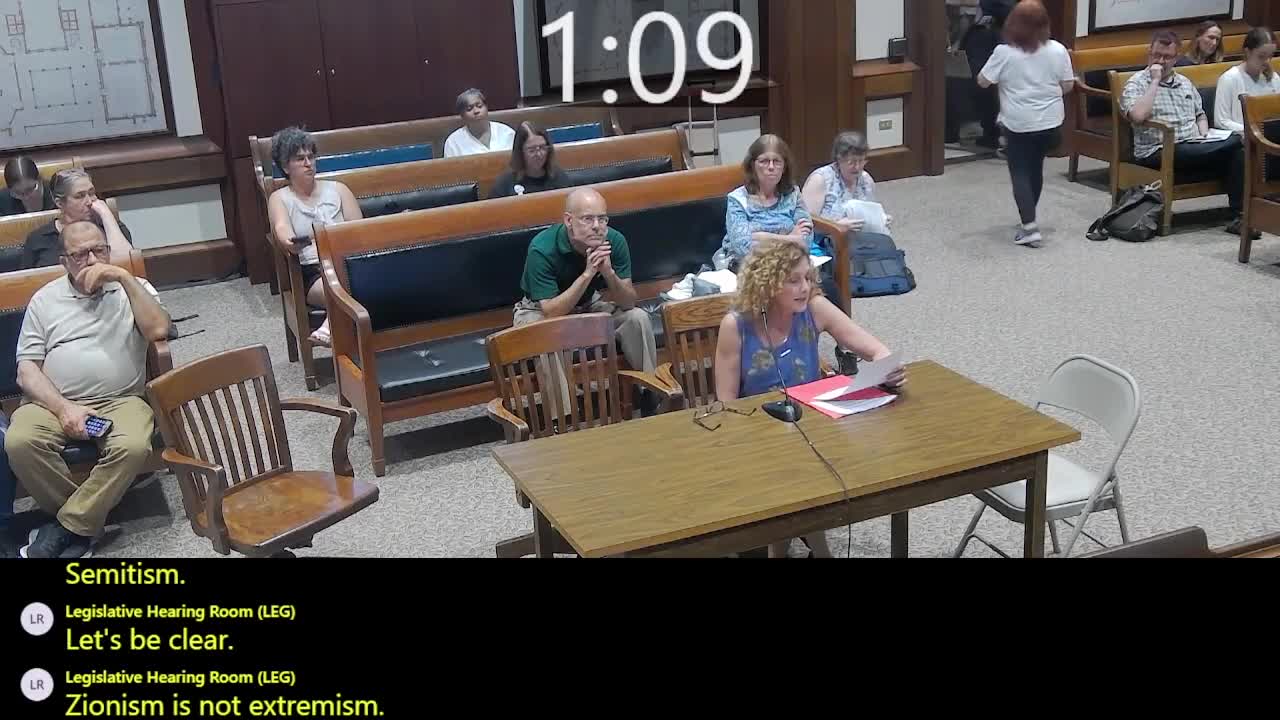
The Joint Committee on the Judiciary heard more than an hour of public testimony both supporting and opposing House Bill 17‑63, which would adopt the International Holocaust Remembrance Alliance (IHRA) definition of antisemitism into state practice. Supporters, including Robin Goldstein and members of the Massachusetts Antisemitism Task Force, said the definition offers clarity and tools to identify and respond to incidents they described as rising in the state. Goldstein said, “Zionism is not extremism. It's not oppression. It's the belief that the Jewish people... have the right to live freely and safely in their historic homeland.” Advocates for adoption pointed to recent incident increases cited in state reporting and argued the definition helps enforcement and civil‑rights work. Opponents included academics, legal scholars and Jewish and Palestinian‑rights advocates who argued the IHRA text is vague, has been used to suppress academic and political speech, and improperly equates criticism of Israeli government policy with antisemitism. Professor Ben Eidelson (Harvard Law) testified the proposal is “conceptually incoherent, legally destabilizing, and quite possibly unconstitutional.” Several witnesses noted that Kenneth Stern, one of the authors of the IHRA examples, has warned against weaponizing the definition. Speakers described concrete examples: journalists, faculty and students who faced employment or disciplinary action after protest or critical commentary; parents and teachers who said curricula and campus speech had been chilled; and Holocaust survivors and Jewish leaders who said the definition is a necessary tool to protect Jewish communities. Committee members heard requests on both sides for the panel to reject or to refine the bill. Chairs invited additional written testimony and submissions from legal experts and civil‑society groups. No final action was taken at the hearing.