Get Full Government Meeting Transcripts, Videos, & Alerts Forever!
Get email alerts on the Reentry Housing topic
No spam. Unsubscribe anytime.
Lawmakers hear proposal for reentry housing program to reduce recidivism
Summary
Senator Adam Gomez and community providers pressed for S996/H1554, a reentry housing program that would coordinate corrections, probation and housing supports; a provider program reported low recidivism and estimated multi‑million dollar savings from stable housing supports.
Senator Adam Gomez and community providers told the Joint Committee on Housing that a statewide reentry housing program is needed to improve outcomes for people leaving incarceration and to reduce recidivism.
Why it matters: Witnesses said housing is a critical factor in successful reentry. Stable housing helps employment, family reunification and health care access; without it, returning citizens face higher recidivism risk.
Legislative proposal: S996/H1554 would create a reentry housing program that coordinates the Department of Correction, probation and parole, and community providers to plan housing before release, provide vouchers and supports, and measure outcomes with clear metrics.
Provider evidence: Noah Risley of Just for Housing described the SHARP (Stable Housing and Reentry Program) model and results: the program housed more than 80 justice‑involved individuals in Boston and Cambridge over five years, reported a 2% recidivism rate for participants (far lower than statewide averages), reunited 84% of participants initially involved with DCF with their children, increased average participant income and credit scores, and estimated over $3,000,000 in savings to the Commonwealth across five years. Risley and others said SHARP had to turn away applicants because of limited funding.
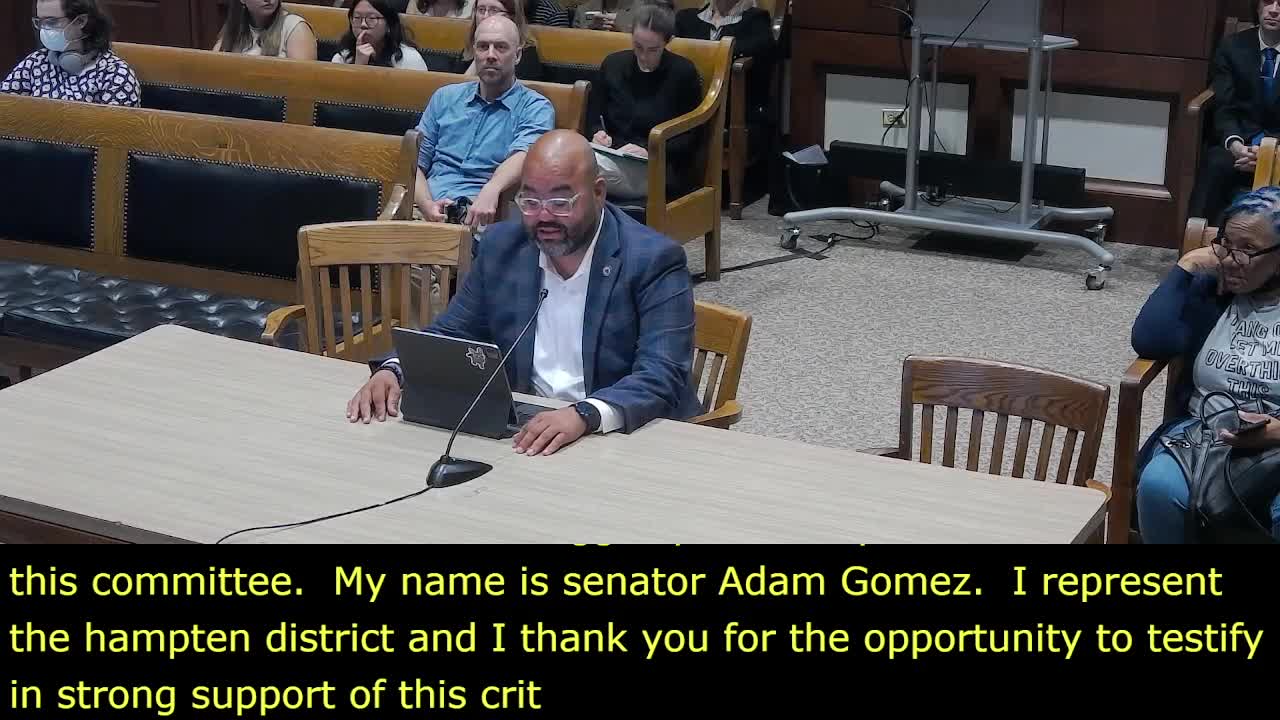
Sponsor remarks: Senator Gomez framed the bill as an evidence‑based investment in public safety and dignity, saying the program would prioritize housing access for formerly incarcerated individuals and include outcome metrics to measure success.
Next steps: Supporters asked for a favorable report and statutory clarity on interagency roles. The committee accepted written testimony and did not vote on the bill during the hearing.