Get Full Government Meeting Transcripts, Videos, & Alerts Forever!
Get email alerts on the Criminal Justice Life Without Parole topic
No spam. Unsubscribe anytime.
Joint committee hears dozens of lifers and advocates urge hearings for those serving life without parole
Summary
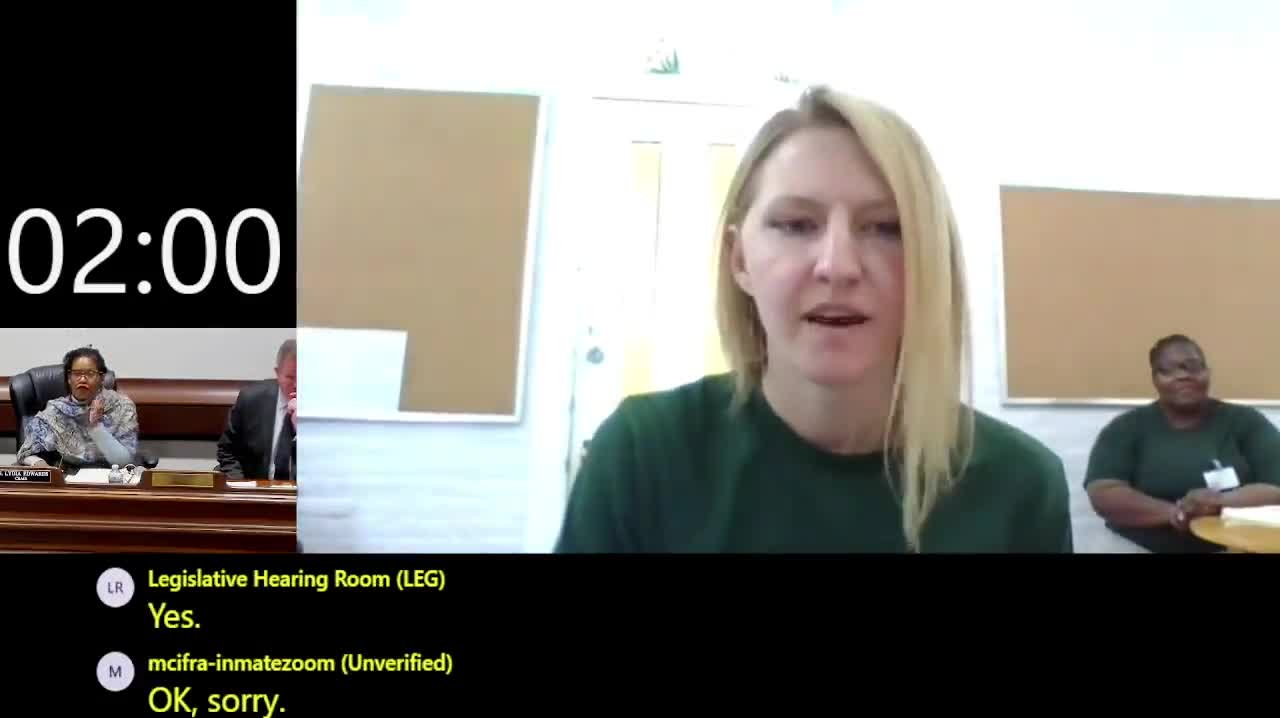
The Joint Committee on the Judiciary heard more than a hundred in-person and remote witnesses — including people serving life sentences, family members and advocacy groups — pressing lawmakers to allow parole review after 25 years and to consider reducing the use of life without parole.
The Joint Committee on the Judiciary held a multi-hour public hearing June 1 where incarcerated people, family members and dozens of advocates testified in favor of bills to end or limit life without parole and expand parole review.
Speakers including people serving life sentences, their relatives and elected officials said providing parole eligibility or review after 25 years would let the parole board determine whether release is compatible with public safety while allowing people who have demonstrated rehabilitation to seek reintegration.
Why it matters: Massachusetts has a comparatively high share of people serving life without parole, witnesses said, and many testified that they had taken education, counseling and restorative-justice programs while incarcerated. Supporters described the bills as narrow and not automatic releases — rather, they would create a chance for a hearing to show rehabilitation and to allow victims’ families a forum for participation.
Details and testimony: Dozens of people who described themselves as “lifers” or who had served decades in prison gave first-person accounts to the committee. Some described education and mentoring work inside facilities; others described medical and aging costs of long incarceration. Family members of people serving life sentences and representatives from advocacy groups described racial disparities in sentencing. Elected officials and faith leaders urged the committee to approve measures that would create parole review pathways or allow limited resentencing for long-term sentences.
No final actions were taken at the hearing. Several witnesses asked the committee to move H.2052/S.1178 out of committee to allow legislative debate and amendment.
What supporters said: “We’re not asking for releases; we’re asking for a chance to be heard,” several witnesses said, describing decades of programming and remorse. Elected supporters framed the bills as consistent with public-safety goals — citing reduced recidivism for older prisoners and the costs of long-term incarceration.
What opponents said: A small number of public commenters and written filings emphasized victims’ harms and urged caution; several members of the committee asked for more data and said they wanted to balance victims’ voices with rehabilitation claims.
Next steps: Committee members did not vote on the measures at the hearing. Sponsors said they will be available to meet with members about statutory drafting, parole-board processes and related implementation details.