Get Full Government Meeting Transcripts, Videos, & Alerts Forever!
Get email alerts on the Permanent Affordability Homeownership topic
No spam. Unsubscribe anytime.
Advocates push ‘Homes for Lasting Affordability’ bill to fund permanently affordable homeownership
Summary
Witnesses including community land trust leaders and Sen. Liz Miranda urged the committee to advance H1576/S1010, a bill to create a program funding permanently affordable homeownership (shared‑equity models) with long‑term deed restrictions (99 years) and support for small projects up to 25 units.
Community land trust leaders, researchers and state lawmakers told the Joint Committee on Housing that a permanent affordability homeownership program (H1576/S1010, “Homes for Lasting Affordability”) would create durable homeownership opportunities for low‑ and moderate‑income families.
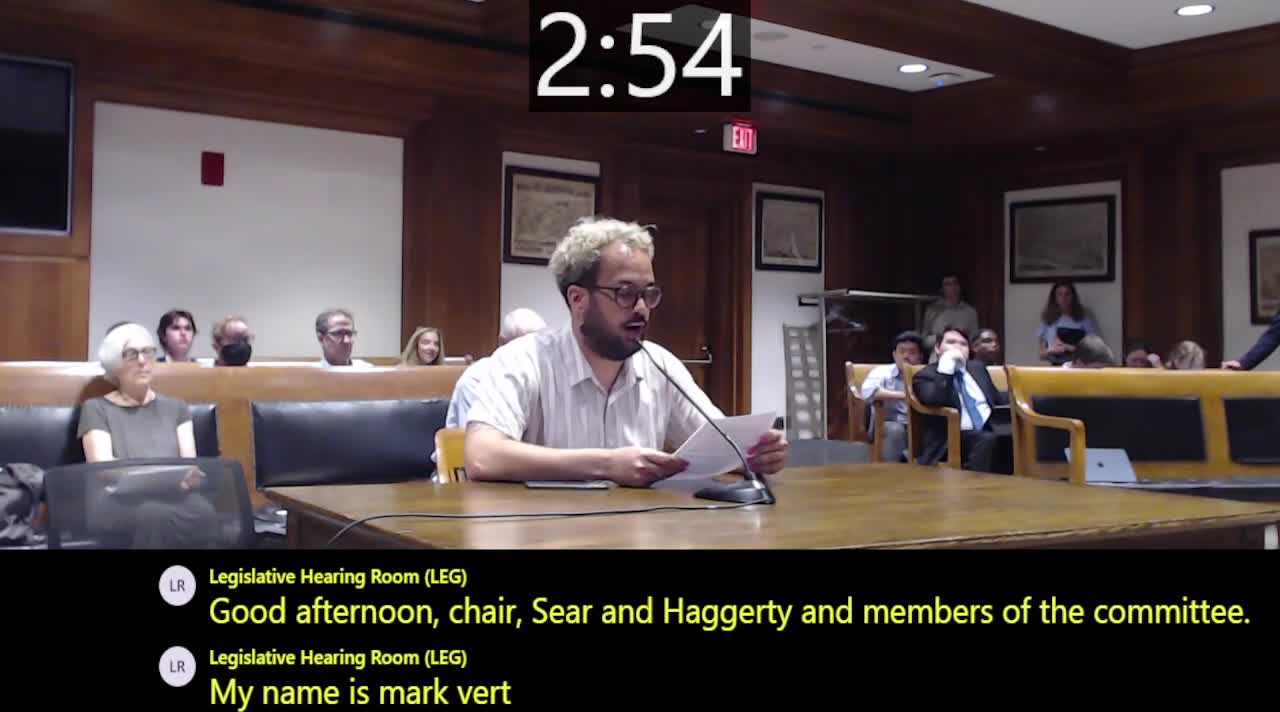
What proponents said: Caroline Ellenbird, director of a community land trust in Chelsea, described shared‑equity homeownership as preserving low costs across multiple buyers and said small duplex/condo projects preserve neighborhood stability. Penn Low, a Tufts professor and researcher, described CLTs as “wise public policy” that produce durable affordability over generations and argued public dollars invested once can yield long‑term returns when land is stewarded by a CLT.
Senator Liz Miranda said the bill would establish a program in the Executive Office of Housing and Livable Communities to fund permanently affordable homeownership targeted to households earning 70–120% of area median income and preserve affordability “for 99 years.” She said the program would prioritize small to mid‑sized developments (1–25 units) and mixed‑use projects.
Examples and constraints: Witnesses described a Highland Park Community Land Trust project in Roxbury and a Chelsea project in partnership with Habitat for Humanity that relied on municipal contributions and would not have moved forward without local funds because state support was not available for permanently affordable units. Multiple witnesses told the committee that CLTs and shared‑equity structures can produce family‑sized units well below market prices and are resilient in downturns.
Requests to committee: Supporters urged a favorable report and asked the committee to include program funding in future budget deliberations. No committee vote or formal enactment occurred during the hearing.
Ending: Proponents said the bill would add a missing state‑level financing tool to preserve long‑term affordability and anchor intergenerational wealth in communities with rising housing costs.