Get Full Government Meeting Transcripts, Videos, & Alerts Forever!
Get email alerts on the Public Housing topic
No spam. Unsubscribe anytime.
Housing authorities ask committee to ease procurement rules and tax treatment for replacement public housing
Summary
Representatives of Massachusetts housing authorities urged changes to Chapter 149 procurement rules and proposed tax exemptions for replacement public‑housing units so capital dollars from the Affordable Homes Act can be used more effectively to redevelop low‑density sites into higher‑density affordable housing.
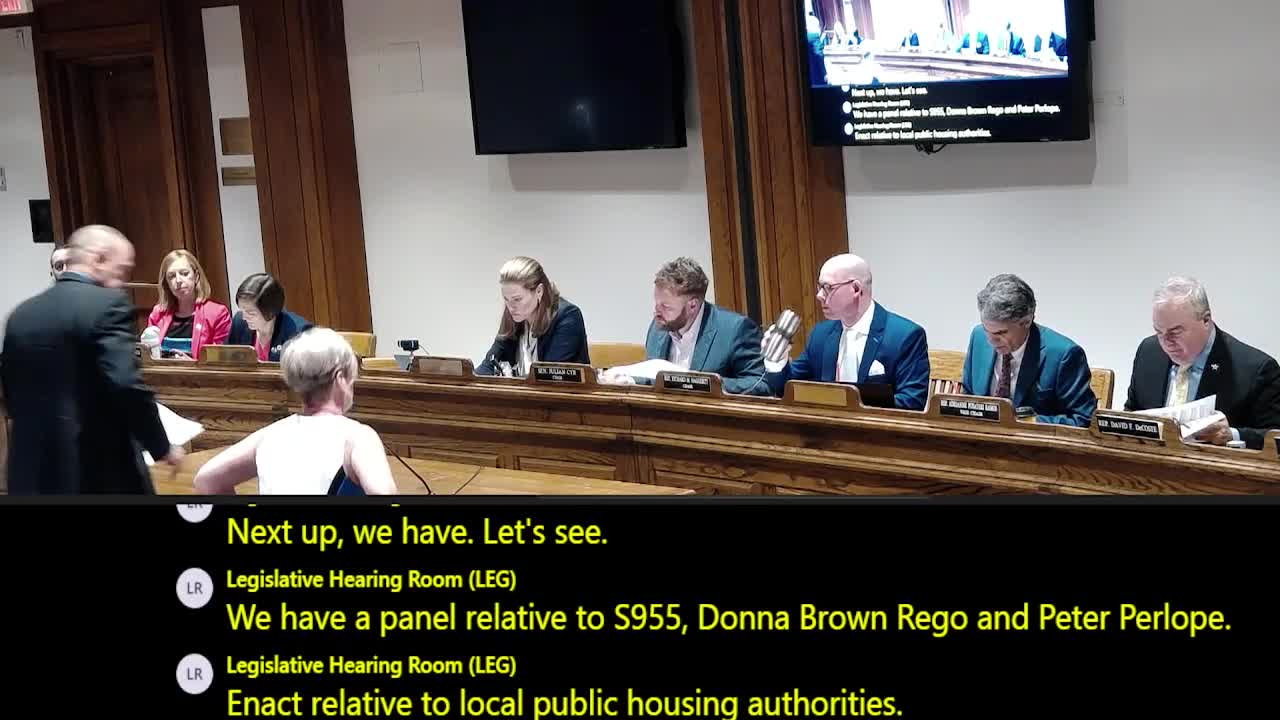
Donna Brown Rigo, executive director of the Massachusetts chapter of NAHRO, and Peter Pru (President and COO of the Worcester Housing Authority) told the committee that public housing authorities need targeted statutory relief to redevelop aging properties and stretch limited capital dollars.
Peter Pru described two bills the panel supports: H‑115.5, which would exempt renovated or replacement public‑housing units from local property taxes for the units that replace demolished units (with a prorated pilot payment to municipalities), and H‑50‑51, which would streamline Chapter 149 procurement by eliminating the filed sub‑bid requirement. Pru said the procurement change would not affect prevailing wage requirements but would reduce delays and owner‑contractor friction that can cause overruns and project delays.
Pru explained that housing authorities typically cannot build new public housing directly; they partner with nonprofit affiliates or developers to develop replacement housing. He told the committee the tax exemption would allow entities that build replacement units to use operating funds for debt service and long‑term viability rather than paying full local property taxes on replacement units.
Committee members asked practical questions: whether housing authorities pay property taxes (they are generally exempt and most municipalities negotiate a pilot in lieu of taxes), how pilot agreements are reached, and whether rent would increase for residents in redeveloped projects. Peter Pru answered that residents’ rents in public housing remain 30% of net income and that redevelopment generally changes subsidy structures (for example to voucher models) but would not increase residents’ rent share beyond the statutory standard.
No votes were held; the committee requested written materials, including data on which municipalities have pilot agreements and examples of redevelopment projects and budgets.