Get Full Government Meeting Transcripts, Videos, & Alerts Forever!
Get email alerts on the Supportive Housing topic
No spam. Unsubscribe anytime.
Coalition backs interagency board to speed supportive housing pipeline
Summary
Nonprofits, healthcare and housing coalitions supported H1552/S991 to create an interagency supportive housing finance and strategy board and implement the Affordable Homes Act supportive housing pool fund, arguing coordinated state funding could create at least 2,000 supportive units more efficiently.
A broad coalition of housing, health and service organizations told the Joint Committee on Housing that supportive housing — deeply affordable units paired with services — requires streamlined, interagency financing to scale rapidly.
Why it matters: Supportive housing is widely cited by witnesses as a cost‑effective solution for people with complex service needs, including individuals experiencing chronic homelessness, people with behavioral health conditions, veterans and families exiting shelter. Witnesses said current funding processes force developers to assemble piecemeal capital from multiple state agencies, which adds delay and costs.
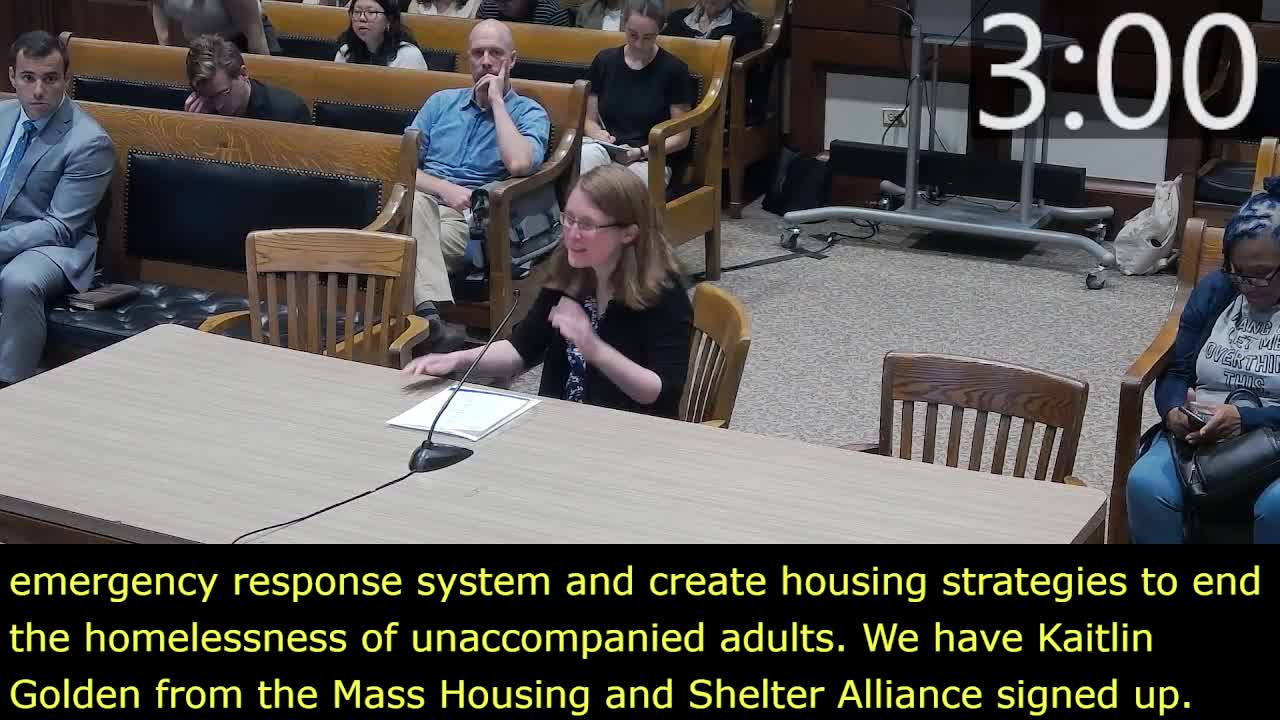
What was proposed: Caitlin Golden of the Massachusetts Housing and Shelter Alliance, Will Lehi of United Way of Massachusetts Bay, Dana Mosh of the Massachusetts Association for Mental Health, Jordan Stocker of Citizens' Housing and Planning Association (CHAPA), and other coalition representatives supported H1552/S991, which would create an interagency supportive housing finance and strategy board to coordinate funding, issue joint requests for proposals, and implement the supportive housing pool fund established in the Affordable Homes Act. United Way’s testimony said the proposal would create a program to provide at least 2,000 supportive housing opportunities using the pool fund and tax credits.
Evidence and rationale: Witnesses pointed to research showing supportive housing reduces public costs in health care and corrections while improving outcomes for residents. MAMH referenced a Blue Cross Blue Shield of Massachusetts Foundation study showing housing reduced total health costs for formerly homeless people in one analysis. Coalition testimony argued that central coordination would reduce transaction costs that currently slow development and undermine projects’ financial viability.
Next steps: Witnesses asked the committee to report the bill favorably and to move quickly so state resources can be deployed efficiently to meet rising need. The committee collected written testimony and did not take formal votes at the hearing.