Get Full Government Meeting Transcripts, Videos, & Alerts Forever!
Get email alerts on the Bright Act topic
No spam. Unsubscribe anytime.
Massachusetts leaders press $2.5 billion BRIGHT Act to modernize and decarbonize public higher education
Summary
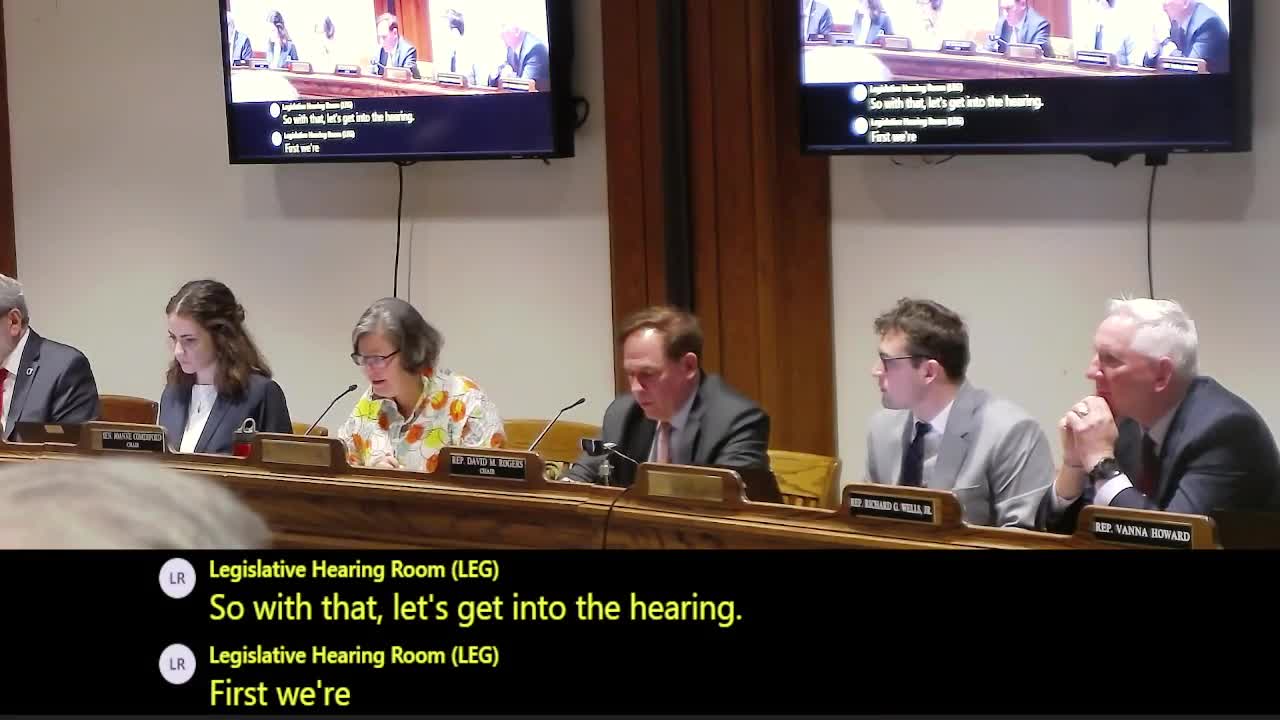
The Joint Committee on Higher Education heard hours of testimony in favor of H.54, the "BRIGHT Act," a proposal to leverage fair‑share surtax revenues and special‑obligation borrowing to provide roughly $2.5 billion for capital investment across the University of Massachusetts, state universities and community colleges.
The Joint Committee on Higher Education heard hours of testimony in favor of H.54, the "BRIGHT Act," a proposal to leverage fair‑share surtax revenues and special‑obligation borrowing to provide roughly $2.5 billion for capital investment across the University of Massachusetts, state universities and community colleges.
University leaders, the governor’s office, building authorities, construction trades and community college presidents told the panel that aging facilities, high deferred‑maintenance totals and climate goals together require a coordinated, largely state‑led financing approach. President Marty Meehan, University of Massachusetts, called H.54 “a generational investment in public higher education,” saying the bill would accelerate decarbonization and replace outdated infrastructure across UMass campuses.
Why it matters: witnesses said many campus buildings were built in the post‑war era and now require programmatic renovation, life‑safety upgrades and systems replacements. UMass officials testified the system has an estimated $4.8 billion in deferred maintenance needs and that UMass Amherst alone faces about $1.8 billion in deferred maintenance. University witnesses also said UMass campuses account for a disproportionate share of on‑site emissions from state buildings — cited in testimony as about 44 percent — making higher‑ed campuses critical to meeting state climate targets.
What proponents propose: administration witnesses described a financing plan that would use a modest annual fair‑share appropriation to support $2.5 billion in special‑obligation borrowing, with an initial one‑time supplemental appropriation (testimony referenced $175 million in the Senate supplemental) to get projects started quickly. Secretary testimony explained programmatic buckets in the draft bill: authorizations to modernize and decarbonize campus cores, targeted grants for smaller modernization and workforce‑skills projects, and a pot to support disposition/acquisition for housing development.
Some of the figures and examples offered at the hearing: - UMass system deferred maintenance: $4.8 billion (President Marty Meehan). - UMass Amherst deferred maintenance: $1.8 billion; campus footprint and research activity cited as drivers (Chancellor Javier Reyes). - The administration described a $125 million annual appropriation concept that would underwrite up to $2.5 billion in borrowing and noted a December/January working group report that informed the bill design.
Voices from the hearing: President Marty Meehan (University of Massachusetts) said the BRIGHT Act would “retire outdated infrastructure, and bring a new generation of world‑class facilities that are energy efficient, climate resilient, and meet the needs of a twenty‑first century research university.” Chancellor Javier Reyes (UMass Amherst) testified that deferred maintenance and sustainability are “clearly intertwined” on his campus and described recent and planned carbon‑neutral construction. Governor Healy (testimony for the administration) described the proposal as “a $2,500,000,000 investment” that would generate construction jobs and strengthen workforce pipelines. UMass Medical School leaders detailed heavy research space needs and energy/water‑reuse projects where capital would be used.
Delivery and capacity: witnesses from the University of Massachusetts Building Authority and the Massachusetts State College Building Authority described existing project pipelines and implementation capacity. The UMass Building Authority told the committee it manages a large portfolio and has shovel‑ready projects; the MSCBA described its work on residence halls and noted it could be used more broadly to support campus projects. DCAM (the state's capital agency) and other agency witnesses said they have roadmaps for decarbonization planning and facility condition assessments and asked for legislative authorization timed to funding availability so projects can begin quickly.
Construction and workforce impacts: contractors and building trades leaders supported the bill as economic stimulus that would keep skilled trade workers employed amid a private‑sector slowdown. Industry witnesses estimated tens of thousands of construction jobs and billions in economic activity if the program is funded and projects move forward.
Committee follow‑up and next steps: chairs and members asked for additional materials — including campus lists of shovel‑ready projects, decarbonization roadmaps and modeling of how the financing would affect campus tuition/fees and campus operating budgets. Committee staff said they will request that information from the administration, UMass, the state universities and community colleges.
Ending: supporters urged timely action so projects can begin in the current construction season and so the Commonwealth can preserve higher education competitiveness, reduce energy costs and advance workforce development goals.