Get Full Government Meeting Transcripts, Videos, & Alerts Forever!
Get email alerts on the Missing Middle topic
No spam. Unsubscribe anytime.
Sen. Feeney presses missing‑middle starter homes bill to expand starter home supply
Summary
Senator Feeney told the committee S.989 would create incentives, zoning tools and a trust fund to support smaller starter homes and residence types such as duplexes and triplexes to address declining entry‑level home stock.
Senator Feeney told the Joint Committee on Housing he filed S.989 “an act establishing the missing middle starter home development and homeownership program,” calling it a targeted response to the disappearance of entry‑level starter homes in Massachusetts.
Why it matters: Feeney said much of the state’s housing shortage is a production problem and that “production, production, production” is essential, but that policy should also restore smaller, starter single‑family and small multifamily home types — duplexes, triplexes and four‑family buildings — that historically provided opportunities for first‑time buyers.
Details offered to the committee: Feeney outlined three pillars of his approach: encourage municipal zoning changes to reduce large minimum lot sizes; create incentives (including tax or other financial incentives) for developers to build starter homes; and add affordability incentives such as shared‑appreciation trusts to keep prices within reach for first‑time buyers. He said the bill would build on existing tools such as chapter 40Y and proposes a 40Z trust fund to pair zoning changes with finance tools. He also referenced Vermont and other jurisdictions as models and said some incentives would target buyers at roughly 80 to 120 percent of area median income.
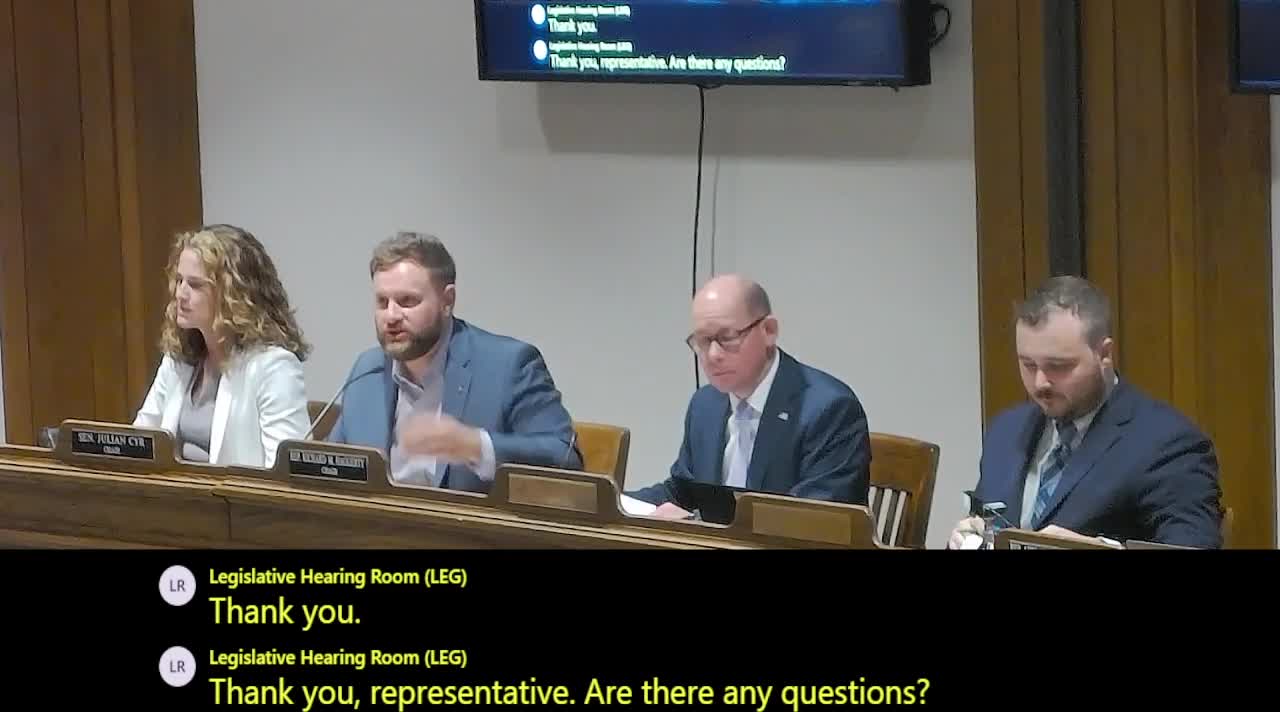
Committee exchange: Senators and representatives on the panel emphasized that “missing middle” is a broad term and said details about income targets, incentives, and municipal take‑up would need to be worked out. One speaker noted that developers “go where the money is” and that incentives must be sufficient to change that calculus.
Context and limits: Feeney’s presentation was an outline of policy goals rather than a detailed financing plan; he told the committee he would submit fuller written testimony. No formal committee vote or directive was recorded at the hearing.
Ending: Supporters asked the committee to advance the bill and to coordinate municipal outreach if the changes are to be implemented at scale.